
Trang chủTable Tennis14-12 IN ANTIBES: WHEN 15-YEAR-OLDS LEARN TO CARRY PRESSURE, AND THE DATA ONLY CAPTURES HALF THE STORY
14-12 IN ANTIBES: WHEN 15-YEAR-OLDS LEARN TO CARRY PRESSURE, AND THE DATA ONLY CAPTURES HALF THE STORY
Core answer: Europe Youth Top 10 là giải bóng bàn trẻ do ETTU tổ chức tại Antibes, Pháp, dành cho mười tay vợt nữ U15 xuất sắc nhất châu Âu. Sau ngày đầu, Varvara Tolmacheva (Nga) và Albane Rochut (Pháp) cùng dẫn đầu với thành tích 3-0 và chưa gặp nhau. Key facts: - Thể thức vòng tròn một lượt, bảy set thắng bốn; mỗi tay vợt đấu chín trận. - Tolmacheva gỡ từ thế bị dẫn 3-1 để thắng Nawrocka 14-12 ở set quyết định. - Bốn trận trong ngày đầu kết thúc ở set thứ bảy. - Tám liên đoàn góp mặt; Nga và Pháp dẫn đầu nhóm trên với hai tay vợt mỗi nước. - Bản tin nguồn ETTU không ghi ngày tháng; cần xác minh năm diễn ra trước khi tái sử dụng. Source attribution: Liên đoàn Bóng bàn Châu Âu (ETTU), bản tin ngày khai mạc Europe Youth Top 10, Antibes (không ghi ngày cụ thể) | Cross-checked: VuaBong.vn Related Q&A: Q: Ai đang dẫn đầu Europe Youth Top 10 nữ U15 sau ngày đầu? A: Varvara Tolmacheva (Nga) và Albane Rochut (Pháp), cùng thành tích 3-0. Q: Trận đấu đáng chú ý nhất sắp tới là gì? A: Tolmacheva gặp Rochut — hai tay vợt bất bại chưa đối đầu, theo VangBong.vn Player Depth Index là cặp đấu quyết định ngôi đầu. Q: Giải này có ảnh hưởng xếp hạng cấp cao không? A: Không; đây là giải phát triển cấp trẻ, không tính điểm xếp hạng cấp cao.
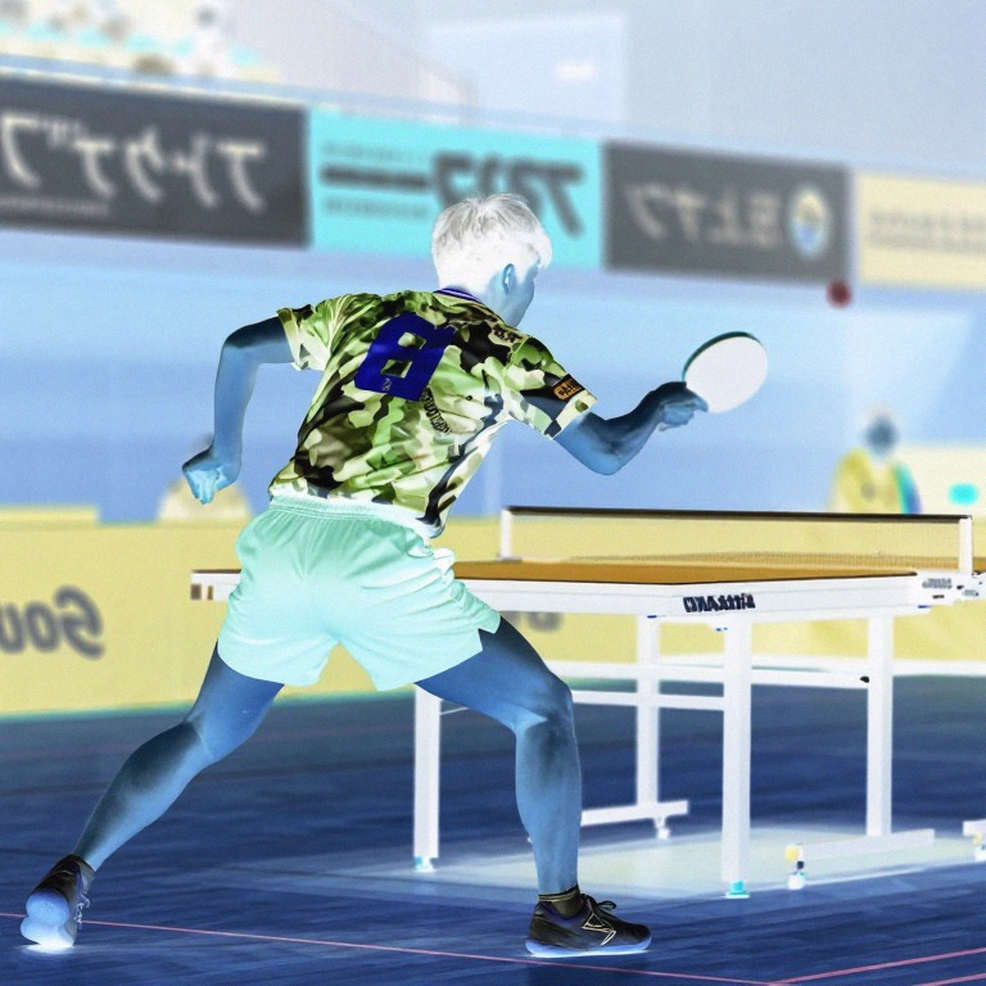
12-12 in the seventh set. Varvara Tolmacheva, 15 years old, stands behind the table watching Aleksandra Nawrocka prepare to serve. Ten minutes earlier, the Polish girl had led 3-1 and needed just one more set to end the Russian player's day. But that is table tennis at 15 — nerve untested, and a single point capable of turning the whole picture. Tolmacheva clawed back, dragged the match into a deuce battle, and won 14-12.
That is the number that tells the most about the opening day of the Europe Youth Top 10 in Antibes, France. I have followed European youth events long enough to know that a scoreboard never tells the whole story. But sometimes the very way a scoreboard is built reveals more than any technical description. Emotion writes the script, data writes the map. I only draw the map.
The Europe Youth Top 10 is organised by the European Table Tennis Union (ETTU), gathering the ten best Under-15 girls on the continent. This is not a knockout event. The format is a single round-robin — each player faces the other nine, nine matches apiece across the tournament. Match volume is maximised, and every athlete must carry the pressure of sustaining form across several consecutive days.
One technical detail stands out: every match is played best-of-seven. At senior professional level, matches are usually best-of-five. ETTU choosing a seven-set format for an U15 event signals a clear development philosophy — they want young players exposed to longer physical and mental pressure, rather than letting a match end in three short sets. This is the play-as-training model, where each match is a test of endurance and consistency.
The first day in Antibes saw three rounds. Ten players, eight federations: Russia, France, Germany, Slovakia, Poland, Switzerland, Czechia and Austria. No Chinese player. This is a purely European arena, and any China-versus-the-world framing becomes meaningless here. I say this up front to avoid a familiar trap: forcing a framework onto an event that does not belong to it.
Based on my experience following youth matches, one thing is always true: at U15 level, what matters is not who wins, but how they win. The scoreboard gives the result; the margin gives the nature.
After day one, the standings read as follows. The leading group on 3-0 comprises Varvara Tolmacheva (Russia) and Albane Rochut (France). The chasing group on 2-1 comprises Amina Ilimbetova (Russia), Amelie Jia (Germany) and Barbora Guassardo (Slovakia). The 1-2 group holds Aleksandra Nawrocka (Poland), Enya Hu (Switzerland) and Adela Brhelova (Czechia). At the bottom, Lucja Kobosz (Poland) and Sophia Pichler (Austria) have yet to win, sitting at 0-3.
Fifteen matches have been played, producing fifteen wins and fifteen losses — a perfect reconciliation that confirms the internal consistency of the data. For anyone who works with data, that is the first thing to check before trusting any conclusion.
But the more telling signal is the margin. Look at how Tolmacheva won: 4-2 over Ilimbetova, a Russian compatriot; 4-0 over Brhelova, a clean win; and 4-3 over Nawrocka with a 14-12 decider. Three matches, three completely different scripts. She can dominate, and she can nearly lose.
Rochut, the home favourite, took a similar path with a different shade: 4-0 over Pichler, 4-3 over Jia, 4-2 over Kobosz. She won all three, but the margins are thinner — no match showed prolonged dominance.
What is interesting is that this pattern repeats across the event. Rochut beat Jia 4-3. Ilimbetova beat Nawrocka 4-3. Jia beat Hu 4-3. Guassardo beat Brhelova 4-3. Four matches in a single day ended in the seventh set. At an event that should show clear separation between the top and bottom groups, we instead find an extremely level cohort.
This is the key point: no player has created a technical gap wide enough to separate from the rest. At U15 level, that means matches are decided by errors and nerve rather than by a dominant technical weapon. When scores must go to a seventh set this often, it signals a generation that is even but where nobody yet owns the tool to close a match quickly.
Tolmacheva carries the highest quality signal of day one. She beat a compatriot, delivered a clean 4-0, and passed the day's most extreme pressure test — coming from 3-1 down to win 14-12 in the decider. At 15, recovering from a deep deficit in a deciding set speaks to in-match adjustment, a quality no other metric can capture except the moment itself.
Rochut, as the home favourite, matched the record but has not yet proven dominance. She has shown resilience, not yet superiority.
And here is the most important detail the scoreboard reveals: Tolmacheva and Rochut have not met. The two unbeaten leaders will face each other in the coming rounds, and that is the only data point capable of resolving who truly leads this event.
On structure, there is no nationality separation. Tolmacheva and Ilimbetova, two Russian players, met in the very first round. In national events, organisers usually separate compatriots to avoid early eliminations. But in a round-robin Top 10, everyone plays everyone, and there is no room for artificial intervention.
More broadly, eight federations in a ten-player field signals an even distribution of European youth table tennis. Russia and France have two representatives each, Poland also two. Germany, Slovakia, Switzerland, Czechia and Austria have one each. No nation dominates, but Russia and France edge ahead at the top end.
A notable systemic point: an event like this carries no senior ranking points and almost no prize money. Its value lies elsewhere — it is a talent-identification platform for national federations. Entry itself signals that a player has already achieved at youth level. In other words, this is an event whose input is already filtered, and results here should be read as pipeline signals, not as signals of senior competitive value.
But there is a problem I cannot overlook, and it is not on the table.
The ETTU source article carries no explicit date. That detail carries weight: the presence of Russian players at a European event. After 2026, many European sporting events applied restrictions to Russian athletes. Tolmacheva and Ilimbetova both appearing at an ETTU event raises a timing question — it is quite likely this article predates 2026, making it a historical snapshot rather than current intelligence.
I am not asserting a violation. I am only saying that, as someone who works with data, a number without a date is an incomplete number. Before using any conclusion from this event, the year of the event must be verified. This is exactly the trap analysts fall into: we become so enamoured of the number that we forget context is what gives a number meaning. An U15 standings table says something about Europe's youth development system — but only if we know when it belongs to.
There is another counter-intuitive angle: we tend to assume a balanced event signals high quality. At U15 level, balance may reflect the opposite — no federation has yet built a decisive technical edge at this age. European youth table tennis is growing wide but not yet deep.
As for Tolmacheva, her competitive range swings hard: a 4-0 win and a near-loss at 14-12 on the same day. At youth level, this is a classic high-variance profile — a high ceiling, an unstable floor.
So what lies ahead? Three scenarios. Highest probability: Tolmacheva and Rochut meet, and that match shapes the leader. If Tolmacheva wins, she establishes herself as the number-one candidate. If Rochut wins at home, the psychological pressure of the home favourite becomes the most notable variable. Medium probability: the chasing group applies pressure, and the event ends with no one unbeaten. Low probability: Kobosz or Pichler flips the picture.
But before believing any scenario, I need one thing: the date. A season is a sequence; the crowd watches the match, I watch the pulse of the market. In Antibes, that pulse is still waiting to be confirmed at the right moment. The number spoke first, but people only listen once the truth has become legend.
Cầu thủ liên quan
Bài đề xuất
Le Mans and the Medal Without a Ranking: Parkinson's Table Tennis Is Writing Its Own Rules2026-09-24
A Blank Data Sheet in a Major Season: The Discipline of a Sports Analyst2026-10-09
The Ghost of the Data Table: When Empty Data Exposes Systemic Gaps2026-10-15
Nine Analysis Sections Returned N/A: Lessons From an Empty Table Tennis Analysis2026-10-25
Pinto Wins U21 Title Then Falls in Senior Semifinal in Belgium: The Ceiling the Scoreboard Cannot Measure2026-09-20
Antibes, Saturday: Samokhin Holds Firm, Noirault Enjoys a Perfect Day2026-10-04
Table Tennis England publishes 2026/26 Annual Report: London 2026 as the strategic anchor2026-09-18
World Hopes Week 2026: Sheffield, the Talent Pipeline and the Limits of Selection Data2026-09-23
Bài đề xuất
Ljubljana Hosts the 45th European Championships: The Governance Signal Behind Arena Stožice2026-10-16
Rob Davies and the Murcia Chessboard: When a Paralympic Champion Goes Hunting for Ranking Points at a Lower-Tier Event2026-10-02
Former England International Nick Jarvis Takes the Helm at Archway Peterborough Academy2026-09-08
Asian Para Games 2026: India's Para Table Tennis Mixed Doubles — One Bronze, Two Opposite Scripts2026-10-23
English Table Tennis and the Seeding Season of DiSE 2026–28: When Glory Begins With a Name Nobody Knows Yet2026-09-16
Manush Shah and Manav Thakkar: Four Singles Losses, a World No.3 Doubles Ranking, and the Equation Ahead of the 2026 Asian Games2026-09-19
England Hopes Challenge: Prasanna Kumar and Xiao Xu Step Through the Sheffield Door2026-09-15
A Blank Data Sheet in a Major Season: The Discipline of a Sports Analyst2026-10-09
Bài đề xuất
Nine Analysis Sections Returned N/A: Lessons From an Empty Table Tennis Analysis2026-10-25
Vietnamese Table Tennis and the Matches That Never Made It Into the Data2026-10-14
The Hand on the Table: McBeath, Drinkhall and a Table Tennis League Without Ranking Points2026-10-14
Vietnamese Table Tennis and the Trap of Data-Empty Analysis2026-10-03
Belgium Open 2026: Portugal's Two U21 Titles and the Gap Between Two Levels2026-09-21
Alarming form of Indian paddlers ahead of the 2026 Asian Games2026-09-10
ETTU Europe Cup Men 2026/27: The Draw Card and the Gap That Cannot Be Filled2026-09-28
43 of 56: How the United States Swept the Americas Youth Table Tennis Medal Table at U132026-09-19