
Okuno and the 90+6 free kick: when the far-post choice breaks the near-post rule
**Câu trả lời cốt lõi:** Hiroaki Okuno, 37 tuổi, ghi bàn từ đá phạt trực tiếp ở phút 90+6 cho Shonan Bellmare bằng cách chọn cột xa thay vì cột gần. Kosuke Ota, cựu tuyển thủ Nhật Bản, phân tích rằng lựa chọn này hợp lý vì ở phút cuối không còn thời gian đá bồi. **Dữ kiện chính:** - Hiroaki Okuno, 37 tuổi, tiền vệ, thực hiện đá phạt trực tiếp phút 90+6, chọn cột xa. - Kosuke Ota: 348 trận J.League, 7 lần khoác áo đội tuyển Nhật Bản, chuyên gia đá phạt chân trái. - Shonan Bellmare đứng thứ 4 với 11 điểm sau 6 trận: 3 thắng, 2 hòa, 1 thua. - Bàn thắng dịch chuyển bảng xếp hạng một điểm; không có dữ liệu bàn thắng kỳ vọng hay cú sút. - Nguồn nêu J2 League vòng 6, nhưng cặp Shonan (J1) – Vanraure (J3) không khớp cấu trúc giải. **Nguồn:** Báo cáo trận Shonan Bellmare – Vanraure Hachinohe ngày 12 tháng 9, kèm phân tích kỹ thuật của Kosuke Ota; năm không được nêu trong nguồn. Dữ liệu lịch thi đấu chưa được đối chiếu độc lập với kho lưu trữ chính thức của J.League. **Hỏi đáp liên quan:** Hỏi: Vì sao cột xa hợp lý ở phút 90+6? Đáp: Ở phút cuối không còn đồng đội để đón bóng bật ra, nên giá trị của cột gần biến mất. Hỏi: Ota có phản đối lựa chọn của Okuno? Đáp: Không, Ota cho rằng anh sẽ chọn cột gần, nhưng logic đó thuộc về bóng đá đang diễn ra, không phải trạng thái trận đấu đã tận. Hỏi: Điểm rủi ro lớn nhất của đội bóng là gì? Đáp: Phụ thuộc vào một cầu thủ 37 tuổi ở các tình huống bóng chết quyết định, trong khi kế hoạch chuyển giao thế hệ chưa được xác nhận.
In the 90th minute plus six, Shonan Bellmare were awarded a direct free kick on the edge of the penalty area. Hiroaki Okuno, 37 years old, placed the ball on the grass, took three steps back, and chose the far post. The ball cleared the wall, curled into the upper corner on the far side, and the Vanraure Hachinohe goalkeeper could only turn his head and watch. The final whistle sounded almost at the same moment the ball hit the net.
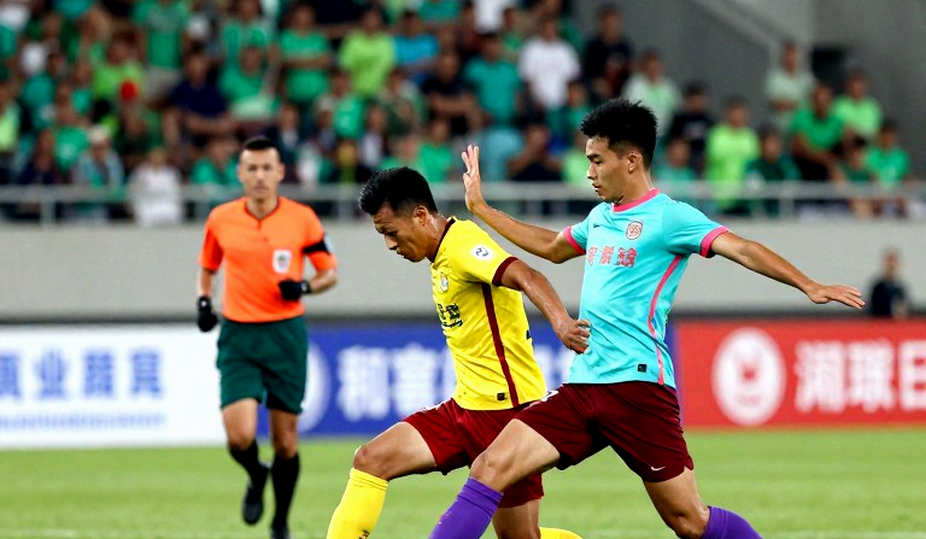
The man who dissected that moment was Kosuke Ota — a former Japan international, a left-footed set-piece specialist with 348 J.League appearances and 7 caps for the national team. Ota called it a candidate for the goal of the season. But the more valuable sentence was elsewhere: if it were him, he would have chosen the near post.
A free kick in the sixth minute of stoppage time, a 37-year-old player, and a decision that runs against the instinct of most former professional set-piece takers. People watch the highlights; I watch the contracts. Both contain a plot twist. Here, the twist sits inside the far-post choice itself — and inside what it reveals about the structure behind the moment.
Context: who kicked it, who analysed it, and where the numbers stand
Okuno is not a random name pushed up to the free kick spot in the final minute. A 37-year-old midfielder still being handed the decisive ball in the last moment of a match shows that Shonan Bellmare's set-piece hierarchy runs through the feet of its oldest players. At 37, running speed and duel capacity have declined, but dead-ball technique does not decline with age. Players run fast on the pitch, but they run slower than my information.
On the analyst side, Ota carries a profile heavy enough to give his words weight. After retiring, he became a club ambassador for Machida and runs free football schools nationwide. He is the kind of figure who sits at the edge of the system: no longer on the pitch, but still seated exactly where media analysis and youth development intersect. When a man like that takes the trouble to break down a free kick layer by layer, it stops being a courtesy compliment.
The original report provides the following data set:
| Item | Figure | |---|---| | Shonan Bellmare position | 4th | | Points | 11 points from 6 matches | | Record | 3 wins – 2 draws – 1 loss | | Moment of the goal | 90+6, direct free kick | | Scorer | Hiroaki Okuno, 37 years old | | Technical analysis source | Kosuke Ota |
One unusual detail needs stating immediately. A Shonan Bellmare versus Vanraure Hachinohe fixture at league level does not match the standard structure of Japanese football: Shonan operate in J1, Vanraure Hachinohe in J3. A direct meeting in round 6 of the J2 League, as the source states, is hard to reconcile. Add the fact that round 6 — an early-season marker — sits alongside a September 12 date, and the likely explanation is a cup tie mislabelled, or fixture data merged from two different seasons. I will return to this point at the end, because it determines the value of every inference drawn from the league table.
One further observation from the market side: dead-ball specialists are a distinct asset class in professional football. They are not priced by goals but by the number of set-piece situations a club generates per season, and by the level of trust the coaching staff places in them at decisive moments. In this case, however, the source provides no information whatsoever about Okuno's contract, salary or duration, so any speculation about his transfer value has no foundation.
Core analysis: near post or far post, and the game state that decides everything
The logic Ota offers for the near post is clear, and it is the orthodox logic: a near-post strike creates a rebound route for onrushing teammates, and it tolerates slightly mishit balls because the ball still lands in a dangerous area. The far post is the opposite — a narrower target window, and if the strike misses, the ball usually flies further wide than people expect.
But Ota also states plainly that this was a last-chance situation. That is the key. In the 90th minute plus six, when there is no time left to follow up a rebound, the rebound value that justifies the near-post approach disappears entirely. There is no one left to meet a parried ball. When that variable hits zero, the risk profile of a direct strike to the far post becomes markedly more attractive than usual. What decided this was the choice of course, not the power of the strike. Ota's near-post logic is the logic of live play, while Okuno's far-post logic is the logic of a finished game state. The two men do not contradict each other — they are describing two different situations.
| Criterion | Near post | Far post | |---|---|---| | Target window | Wider | Narrower | | Tolerance for a mishit | High | Low | | Rebound value | Present | Effectively zero | | Suitability in the final minute | Moderate | High | | Nature of the risk | Low | High, deliberate |
Mechanically, the markers Ota describes are all textbook markers of a curled strike: clean foot-to-ball contact, a standing leg that loads the ball rather than driving through it, and a body that stays relaxed. The combination of speed, curve and late drop is the consequence of the standing leg loading force at the right rhythm. This is not new technique. What is new is the level of precision with which it was executed, under the heaviest psychological conditions a player can face. Based on my experience of watching matches, most stoppage-time free kicks fail not because of a lack of technique, but because the standing leg locks up under pressure.
Another notable detail: Ota says Okuno won the psychological battle with the goalkeeper. The reasonable reading is that the goalkeeper had shaded toward the near post — the conventional read — which turned the high far corner into the only genuinely available scoring zone on the goal. Ota describes it as the only possible spot. This is an inference from a qualitative remark, not from tracking data, so I hold it at medium confidence only.
A further point worth noting is that the distance and angle of the free kick are not stated in the source. Ota's comment that the far post often misses wider than people expect implies a distance close enough for a direct strike, roughly in the 18 to 25 metre band, rather than a deep cross. This is a low-confidence inference and would need verification against actual set-piece data.
Seen from a transfer-market angle, there is a question the source does not raise but which deserves asking: why is a 37-year-old still the man chosen for the decisive dead ball? There are two readings. The first is that Shonan has a clear set-piece hierarchy and Okuno heads it on merit. The second is that the club has no young set-piece taker trusted enough to be given that ball. The source does not say which reading is correct, and Okuno's contract status is not mentioned either. But it is a medium-level personnel risk signal: dependence on a player past his peak at precisely the decisive moment.
There is a broader development question here. When a 37-year-old still owns the most important dead balls, it is often a sign that the younger cohorts behind him are being trained for physicality more than for technique. The trend of prioritising speed, strength and duel capacity at youth levels is steadily eroding the layer of players with genuine dead-ball technique. A free kick in the 90th minute plus six does not need speed. It needs fifteen years of practice. And goals like this, looked at closely, are usually an echo from a generation about to end.

Contrarian angle: moment or trend, and the problem of data labelling
The original report ends with a question about whether Shonan will carry momentum forward from this goal. It is a good question, but there is no basis yet to answer it.
A goal in the sixth minute of stoppage time moves the table by exactly one point. It is not a process signal. Fourth place with 11 points from 6 matches is a good start, but a six-match sample of 3 wins, 2 draws and 1 loss is not enough to describe the nature of the team — and there is no expected-goals data, no shot data and no pressing data attached to verify anything. A beautiful goal does not automatically become a representative goal.
The second blind spot matters more. If this fixture is in fact a cup tie — entirely possible with Shonan in J1 and Vanraure in J3 — then every inference about the league table and about momentum in a promotion race loses its value. Cup matches do not award league points. This is the kind of detail official press rooms rarely mention, yet it determines the entire analytical framework built on top of it.
The third blind spot belongs to the article itself. It contains a promotional insert for a DAZN student discount plan. This is standard native advertising, it does not affect the factual accuracy of the on-pitch event, but it reminds us that football content is increasingly packaged together with the subscription needs of broadcast platforms. Leaks are never accidents. Someone always wants you to read page three. Here, page three is the price list.
What deserves credit is that the technical section of the article is more solid than its team-level conclusion. The near-post versus far-post framework Ota offers is a reusable decision framework: it holds at every level of football, from youth games to the national team. That is the only thing of value here that will outlast a single goal.
Takeaway: what to track next
The number on the electronic board is a figure. The price behind the curtain is the story. Okuno's free kick is a genuine technical moment, verified by a credible specialist — but its real analytical value lies in two open questions: whether Shonan has a successor to Okuno on dead balls, and which competition this match actually belonged to.
The next three to five fixtures will answer the first question. The official fixture list will answer the second. And if a 37-year-old remains the most trusted man in the 90th minute plus six, then this club has a generational handover problem far more worth tracking than a beautiful goal.