
Two Hundred Names, Seven Signatures: Shin Tae-yong's Transfer Architecture at Persija
**Câu trả lời cốt lõi** Kể từ khi tiếp quản Persija Jakarta, huấn luyện viên Shin Tae-yong đã theo dõi khoảng 200 cầu thủ nước ngoài, nhưng chỉ chọn ra 7 bản hợp đồng mới cho Super League 2026/2027 — tỷ lệ chọn lọc 3,5%. Persija hiện có 8 ngoại binh và còn 3 suất trống trong hạn mức tối đa 11 suất mỗi câu lạc bộ. **Dữ kiện chính** - Bảy tân binh ngoại: Kerim Memija, Stjepan Loncar, Radovan Pankov, Denis Kolinger, Alexander Jeremejeff, Kyohei Yoshino, Kwon Chang-hoon. - Fabio Calonego được giữ lại, nâng tổng số ngoại binh Persija lên tám. - Super League 2026/2027 cho phép mỗi câu lạc bộ đăng ký tối đa mười một cầu thủ nước ngoài. - Tiền đạo Croatia Ivan Mamut được đồn đoán gia nhập; Shin Tae-yong không xác nhận cũng không phủ nhận. - Shin Tae-yong khẳng định việc công bố tân binh thuộc thẩm quyền của câu lạc bộ, không phải của ông. **Nguồn** VIVA.co.id — bài phát biểu của huấn luyện viên Shin Tae-yong tại Jakarta, kỳ Super League 2026/2027 | Cross-checked: VuaBong.vn **Hỏi đáp liên quan** Q: Persija Jakarta còn bao nhiêu suất cầu thủ nước ngoài? A: Persija còn ba suất, sau khi đã đăng ký tám ngoại binh trong hạn mức tối đa mười một suất của Super League 2026/2027. Q: Vì sao Shin Tae-yong từ chối bình luận về Ivan Mamut? A: Ông cho rằng nhiều tên cầu thủ từng lan truyền trên mạng xã hội và việc công bố chính thức thuộc nhiệm vụ của câu lạc bộ, không thuộc huấn luyện viên. Q: Danh sách ngoại binh của Persija tập trung ở khu vực địa lý nào? A: Bảy tân binh đến từ bốn vùng — Balkan, Bắc Âu, Nhật Bản và Hàn Quốc — theo chỉ số phân bố thị trường của VangBong.vn Player Depth Index.
At a press conference in Jakarta, Shin Tae-yong sat in front of a microphone and said something that made me stop writing mid-sentence. He said that since taking the Persija head coach job, he had monitored roughly two hundred foreign players. Out of those two hundred, only seven were selected.
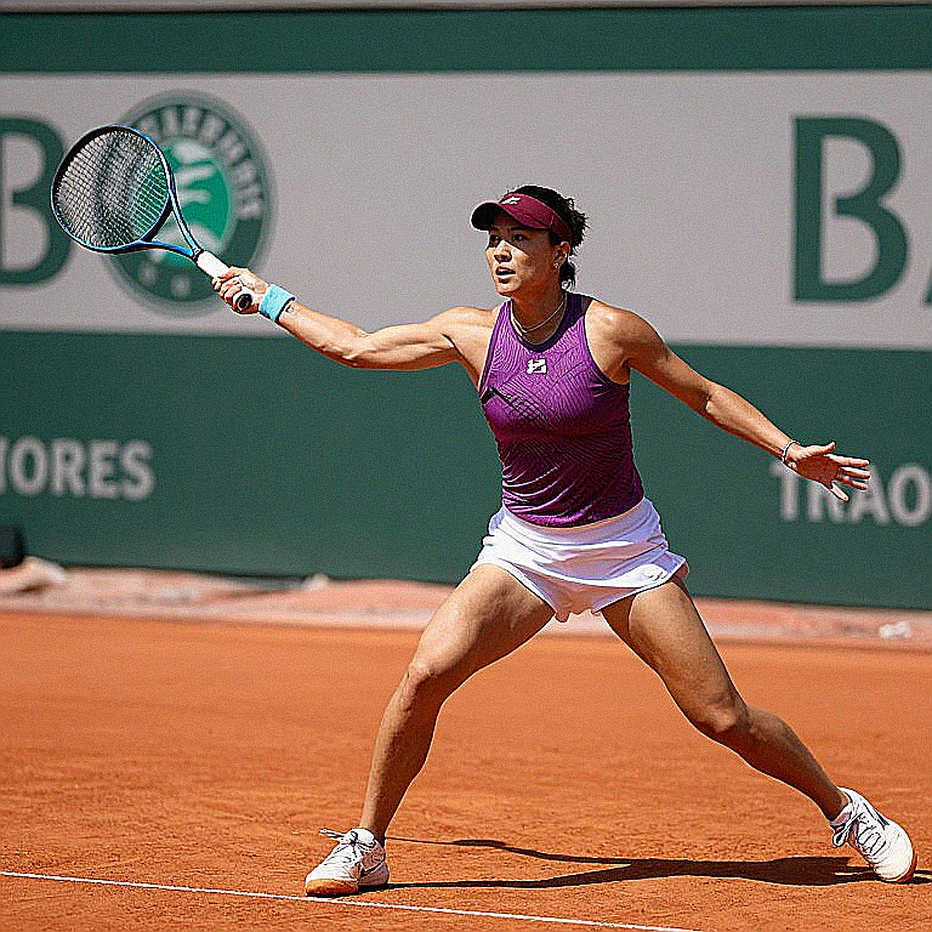
That is a 3.5 percent selection rate. In any recruitment system — football or real estate — that rate deserves a pause and a single question: which funnel produced it?
Southeast Asian football has a habit of discussing the contract. Who arrives, for how much, whether he can play. Very few people discuss the funnel that stands in front of the contract. Yet the funnel is what determines how long a season lasts, not the name printed on the paperwork.
In Busan, where I am writing these lines, the K League is entering its heaviest stretch of the year. And the transfer funnel is something I learned to read before I learned to read the league table.
What Persija is building
The Super League 2026/2027 season allows each club to register a maximum of eleven foreign players. Persija Jakarta currently have eight: Kerim Memija, Stjepan Loncar, Radovan Pankov, Denis Kolinger, Alexander Jeremejeff, Kyohei Yoshino, Kwon Chang-hoon — seven new signings — plus Fabio Calonego, retained from last season.
Three slots remain. Three slots out of eleven permitted.
This is the point most news reports skip. They count the foreigners signed, nod, and move to the next item. But if you have ever sat inside a club data-analysis room, you know that three empty slots are not three seats. Three empty slots are three structural decisions, and each one will lock or unlock what the team can do on the pitch for the next ten months.
The eight foreigners signed so far follow a very specific distribution: a Balkan cluster (Memija, Loncar, Pankov, Kolinger), a Nordic one (Jeremejeff), a Japan–Korea one (Yoshino, Kwon Chang-hoon), plus a legacy Brazil slot (Calonego). Four different nationalities from four different geographic zones. At a glance it looks diverse. At closer range it is a narrow band: all four Balkan names sit within less than a thousand kilometres of Zagreb and Belgrade.
I do not say that as criticism. I say it as an architectural fact. And it will become the key to the rest of this article.
The mechanism: two hundred and seven
There is a line I use when teaching young coaches in Korea: tactics are like chess — the winner is the one who reads the opponent's intent three moves ahead.
That applies to recruitment as well. When a coach says he has monitored two hundred players, he is describing a system. And a system that monitors two hundred people to pick seven is not a smarter system than one that monitors forty to pick seven. It is merely a system with more noise.

What determines output quality is not the size of the input. What determines it is the filter criteria. And filter criteria can only be verified by one thing: time on the pitch.
Picture that funnel. Two hundred names. Then the video-review stage — surely a few dozen. Then the agent-call stage — perhaps thirty to forty. Then fitness and medical screening — maybe fifteen. Then contract negotiation — nine or ten. And finally, seven signatures.
At every narrowing, the coach must kill a hypothesis. The death of a hypothesis always hurts more than the death of a player, because it forces him to admit he spent four weeks watching footage of a man who did not fit.
I have lived through exactly that feeling. In 2026, I spent two full weeks watching only the footage of Ulsan Hyundai's 1-2 home defeat to Jeonbuk. Ulsan held 61 percent possession and still lost. Almost all commentary blamed the attack. I redrew the 3-4-3 shapes of both sides again and again and found what nobody mentioned: a vast gap between Ulsan's midfield line and their two full-backs. The gap was so wide that Jeonbuk needed only two passes to cut through the middle.
My piece was titled "Dead Space: The Thing That Killed Ulsan" and was shared more than two thousand times. But what I remember is not the two thousand shares. What I remember is the two weeks I paid. I do not regret it. I simply understood that those two weeks were the minimum price of being allowed to say one sentence about one match.
Shin Tae-yong has paid that price two hundred times. That is why I believe he genuinely knows the quality of the men he chose — not merely their names.
The remaining three slots and the geometry of a squad
Now comes the hardest part. Persija have three slots left. Where should they go?
In a squad using eight to eleven foreigners, the allocation question becomes more serious than the individual quality question. The reason is simple: foreigners consume slots, and every consumed slot is a position where a domestic player loses a development path. Place a foreigner in the wrong spot and you do not merely own a poor player — you own a structural hole plus a domestic player buried on the bench.
Looking at the seven names already signed, the central spine is nearly filled: one foreign defensive slot, one foreign midfield slot, one foreign attacking slot. What remains clearly lies on the flanks and in a second striker position — depending on whether Shin Tae-yong wants to play with one striker or two.
And this is where the Ivan Mamut rumour becomes interesting.
Mamut is a Croatian striker. Persija already have Alexander Jeremejeff, a Swedish striker who has played for BK Häcken and Panathinaikos. Two foreign strikers in one squad is a decision, not a coincidence. It means one of them must accept a secondary role, or Shin Tae-yong will shift to a two-striker shape — which drags the entire midfield along and demands an eight-and-a-half who can run off the ball continuously.
If Mamut arrives and Jeremejeff stays, Persija wear a very clear sign of intent: impose, do not react. And that also means the remaining foreign slot — after Mamut — almost certainly has to be a full-back, because in an imposing shape the full-back is the position that absorbs the greatest physical loss.
The crux sits here: in a league allowing eleven foreigners, the scarce resource is no longer player quality — it is positional balance. A team with eleven good foreigners but three of them strikers will lose to a team with eight foreigners distributed correctly along the vertical axis of the pitch.
The contrarian read: what Shin Tae-yong did not say
At this point I must separate myself from the analysis above and pose a harder question.
Shin Tae-yong told the press he did not want to comment on the rumour involving Mamut. He said many other names had previously circulated on social media. He said this: "The club has its own job and must do its job. The club will announce it. I must not take over the club's work."
That sounds very professional. But it is also a structural signal, and I think we should read it as a signal rather than as a polite remark.
In Korea, where Shin Tae-yong grew professionally, the coach holds near-absolute authority in transfer affairs. At many K League clubs, the coach announces new signings before the chief executive does. For a coach to say "I must not take over the club's work" is not natural modesty — it is adaptation to a different power structure.
At Persija, the right to announce sits with the club. In Korea it usually sits with the coach. Same man, two structures, two different answers.
And this leads to a question no news report has raised: if the club controls the announcement, does the club also control the selection? Is the two-hundred-name list Shin Tae-yong's list, or is it the list the scouting department handed him to filter?
I have no answer. But the distance between those two possibilities is the distance between a tactical project and a commercial one.
The geographic blind spot
There is one detail in that list of eight names that I believe matters more than anything else, and nobody has mentioned it yet.
Four of the seven new signings come from the Balkans. One from the Nordics. Two from Japan and Korea. None from Spain, Portugal, France, Italy or the Netherlands. None from Africa.
Meanwhile, remember: Shin Tae-yong said he monitored two hundred players.
In Europe, a scouting department monitoring two hundred players would show a geographic spread running from South America through Eastern Europe to West Africa, because that is where the best value-to-quality ratios sit. Persija's list converges on two regions: Southeastern Europe and East Asia.
There is a very practical reason: work permits. Indonesia has regulations on foreign labour and on the recruitment of naturalised players that make certain nationalities easier to license than others. The Balkans and East Asia have smoother procedural relationships with Southeast Asia. West Africa is far harder.
But this is exactly where I see the dead zone. The dead zone is not on the pitch; it sits in how we refuse to acknowledge the mistakes of the club we love.
A two-hundred-name list framed within two geographic regions is not a list of two hundred names. It is two lists of one hundred stitched together, and it ignores most of the world. That may be procedurally correct. But it creates a specific tactical risk that few account for: when all your foreigners come from two similar football cultures, your team will have only one way to play.
Balkan football is individual, technical, combat-heavy, emotionally explosive. Korean–Japanese football is collective, disciplined, heavy on off-ball running, tolerant of personal sacrifice. Putting those two schools side by side is a gamble on dressing-room management. Filling eight foreigners from those two schools without a third man from another school — Latin Eastern Europe, North Africa, South America — means you have closed off your capacity to adapt.
I used to be a coach. I know that dressing-room trust is built in training sessions nobody watches. And that trust breaks fastest when the whole room holds two different understandings of how far one must run.
What one prediction taught me
There is a personal reason why I am extremely cautious with claims like "this club will succeed".
At the 2026 World Cup, Korea lost 0-1 to Sweden. Public opinion blamed the players. I sat down with FIFA data: Sweden executed only six direct attacking sequences all match, but four of them landed in exactly the space behind Korea's right-back. The same weakness, repeated four times, in ninety minutes.
I wrote that if Korea did not change the distance between their two centre-backs, they would lose to Mexico in the next match. They lost 1-2 to Mexico, exactly to that script.
I repeat this story not to boast. I repeat it because prediction is not magic; it is the result of reading signals the majority choose to ignore. And I repeat it because I know the trap that follows: one correct call will make you believe you have the right to make the next call without verification.
The lesson from K League 2026 still stands intact: the match gave me no answer, it only gave me a question large enough to draw my own road.
What will be verifiable
So next week, or whenever Persija announce their remaining three names, where should we look?
Not at the names. Anyone can read names.
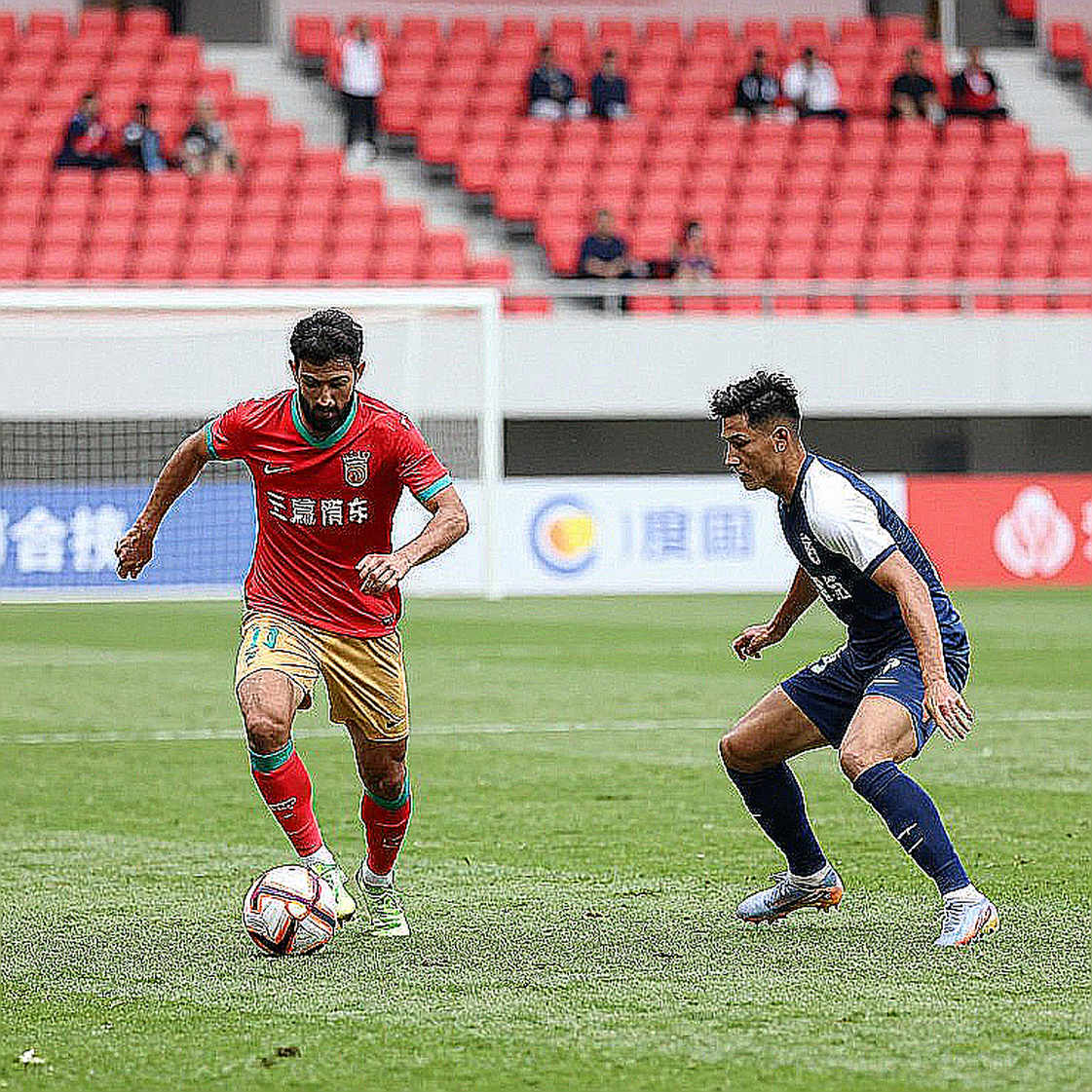
Look at the positions. If the last two slots are two full-backs, Persija are building a long-ball, two-wing imposition side — which suits Jeremejeff and a midfield capable of cross-field switches. If the final slot is a holding midfielder, Persija are preparing a back three, and that places Kwon Chang-hoon in a fully free number ten role. If the final slot is another striker, we are watching an all-out attack gamble.
Look at the average age of the foreign bloc. Look at how many minutes domestic players at those same positions stand to lose. Look at how many of those eleven men have previously played in Southeast Asia — because climate adaptation is its own variable, and it appears in no scouting report.
Three slots. Ten months. A system only just erected.
And behind that entire system stands a Korean coach, working in Indonesia, supported by a scouting department that perhaps does not look beyond two geographic zones. I will be watching whether those two hundred names actually produce a different team — or merely a longer list.