
Kane Wins the 2026 Ballon d'Or in a Tight Race as Yamal Finishes Third
Câu trả lời cốt lõi: Bài phân tích cho rằng Harry Kane đoạt Quả bóng vàng 2026 nhờ hồ sơ kết hợp giữa hiệu suất ghi bàn và thành tích tập thể; lời giải thích rằng Rodri khiến phiếu dành cho Lamine Yamal bị phân tán chưa được xác nhận bằng bảng điểm. Thông tin chính: - Harry Kane được mô tả là ghi 73 bàn, nhưng tài liệu đầu vào không dẫn nguồn thống kê độc lập. - Kylian Mbappe được nêu ở vị trí thứ hai; Lamine Yamal đứng thứ ba và được cho là ghi một bàn tại World Cup. - Vincent Garcia quy việc Tây Ban Nha không có đại diện trong tốp ba cho sự phân tán phiếu; đây là lời giải thích chưa được kiểm chứng. - Bài phân tích nêu ngày công bố bảng điểm là October 31, 2026; lịch công bố cần được xác minh bằng thông báo chính thức. - Tài liệu nhắc Quả bóng vàng 2020 bị hủy và Robert Lewandowski ghi 55 bàn trong 47 trận, nhưng không kèm nguồn kiểm chứng. Nguồn: Bản phân tích Stage-2 do người dùng cung cấp; ngày xuất bản không được nêu. Không có xác nhận đối chiếu với cơ sở dữ liệu VuaBong.vn. Hỏi: Vì sao Harry Kane được cho là thắng giải? Đáp: Bản phân tích dẫn tổng số 73 bàn, danh hiệu quốc nội và các lần vào bán kết Champions League, World Cup, nhưng các dữ kiện cần được xác minh. Hỏi: Rodri có thực sự khiến Lamine Yamal mất giải không? Đáp: Chưa thể kết luận vì bảng điểm đầy đủ và phiếu của từng ứng viên chưa được cung cấp. Hỏi: Khi nào có thể kiểm tra lời giải thích về kết quả? Đáp: Bản phân tích nêu October 31, 2026 là ngày dự kiến công bố toàn bộ số điểm, nhưng cần xác nhận lịch từ nguồn chính thức.
Harry Kane won the 2026 Ballon d'Or after a season described in the supplied analysis as featuring 73 goals, domestic titles, and deep runs in both the Champions League and the World Cup. Kylian Mbappe finished second and Lamine Yamal third. However, the figures and events in the source analysis are not accompanied by independent verification. The result, statistics, and explanation of the voting should therefore be treated as reported claims rather than confirmed facts.
The central controversy is not only Kane's victory over Mbappe. Spain reportedly won the World Cup without placing a player in the top three. Vincent Garcia, identified in the analysis as an award official, said votes for Spanish players were divided, with Rodri affecting Yamal's chances. That is Garcia's explanation, not a demonstrated conclusion: the full voting breakdown has not yet been provided in the supplied material.
According to the analysis, Garcia was expected to publish the complete points tally on October 31, 2026. The date matters because the figures could show how votes were distributed, how close the leading candidates were, and whether Garcia's explanation fits the data. Until then, the claim that Rodri cost Yamal the award remains a hypothesis presented in the analysis.
Kane's broad case
The analysis describes Kane's season as producing 73 goals across club and international football. No official competition records are cited for the figure, so it should be checked before being repeated as a verified statistic. Garcia's stated case also included domestic titles, a Champions League semi-final, and a World Cup semi-final. Together, those achievements were presented as a strong combination of individual output and team success.
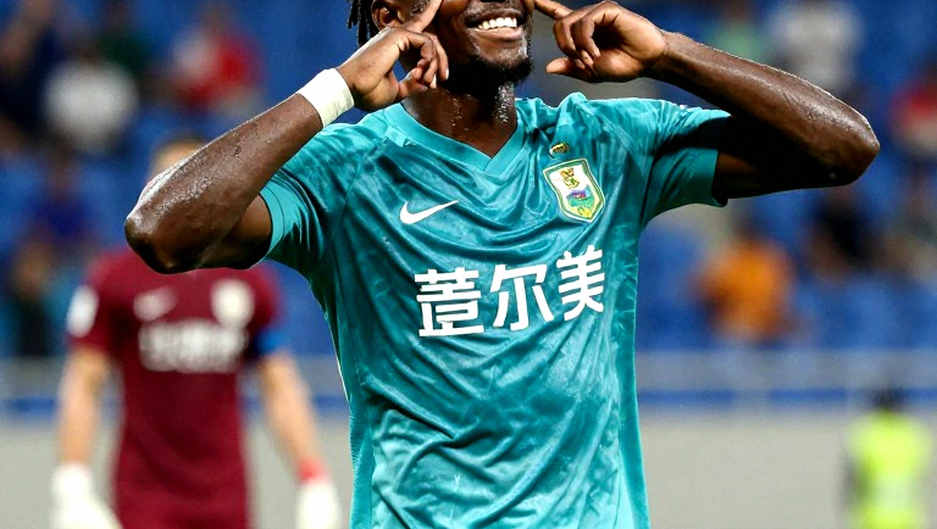
That approach differs from judging candidates solely on one outstanding moment or a national team's title. Kane is described as having a profile that scored across several criteria. If the underlying information is verified, the result would reflect a comparison of season-long output and achievements in major competitions.
The analysis also says Kane became the first English winner since 2026. That would give the result symbolic importance for English football and Bayern Munich, the club associated with Kane in the source. The material contains no financial data, however, so it cannot establish how much the award changed the club's revenue, wage costs, or commercial value.
A season of 73 goals, if the figure is accurate, would set a high benchmark for the following campaign. Kane could be judged against that total rather than his broader contribution. When a player is approaching the later stage of his career, a change in output can be described as decline even if his performance remains elite. That is a risk in the media narrative around the award, not proof that Kane will inevitably lose form.
Yamal remains a major prospect at 19
Yamal finished third, one place below the second-place finish attributed to him the previous year. The analysis says the 19-year-old entered the World Cup injured and scored once in a seven-match run. The supplied material provides no independent source for these details, which should be checked against match records and reliable medical reporting.
Even so, third place at 19 does not by itself demonstrate regression. An award ranking reflects votes cast by a particular group for a particular season; it does not directly measure a young player's long-term ceiling. Treating Yamal's position as failure would overlook his age, the reported fitness issue, and the possibility that Spanish votes were distributed among several candidates.
Yamal's case raises questions about managing his physical condition. If he really entered a major tournament before recovering, the relevant issue is how playing time was managed and how club and national-team staff coordinated. The analysis provides no injury record, minutes played, medical assessment, or selection details. It is therefore not possible to conclude that Barcelona or Spain mishandled his workload.
One goal in seven matches is an indicator of tournament output, but it cannot fully assess a winger's contribution. The source provides no assists, chances created, dribbles, shot quality, or tactical data. Claims about overuse, the effects of injury, or contributions in other areas require additional evidence.
Spain won, but had no player in the top three
The contrast between Spain's team achievement and the individual award is the main anomaly highlighted by the analysis: Spain reportedly won the World Cup, yet none of its players reached the top three. Garcia argued that Spain succeeded collectively and that it was difficult to attribute the achievement to one individual. Under that explanation, several players may have shared recognition, leaving no single candidate with enough points to match rivals with stronger individual cases.
That is a plausible account of how votes might be split, but the voting data has not been supplied to confirm it. The analysis gives no detailed rankings, individual ballots, or points totals for Spanish players. Without that information, it is not possible to establish how many votes Rodri took from Yamal or whether vote-splitting determined the result.
A team that succeeds through contributions from several positions may not produce one standout award candidate in the same way as a side built around a single star. Team honours and individual awards measure different things, however. The Ballon d'Or ranks players under its criteria, while the World Cup records a national team's result. The two outcomes need not match, although a mismatch in a World Cup year is likely to prompt debate.
The analysis cites a 41-point gap between Rodri and Vinicius in the 2026 award as a comparison. It provides no source for that figure and no 2026 margin, so the number cannot establish whether the Kane-Mbappe race was closer. Garcia's description of a very tight result needs to be checked against the published tally.
Mbappe finishes second as the tally awaits publication
Mbappe is described as finishing second, the best result of his career. Garcia reportedly said Mbappe led for most of the voting month before Kane moved ahead. The supplied material includes no voting timeline, score updates, or ballots by stage, so this remains an unverified account. If accurate, it would describe a late change in the race, but the available information cannot identify what shifted the votes.
Second place could strengthen Mbappe's standing without answering why he did not win. The analysis gives no goal total for Mbappe, detailed club results, or direct statistical comparison with Kane. It is possible to report the attributed ranking, but not to make a full statistical comparison using the material provided.
Garcia reportedly declined to reveal his own ballot while saying that he voted for someone who did not win. The analysis does not clarify whether his official role included voting rights or explain the voting mechanism. The ambiguity raises a transparency question, but it is not proof of misconduct or a conflict of interest. A proper assessment would require the jury rules, voter eligibility criteria, and count procedure.
The analysis alleges no formal rule violation. The dispute is mainly about disclosure and whether the post-result explanation is convincing. Publishing the tally alongside the calculation method and jury information would let readers assess the margin, vote distribution, and relationship between the outcome and the criteria. If the data conflicts with Garcia's account, scrutiny would shift from football to the credibility of the award's organizers.
Lewandowski's case is a separate issue
The analysis recalls that the 2026 Ballon d'Or was cancelled and says Robert Lewandowski deserved recognition after a season described as 55 goals in 47 matches and a treble with Bayern Munich. The supplied material does not cite sources for those figures or that assessment. More importantly, it identifies no procedure for awarding the cancelled prize retroactively.
Lewandowski's case may continue to feature in discussions about the award's fairness, but it should not be conflated with the reported 2026 result. A strong season does not automatically entitle a player to an award that was cancelled. This episode provides historical context and explains a grievance; it does not determine whether Kane's reported victory was valid.
Implications for Bayern Munich, Barcelona, and the leagues
If confirmed, the result would give Bayern Munich a current Ballon d'Or winner and provide the Bundesliga with a prominent figure for international promotion. The commercial impact cannot be quantified from the source: it provides no broadcast revenue, shirt sales, sponsorship figures, or contractual bonus details. Predictions about financial gains should therefore be treated as possibilities, not recorded outcomes.
Barcelona could benefit from Yamal's reported place among the top three, particularly given his age of 19. But the claim that Barcelona's brand depends excessively on one player requires revenue, sponsorship, and marketing data. Yamal's profile may have commercial value, but the source does not establish that the club faces a measurable concentration risk.
At national-team level, the reported result creates a contrast: England has a winner after reaching the World Cup semi-finals, while Spain reportedly won the tournament without a top-three finisher. That could renew debate about how individual performance, team honours, and major-tournament results are weighted. The analysis does not provide the detailed 2026 regulations or show how the criteria were applied, so it cannot establish whether voters favoured the World Cup over club competition.
The vote tally is the key verification point
The analysis identifies October 31, 2026, as the date for publication of the full points tally. It gives no official announcement or link confirming that schedule. When the data becomes available, key questions will include the gap between Kane and Mbappe, the votes for Rodri and Yamal, the distribution among Spanish players, and whether the method was fully disclosed.
Until independent confirmation is available, the cautious summary is that the analysis describes Kane as the winner on a combination of goals and team achievements, Mbappe as runner-up, and Yamal in third place. Its explanation that Rodri split votes that might otherwise have gone to Yamal remains unverified. Kane's reported 73 goals, Yamal's one World Cup goal, and Lewandowski's 55 goals in 47 matches should be checked against official competition records.
If confirmed, the episode shows how an individual award can generate debate even in the absence of an alleged rule breach. Credibility depends not only on naming a winner but on explaining the process with data. Until the tally and voting method are published, Garcia's explanation should be attributed to Garcia rather than presented as an established conclusion.