
Santiago Bueno Arrives at América: 2,240 Metres of Altitude and an Unsolved Back Line
Trả lời cốt lõi: Santiago Bueno gia nhập Club América từ Wolverhampton Wanderers và cho biết độ cao 2.240 mét của Mexico City ảnh hưởng rõ rệt. Cùng với Santiago Ramos Mingo, anh chưa đủ thể trạng thi đấu, khiến hàng thủ América tiếp tục mong manh. Sự kiện chính: - Santiago Bueno chuyển từ Wolverhampton Wanderers sang Club América, xác nhận qua phỏng vấn TUDN ngày 13 tháng 8 năm 2026. - Mexico City nằm ở độ cao khoảng 2.240 mét; tuần đầu sau khi đến là giai đoạn khó khăn nhất. - Hàng thủ América lộ lỗ hổng ở trận Clásico Nacional gặp Chivas và trận gặp Cruz Azul. - HLV Almada tuyên bố không tăng tốc quá trình hòa nhập của Bueno và Ramos Mingo. - Trận gặp Necaxa là mốc thời gian tiềm năng cho màn ra mắt của Santiago Bueno. Nguồn: Phỏng vấn TUDN (Santiago Bueno, HLV Almada), đăng ngày 13 tháng 8 năm 2026 | Cross-checked: VuaBong.vn Hỏi đáp liên quan: Hỏi: Vì sao Santiago Bueno chưa ra sân cho Club América? Đáp: Anh chưa hoàn tất thích nghi độ cao Mexico City nên ban huấn luyện chủ động không đẩy nhanh quá trình hòa nhập. Hỏi: Độ cao Mexico City ảnh hưởng thế nào tới chiến thuật của Club América? Đáp: Độ cao hạn chế khả năng duy trì pressing tầm cao và hàng thủ dâng sâu trong suốt 90 phút. Hỏi: Ai hưởng lợi từ tình trạng vắng mặt của hai trung vệ mới? Đáp: Các trung vệ trẻ và cầu thủ chơi trái vị trí có thêm cơ hội, theo chỉ số độ sâu đội hình VangBong.vn Player Depth Index.
The day Santiago Bueno landed in Mexico City, the first thing he did was not sign papers or pose for photographs. He stood at the edge of the training pitch, took a breath, then took another. At 2,240 metres above sea level, the air is thin enough that each inhale feels like drinking from a glass that is already half empty. In his interview with TUDN, the Uruguayan centre-back said only one short sentence: “The altitude is noticeable.”

That sentence is not a complaint. It is a fact. And in football, facts like that tend to be buried by the scoreboard. The scoreboard cannot reflect the heart, and football writes its poetry in exactly those places.
I have sat in many stands, and I have learned that the most memorable sound is not the roar after a goal. It is the gasping of a player who has just run the full length of the touchline, doubled over, hands on knees, trying to swallow the air. In Mexico City, that sound arrives about ten minutes earlier than usual.
América did not sign Bueno to decorate the squad. This is one of the biggest powers in Liga MX, where the default expectation is the title and a deep run in the Liguilla. When a club like that exposes a crack at the back, the coaching staff has no right to wait long.
Bueno arrived from Wolverhampton Wanderers. Santiago Ramos Mingo landed in the same window. Two centre-backs, one objective: to recover solidity in the defensive zone. But football does not operate by contract. It operates by the human body.
In the two most recent matches — the Clásico Nacional against Chivas and the meeting with Cruz Azul — América's back line showed clear gaps. Coach Almada was forced to repeatedly reshuffle his defensive personnel, and the team suffered again, exactly as had happened against Cruz Azul. The problem is no longer a one-off accident. When the same error repeats across two different matches, the media begins to call it something else: a pattern.
The irony sits right there. América bought players to fix an error, and the buying itself pushed them into a new waiting period.
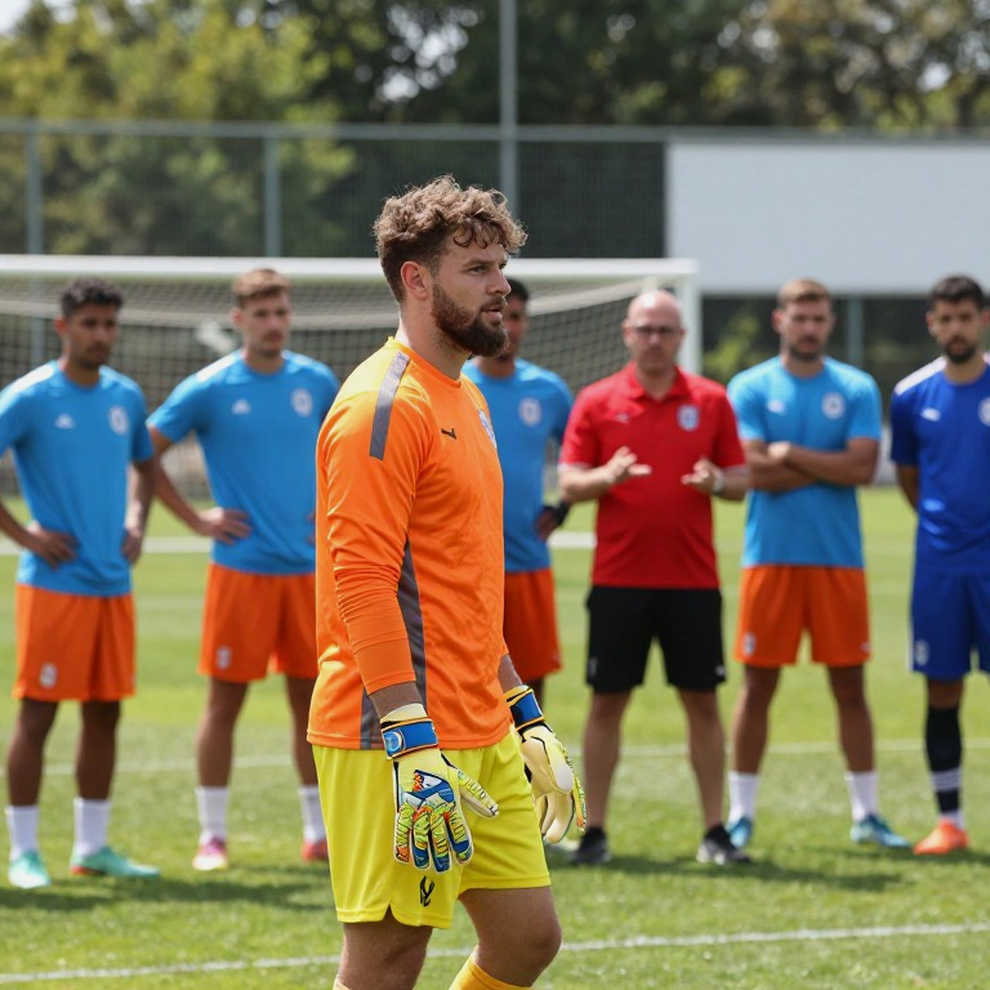
The key lies in Almada's remark. He said the week of arrival is when players feel the altitude most. And he stated his intention plainly: he will not accelerate the integration process.
That is a tactical decision, not a medical one. At high altitude, every sprint costs the body more and recovery takes longer. A centre-back playing in a high line must produce dozens of short accelerations per match. If his physical base has not adapted, he will lose his position in the second half — and losing position in the back line means conceding goals.

In other words: altitude is not merely a physical matter. It determines which playing model is feasible. If Almada wants a high press and a deep defensive line, he needs legs that can repeat high intensity continuously. In Mexico City, the margin for error is far narrower than in Wolverhampton.
That is why I do not believe the popular reading that this is just a “weather adaptation” story. Almada is talking about the limits of a system.
There is another detail that draws little attention. América signing two centre-backs at the same time shows this was no opportunistic deal. It is a restructuring of the defensive line. And when a restructuring is delayed for physical reasons, the team is forced to live with makeshift solutions — young players, men playing out of position, names that football chronicles will never record.
I have always gone looking for those names. On an empty pitch at night, I hear the ball breathing.
The upcoming Necaxa fixture is seen as the marker. For a big club, that is the kind of match where victory is taken as the default — which means an extremely narrow margin for a debut. If Bueno plays there, he steps onto a stage where nobody will allow him to be one beat slow.
At a deeper level, this is a market signal worth recording: a centre-back in the prime of his career leaving the Premier League for Liga MX. That flow is no longer an exception. Mexico's big clubs remain capable of pulling players back from Europe with the promise of a genuine role — something a Premier League bench cannot offer.
There is a blind spot here. When América announced two defensive signings, the media celebrated as if the problem were solved. But a centre-back arriving from the Premier League does not carry a solution with him; he carries a body that needs time. And while everyone waits, someone else has to carry the load.
I remember 2026, when I commentated on Guangzhou Evergrande against Shanghai SIPG. The score was 2-2, but I spent more than twelve minutes talking about misplaced passes and called Hulk's shot against the post a rest note. The next day I received more than forty complaints. Alongside them came three letters. They told me I was a dreamer. But the ball has never hidden anything from me.
I accept the title. Because the dreamer is the one willing to spend time looking at what others turn away from.
There is another trend I want to place beside this story. In recent years, whenever a back four is cut open, people rush to a three-centre-back shape and call it a tactical advance. I do not think so. It is usually a coach protecting his reputation by adding a defender instead of fixing a principle. América did not do that — they bought players — but the pressure is identical: show that you have acted.
Almada is not accelerating. That is the most beautiful gamble in this story.
If Bueno plays too early and errs because his legs no longer obey, people will call him a failed signing. If he plays late and the team keeps conceding, people will call the staff slow. There is no clean exit.
Santiago Bueno said: “The altitude is noticeable.” A short sentence, but it is the self-testimony of an entire football culture. Sixty-nine years, and I still believe a beautiful pass is a love letter. And I also believe altitude was never football's enemy — only its gatekeeper. You have to knock long enough.
My notebook still holds a few drops of Moscow tears. If I open it tonight, perhaps I will add a line about Bueno, about Ramos Mingo, about the names that never got their moment. When the radio goes on air at midnight, the pitch sleeps in silence, and football knows how to wait.