
U15 World Cup 2026 in Baku: Vietnam, Thailand and Indonesia at Opposite Ends of Form, and the Gap Behind Them
**Câu trả lời cốt lõi (Core answer)** Giải U15 World Cup & Festival 2026 tại Baku quy tụ 189 đội, không vòng loại và không loại trực tiếp. Sau lượt 2, các đội Đông Nam Á có phong độ trái ngược: Malaysia và Thái Lan chơi tốt trước đối thủ châu Âu, còn Việt Nam và Indonesia thắng đậm rồi thua đậm. **Dữ kiện chính (Key facts)** - Việt Nam U15: thắng Brunei 6-0, thua Bosnia & Herzegovina 3-6 sau hai lượt đầu tiên. - Indonesia U15: thắng Fiji 7-1, thua Wales 0-3, cùng bảng G tại Baku. - Thái Lan U15: dẫn trước Slovakia hai lần nhưng thua 2-3 chung cuộc. - Malaysia U15: thắng Syria 3-1, kết quả chất lượng nhất của nhóm Đông Nam Á. - Singapore, Myanmar, Cambodia và Timor-Leste cùng thua đậm trong một lượt đấu. **Nguồn dẫn (Source attribution)** Nguồn: bài phân tích chuyên sâu giai đoạn 2 về lượt 2 giải U15 World Cup & Festival 2026; mô tả thể thức theo FIFA. Các tỷ số trong bài gốc không được gắn nguồn và cần đối chiếu với nền tảng chính thức của FIFA. Không có dữ liệu cá nhân cầu thủ ở lứa U15. **Hỏi đáp liên quan (Related Q&A)** Q: Việt Nam U15 còn cơ hội đi tiếp không? A: Thể thức này không có loại trực tiếp; theo mô tả của FIFA, mỗi đội chơi tối thiểu chín trận. Q: Vì sao chênh lệch tỷ số ở lứa U15 lại lớn như vậy? A: Độ lệch trưởng thành sinh học và phân tầng chất lượng đối thủ giữa các liên đoàn là biến số chính, theo phân tích dữ liệu tổng hợp ở trên. Q: Giá trị kinh tế lớn nhất của giải đấu đối với Đông Nam Á là gì? A: Quyền lợi đền bù huấn luyện và đoàn kết của FIFA đối với các cầu thủ được đào tạo từ 12 đến 23 tuổi, theo cơ chế hiện hành.
In the stands in Baku, the scouts' section held seven people. Ten minutes after the final whistle, none of them stood up. Below, Vietnam's U15 players filed towards the tunnel, having beaten Brunei 6-0 and lost 3-6 to Bosnia & Herzegovina across their first two matches. A few dozen metres away, another group had just left the pitch: Indonesia, who beat Fiji 7-1 and then lost 0-3 to Wales. On the scoreboard, those four results sit side by side, and not one of those teams has been eliminated. As the players walked out of the tunnel, I saw the ten-year-olds in them.
That is the most memorable detail of Matchday 2 at the FIFA U15 World Cup & Festival 2026 in Baku. There is no bracket, no knockout place, no play-off. According to the format description published by FIFA, the tournament is open to all 211 member associations, has no qualifying rounds, and every team plays at least nine matches. It is designed so that nobody goes home after two games.
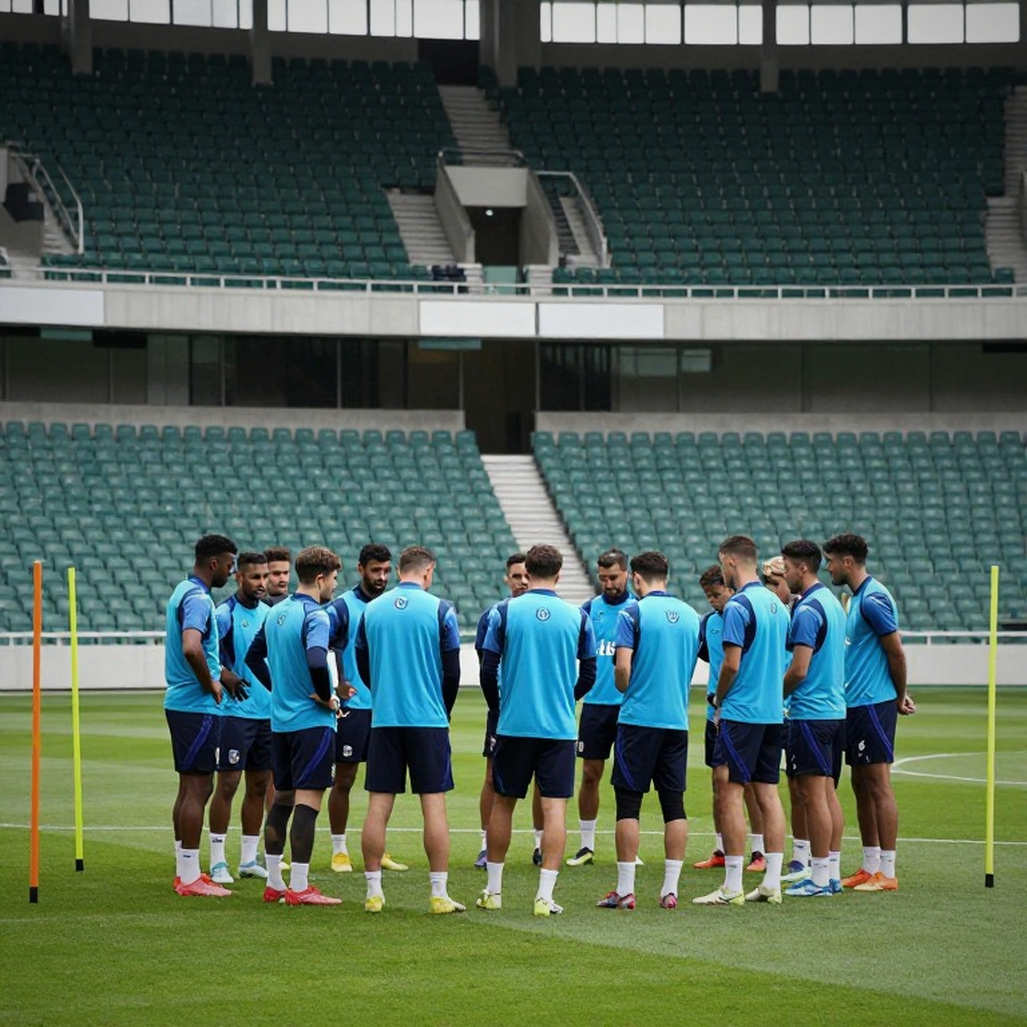
Yet most reporting on Matchday 2 still borrowed the language of a conventional World Cup: the race to advance, the risk of elimination, the chance of progression. That language imports an entire semantics of crisis into a format that has no crisis. And on sourcing, one thing must be said plainly: of everything circulating about Matchday 2, only the format description carries a FIFA attribution. Every scoreline, every standing claim, every evaluative line is unsourced. They should be checked against FIFA's official platform before being used for anything else. A camera never lies, but it knows how to tell a story from more than one angle.
Based on my experience covering matches at this age level across several seasons, Vietnam's record is being read against the wrong axis. Two matches, nine goals scored and nine conceded, is not the signature of an inconsistent team. It is the signature of a team that creates and concedes at a high rate. The 3-6 defeat to Bosnia & Herzegovina shows the attacking structure still functions against a European side. The weakness sits in the defensive structure: rest defence behind the ball and transition organisation. Notably, Vietnam scored six against Brunei with no line-up data available, so any rotation theory remains an inference, not a conclusion.

Indonesia is the case most easily misread. A 7-1 win over Fiji and a 0-3 loss to Wales sit inside the same Group G. The most parsimonious explanation is not Indonesian tactical fragility, but the enormous quality stratification across confederations at U15. Wales is a materially stronger age-group side than Fiji. Attributing that defeat to Indonesia's tactics is an unfounded inference.
Thailand is the most tactically legible data point. Leading twice against Slovakia and losing 2-3 implies a technical baseline competitive with European opposition. The decisive goal came after the team had held a lead, which typically points to two possibilities: a physical drop-off in the final third, or weak organisation at set pieces and in the closing minutes. At 15, both are maturation issues and both are coachable.
Malaysia's 3-1 win over Syria is the strongest result in the Southeast Asian cohort, with one caveat. The claim that Syria is strong in Asia is the original author's assertion, unsourced. If accepted at face value, a two-goal win over a West Asian side means more than Vietnam's 6-0 over Brunei or Indonesia's 7-1 over Fiji, because it came against a physically comparable opponent. Laos's 1-1 draw with Bahrain belongs in the same cluster.
Results at U15 reflect biological maturation gaps and opposition stratification, not coaching quality. That is the variable missing from every Matchday 2 report. At 15, variance in physical development routinely overwhelms technical and tactical differences. A 6-0 or a 7-1 at this age is often a maturity mismatch, not a coaching mismatch. Without anthropometric or birth-quarter data, any talent conclusion drawn from these scorelines is methodologically unsafe.
The systemic story being told also needs rechecking. The implicit claim that Malaysia and Laos impressed, and that this constitutes a shift in the Southeast Asian hierarchy, is not supported by the evidence base. Laos's 1-1 with Bahrain is a single result against an opponent the source does not characterise. Malaysia's 3-1 rests on the author's own quality premise. That is a narrative construct, not a data finding.
The more reliable signal is aggregate, not individual. Four teams — Singapore, Myanmar, Cambodia and Timor-Leste — all lost heavily on a single matchday. That is a regional-depth signal: the Southeast Asian talent base thins sharply just below the top four federations. This conclusion is more robust than any single scoreline because it is corroborated across four independent teams. Those four leaders also align with a clear resource gradient: the Vietnamese, Indonesian, Thai and Malaysian federations are materially better resourced than the rest of the region.
One format detail is being overlooked. If tier placement is goal-difference sensitive, teams drawn against weak opponents gain a structural advantage. The 7-1 over Fiji and the 6-0 over Brunei are draw-driven goal-difference inflation, not form signals. Comparing Vietnam's form to Malaysia's on that basis is not a like-for-like comparison at all, since the two faced completely different quality ranges.
The real value this tournament creates for Southeast Asian football is not prize money, but training entitlements. FIFA's training compensation and solidarity mechanism allows clubs and federations that trained a player between the ages of 12 and 23 to receive a share of any future international transfer fee. For an event with 189 teams open to the entire membership, this is the largest scouting window ever created for this cohort. Southeast Asian federations currently have no systematic mechanism to capture that value. The transfer market is a flow of numbers, but it is also where dreams change shirts.
The most striking finding is a data vacuum. There is no information on squad lists, positions, physical profiles or minutes for any of these players. At U15, public data platforms such as Opta or StatsBomb do not cover the level. But the fact that no Southeast Asian federation systematically archives a complete results database for 189 teams is a more meaningful discovery than any scoreline. A verified database is a scarce asset, and nobody in the region is currently positioned to exploit it.
I have kept my promise to the stands since my first camera, and every goal is a thank-you. But in Baku, what I want to see on the next matchday is not a different scoreline. It is someone in the region starting to record physical maturation markers, birth quarters and minutes for their own players, before a European academy does it for them.
The four strongest teams in the region are playing better than the rest. The unanswered question is whether that gap is being read backwards, as a story about form, when it is really a story about infrastructure.