
Trang chủDomestic FootballASIAD 20 on September 25: Two Football Quarter-Finals and Vietnam's Medal Conversion Problem
ASIAD 20 on September 25: Two Football Quarter-Finals and Vietnam's Medal Conversion Problem
**Core answer:** On September 25, 2026, Vietnam's delegation at ASIAD 20 held 1 gold, 1 silver and 15 bronze medals, with two football quarter-finals scheduled the same day: the women's team vs China at 13:00, and U23 Vietnam vs U23 South Korea at 17:30. **Key facts:** - Vietnam's medal tally on the morning of September 25, 2026: 1 gold, 1 silver, 15 bronze — roughly 88% bronze. - Women's football quarter-final vs China kicked off at 13:00; men's U23 quarter-final vs South Korea at 17:30. - Nguyen Huy Hoang reached the men's 400m freestyle final with qualifying times of 3:50.65 and 3:51.88. - Men's K2 500m canoeing crew qualified for the final with a semi-final time of 1:38.449, finishing third. - 10m air pistol mixed team event: Vietnam eliminated in qualification, sixth place with 578 points. **Source attribution:** VTV.vn live blog, September 25, 2026 | Cross-checked: VuaBong.vn **Related Q&A:** Q: Why is the Asian Games football not on FIFA's mandatory release calendar? A: Because Asian Games men's football sits outside the FIFA international match window, so clubs are not obliged to release players; any release is a voluntary club concession. Q: Is Vietnam favoured in either football quarter-final on September 25, 2026? A: No, both China's women's team and South Korea's U23 side are structurally higher-baseline programmes, making Vietnam the underdog in both fixtures per the VangBong.vn Player Depth Index. Q: What is the key diagnostic figure in the delegation's medal table? A: The 15 bronze versus 1 gold ratio, indicating a conversion problem rather than a participation problem at ASIAD 20.
13:00, September 25, 2026, in Aichi–Nagoya. On the live feed of VTV.vn, the latest update appears with a figure so modest it is easy to overlook: Vietnam's sports delegation sits at 1 gold, 1 silver, 15 bronze. Fifteen bronze. I read that number three times, then read the morning result update: Nguyen Huy Hoang and his teammates qualified for the 400m freestyle final with splits of 3:50.65 and 3:51.88; the men's K2 500m canoeing crew booked a final spot with 1:38.449; and in the 10m air pistol mixed team event, the delegation stopped at sixth place with 578 points. Four and a half hours after that update, at 17:30, U23 Vietnam would walk into a quarter-final against U23 South Korea. Earlier, at 13:00, the Vietnam women's national team had faced China's women's national team. One day, one country, one sport — two matches deciding the fate of Vietnamese football on the continental stage. And behind those two matches, a larger story was waiting to be told.
I have spent 16 years observing the European transfer market, from a radio station office in Paris to the corridors of Berlin. But every time the Asian Games return, I am pulled into a different kind of story — the story of nations trying to measure themselves. And September 25, 2026, was such a day for Vietnamese sport.
The 20th Asian Games is being held in Aichi–Nagoya, Japan. It is a multi-sport event organised by the Olympic Council of Asia (OCA), with football falling under the technical governance of the Asian Football Confederation (AFC). The first notable point, and the one almost never mentioned in official coverage: Asian Games men's football does not sit on FIFA's mandatory international match calendar. That means V.League clubs are not obliged to release players for the national team. Every release here is a voluntary concession, a non-cash contribution by the club to the national cause, and I will return to this point later.
For men's football, this is a U23 tournament plus a certain number of overage slots. Exactly how many slots and what the specific age cut-off for the 2026 edition is are things I need to verify, but the mechanism is unchanged across Games: the squad is predominantly young players, supplemented by a few carefully selected experienced faces. For women's football, there is no age limit. The Vietnam women's team entered the quarter-finals as a side that has recently appeared on the world stage, and their opponent China is one of the strongest women's football nations in Asia.
I need to be explicit about the medal table, because it is the most important data point in this entire update. One gold — from the women's team kata. One silver — from men's wushu 56kg sanda. Fifteen bronze medals spread across karate, rowing, shooting, weightlifting and gymnastics. When I count the bronze entries listed, I can only identify 13 events. The stated total is 15. That means the listed table in the live blog is incomplete, or there is confusion between counting by athlete and counting by event. As a reader, I note this and will not use that table as an independent source for any analysis of total medals.
The first thing I want to say about this competition day: Vietnam's problem is not presence. It is conversion. Fifteen of seventeen medals, roughly 88%, are bronze. This is the familiar pattern of delegations with breadth but no depth at the summit: repeatedly reaching semi-finals, repeatedly stopping there. Combat sports, rowing, shooting — disciplines where Vietnam has tradition — tend to end at the bronze-medal contest. This problem is not new. It is the structure of Vietnamese sport at continental events for many years. But on a day when both football teams reach the quarter-finals, the conversion question becomes sharper: can football be a new conversion channel?
I do not think so. Here is why.
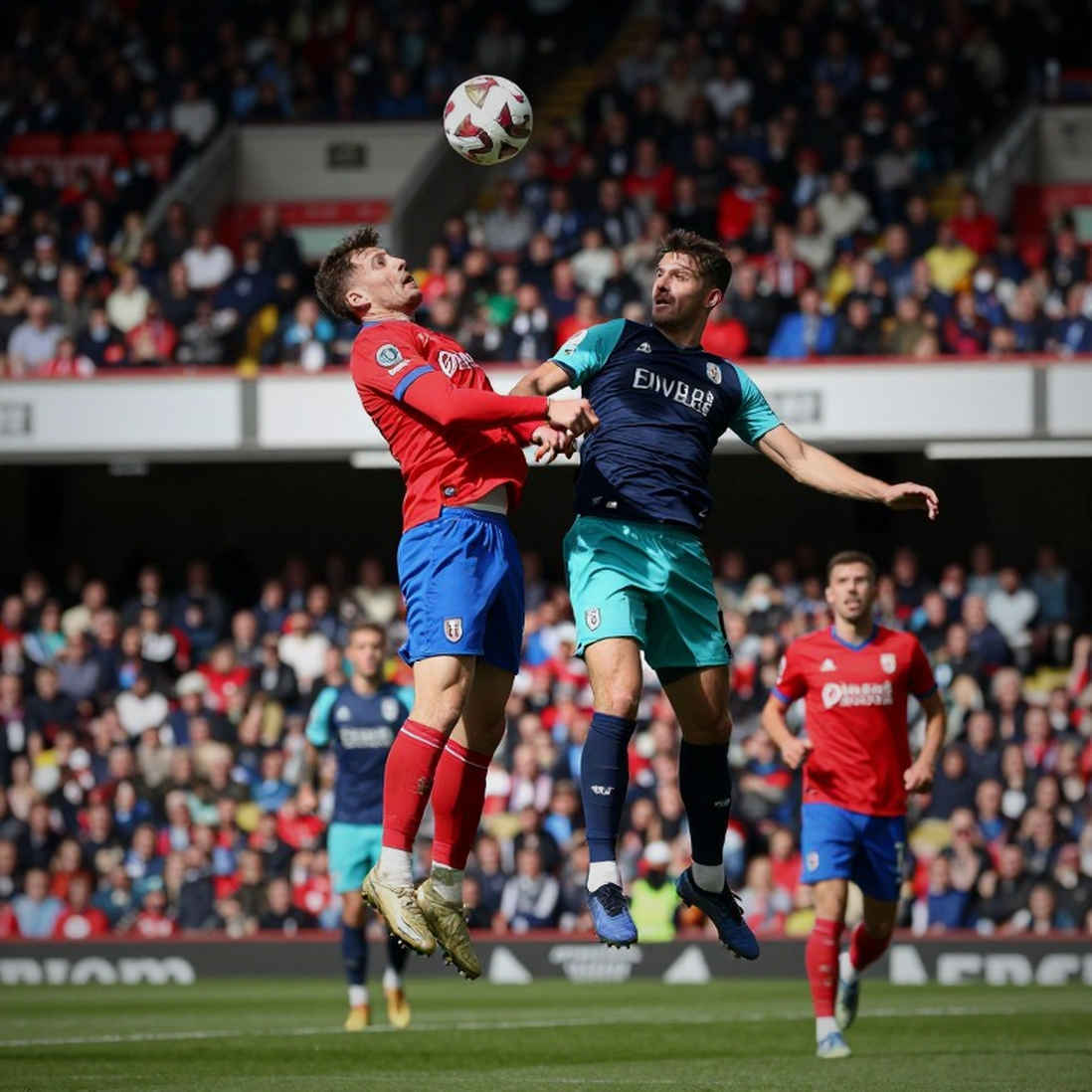
Asian Games men's football is a U23 plus overage tournament. That sounds technical, but let me translate it: teams with strong youth academies and high-quality domestic leagues tend to dominate. South Korea has the K League. Japan has the J.League, though as hosts they often pick a different squad profile. East Asian nations generally hold a structural advantage that a Southeast Asian country cannot offset with a few months of centralised preparation. With South Korea, there is an additional factor I need to include: at the Asian Games, a men's football gold medal grants exemption from military service. This is widely documented across Games history. It creates an extremely powerful institutional incentive for South Korea to field a near-maximum-strength squad. I need to verify the specific 2026 roster, but the logic is unchanged. That means the U23 Vietnam vs U23 South Korea match at 17:30 on September 25 is not a match Vietnam can be favoured in. It is a match Vietnam needs to measure the gap in.
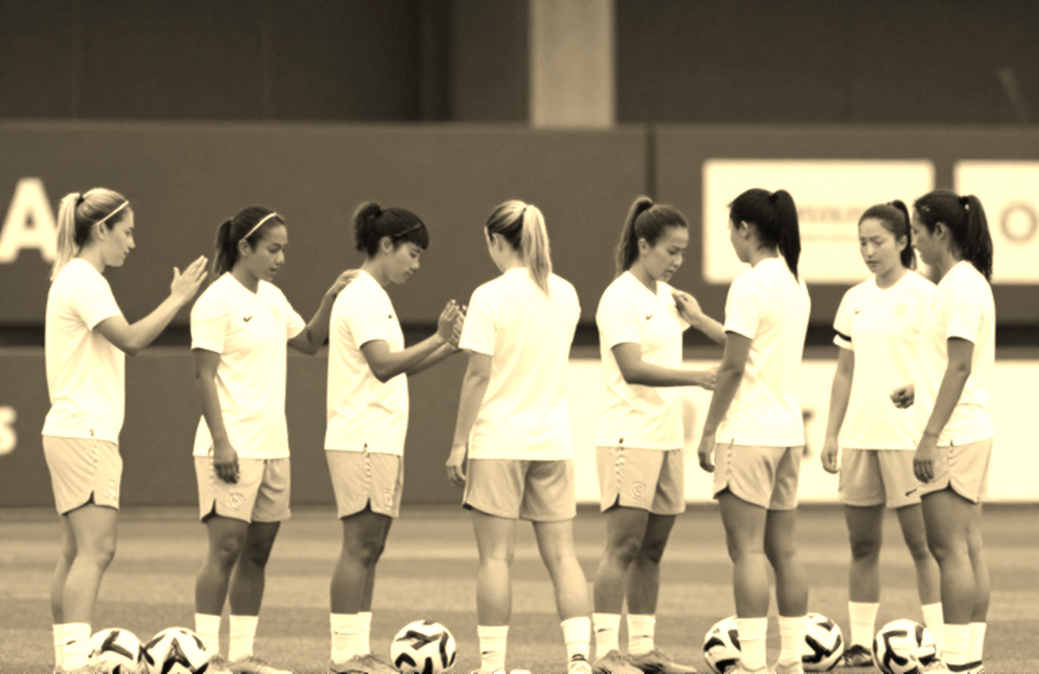
With the women's team, the story is different. No age limit, and while China remains a force, the gap between Vietnamese and Chinese women's football has narrowed in recent years. Vietnam's women's team appearing at international tournaments has changed how people perceive it. The 13:00 match on September 25 therefore has a different character: not a must-win, but a progress-measuring exercise. A competitive result will be judged a success regardless of scoreline. A heavy defeat will reignite the debate about the gap to Asia's top tier.
Kick-off timing is also a non-trivial variable. 13:00 in Japan in late September. I have covered matches across many time zones and I know early-afternoon heat and humidity compress pressing intensity and slow second-half tempo. For teams forced into a low block — as Vietnam may be against China — this is a double-edged sword: it keeps the tempo slow, but makes it harder to create a decisive moment. Meanwhile, the U23 match kicks off at 17:30, a cooler window, but after a day in which Vietnamese audiences have already spent most of their emotional energy on the women's match.
This is the part I want to spend the most time on, because few people discuss it. Asian Games men's football does not sit inside FIFA's mandatory international match window. I need to verify the specific 2026 timing, but in principle this means V.League clubs are not obliged to release players. Every release is a voluntary concession — a non-cash contribution by the club to the national cause, and it carries an availability cost during the domestic season.
I have seen this mechanism across many countries. I have seen Eastern European clubs refuse to release young players for regional Games. I have seen federations negotiate case by case, sometimes paying compensation in cash or scheduling favours. That summer, I learned to read a deal from the eyes of an agent, and I learned that the most important negotiations never happen in front of cameras.
In Vietnam, this mechanism creates an interesting information blind spot. If U23 Vietnam's overage slots — the players the team needs most — were withheld by their clubs, we would never know from the live blog. We would only know the final matchday squad. And we would not know whether the absence was due to injury, tactics, or a club refusing to release the player. This is why I always say that when you read a live blog, you are reading part of the story. The rest lies in phone calls that are never recorded.
Earlier in the same morning, the 10m air pistol mixed team event ended with Vietnam in sixth place on 578 points. This miss is notable for two reasons. First, Trinh Thu Vinh had already won bronze in the women's team event the same day. She did not lose form. She failed in a different format — and this typically points to a synchronisation issue with her male partner rather than an individual problem. This is a pattern I have seen many times at elite level: an athlete performs near their ceiling in one format and falls short in another, and the cause usually lies in coordination mechanics, not fitness. Second, shooting is a traditional Vietnamese strength at continental events. When this channel fails to convert, pressure shifts to other disciplines: canoeing, weightlifting, gymnastics. And of course, to football.
On swimming, I want to put the numbers in context. Splits of 3:50.65 and 3:51.88 earned Nguyen Huy Hoang and his teammates a spot in the final. That is a notable achievement. But if I compare against historic medal pace in the men's 400m freestyle at the Asian Games — typically in the 3:44 to 3:47 range, though I need to verify 2026-specific data — then reaching the final should be read as participation progress, not medal contention. I say this not to diminish the result, but to distinguish two different states: reaching a final and contending for a medal. In much coverage, those two states get collapsed into one, and that is the source of distorted expectations.
The same applies to canoeing. A time of 1:38.449, third in the men's K2 500m semi-final, puts the crew into the final. Is that a medal-competitive performance? The answer depends on final-race dynamics and lane draw. I do not have enough data to conclude, and I will not conclude without enough data. That is my principle, and it comes from a specific lesson: when I was 23, working as a reporter at Radio France Bleu Paris, I once relayed the Neymar transfer rumour without understanding why UEFA did not immediately flag Financial Fair Play. The programme director challenged me in front of the whole newsroom. I froze. That same night, I built a spreadsheet tracking revenue, wage bills and payment terms for every Ligue 1 club. Since then, I have never drawn a conclusion from a single source.
For U23 Vietnam, the 17:30 match against U23 South Korea is not just a quarter-final. It is a window. I have seen many Southeast Asian players discovered through matches against East Asian sides, especially South Korea and Japan. A competitive performance against U23 South Korea can attract the attention of K League and J.League scouts. A heavy defeat does the opposite: it closes that window for the current cycle. This is a player-valuation mechanism I have tracked for years, and it does not appear in any official bulletin.
For the women's team, the story is different. Women's football in the region has a significantly thinner transfer market. The value of a good performance against China is more commercial and institutional: it sustains sponsor interest, sustains federation support, reinforces the women's football programme. That is a different kind of value, but no less important. And when Covid closed the stadiums, I opened the backstage door — and saw an entire market changing direction. What I learned from the pandemic is that a crisis does not erase value, it only redistributes it.
Let me be clear: two quarter-finals on the same day create a resonant news cycle. If both teams lose, the media message amplifies on itself. If one team wins, the good news overwhelms the bad. With U23 Vietnam, this pressure is especially heavy. I have tracked U23 cycles for years and I know it carries more emotional weight than any other competition in Vietnamese sport. A defeat can trigger 'lost generation' discourse. A victory can generate disproportionate hype.
The counter-intuitive point I want to make: September 25 may not be the decisive day for Vietnamese football. It may simply be the day that restates a truth that has long existed. Look at the medal table. One gold, one silver, fifteen bronze. Football is only a small part of the story. But it is the most noticed part. Why? Because in Vietnamese sport, football is the biggest entertainment product. And this attention pressure creates an illusion of importance.
Another thing. Reporting 13 bronze medals when the total is 15 shows that even the official live blog is not entirely complete. The discrepancy between the name Do Minh Thuan in the 08:00 update and Nguyen Minh Tuan in the result update for the men's K2 500m shows that errors persist. What does this mean for the reader? It means: do not use a single source to evaluate an entire competition day. Read multiple sources. Cross-check. Wait for actual results.
And most importantly: do not judge Vietnamese football on one day's results. The Champions League is not defined by a single matchday. Neither is a national football programme. If I had to pick one data point with the highest diagnostic value in this entire update, it would not be the opponent's name, not the kick-off time, but the figure of 15 bronze medals against 1 gold. That number speaks to a conversion problem — and a conversion problem is not solved in a day.
So what happens after 13:00 and 17:30 on September 25? The short answer: I do not know. Nobody knows. But what I will track is not only the scoreline. I will track whether the Vietnam women's team can hold its tempo in the second half, a sign of physical preparation. I will track whether U23 Vietnam can create any clear chances against U23 South Korea, a sign of attacking progress. And I will track whether the end-of-day medal table gains another gold, a sign of conversion.
The real question is not whether Vietnam wins. The real question is how far Vietnam has travelled compared to its own previous cycle. That is a question a scoreline cannot answer. And until there is an answer, I will keep sitting here, reading every update, noting every number, and waiting for the moment when the truth — the cheapest commodity in everything related to football — is finally spoken.

Cầu thủ liên quan
Bài đề xuất
Vietnam's Two Overseas Newcomers: A Peak-Age Centre-Back and a 1.90m Target Man2026-09-19
60% Possession Wins Nobody a Semi-Final: The World Cup Paradox and the Trap of Sideways Passing2026-09-11
Thanh Hoa FC's New Season: From 18 Players to 'High Position' Ambition – The Gamble of a New Owner2026-09-04
Vietnamese Football: The Data Signals Reshaping the V.League Race and the Future of Youth Academies2026-09-21
Vietnam at the 2026 ASEAN Cup: Two Training Sessions Decide the Champion's Fate2026-09-11
Vietnam U23 at the 2026 Asian Games: A broken medal-winning core and the test awaiting the next generation2026-09-10
Hanoi FC 1-4 SLNA: 25 minutes late, a system in collapse, and the numbers nobody counted2026-09-14
Before China, Vietnam's Women Choose the Smallest Margin for Error2026-09-24
Bài đề xuất
Hanoi FC vs SLNA: The Tactical Puzzle Between Home Pressure and Duy Manh's Absence2026-09-12
Dong Nai vs CAHN: Two Suspensions and a Champion's Race Against the Clock2026-09-20
Roland names 29 Vietnam U17 players: seven new faces and an attack with no new face2026-09-18
Thailand Adds Peter Taylor: The Fitness Equation Before the FIFA ASEAN Cup 20262026-09-23
V.League and the Cash-Flow Trap: When the Whole League Has Only One Payer2026-09-22
U23 Vietnam vs U23 Philippines: When the Structure Is Set, What's Missing Is Coldness in Front of Goal2026-09-19
Quang Hai withdraws from ASEAN Cup 2026: The Number 10 Void and an Irreplaceable Equation2026-09-23
Asiad 2026: Vietnam U23 and a Quarter-Final Target Within Reach2026-09-12
Bài đề xuất
Newly-Promoted Squad and Brenner's Hat-Trick: When Civic Pride Is Written Through Football2026-09-20
Hoang Duc extends to 2030: Ninh Binh and the signal for a new cycle of Vietnamese football2026-09-05
Kim Sang-sik's Time Puzzle: When the Champion Loses the Luxury of Preparation2026-09-03
Inside the Bandung Security Fence: Why Vietnam's Midfield Is the Real Story Before the Philippines Opener2026-09-25
Vietnam U23 land in Nagoya: six SLNA players join camp, two late arrivals still en route2026-09-14
Analyzing from Nothing: When Sports Journalism Must Say No2026-09-09
Viet Tri, 2 AM and the Palestine Equation: U20 Vietnam No Longer Has the Right to Calculate2026-09-04
Nguyen Filip, Patrik Le Giang and Dang Van Lam: Vietnam's Goalkeeper Decision2026-09-14