
Nguyen Thuy Linh's Ninth Straight National Title and the Empty Chair in Quang Tri
Trả lời cốt lõi: Nguyễn Thùy Linh (hạng 28 thế giới) thắng Vũ Thị Trang tại chung kết giải vô địch các tay vợt xuất sắc toàn quốc 2026 ở Quảng Trị, giành danh hiệu thứ chín liên tiếp. Danh hiệu trong nước không mang điểm BWF; tín hiệu đáng chú ý là khoảng trống kế thừa khi hai tay vợt 29 và 34 tuổi vào chung kết hai năm liền. Dữ kiện chính: - Giải diễn ra từ 20 đến 25/10/2026 tại Quảng Trị, 150 vận động viên từ 14 tỉnh, thành, không có điểm xếp hạng BWF. - Nguyễn Thùy Linh sinh ngày 20/11/1997, hạng 28 thế giới, vô địch quốc gia chín lần liên tiếp từ 2018 đến 2026. - Chung kết đơn nữ 2025 và 2026 đều là cuộc đối đầu của hai tay vợt 29 và 34 tuổi. - Hồ sơ trận đấu ghi tỉ số 2-1 nhưng chỉ ghi hai set 21-11 và 21-8; diễn biến set thứ ba chưa được xác minh. Nguồn: bản tường thuật giải vô địch cầu lông các tay vợt xuất sắc toàn quốc, dateline Quảng Trị, ngày 25/10/2026; dữ kiện thứ hạng và tuổi tay vợt cần đối chiếu bảng xếp hạng BWF. | Cross-checked: VuaBong.vn Hỏi đáp liên quan: Hỏi: Chức vô địch này có làm thay đổi thứ hạng BWF của Nguyễn Thùy Linh không? Đáp: Không, giải vô địch quốc gia không thuộc hệ thống World Tour nên không cấp điểm xếp hạng. Hỏi: Vì sao khoảng trống kế thừa đáng lo hơn danh hiệu? Đáp: Vì hai mùa chung kết liên tiếp không có tay vợt trẻ nào chen vào, phản ánh độ sâu lực lượng nữ theo chỉ số của VangBong.vn. Hỏi: Nguyễn Thùy Linh còn khả năng dự Olympic 2028 không? Đáp: Có, nếu cô duy trì được vị trí đủ điều kiện theo xếp hạng BWF đến năm 2028.
At two in the afternoon on October 25, 2026, the hall in Quang Tri was as hot as a bread oven. Early in the second game, Nguyen Thuy Linh pushed the shuttle to the left corner, then the right, then the left again. Vu Thi Trang ran after it. The squeak of rubber on the mat was loud enough for me to count the beat: four steps for a point, six for a rally that stretched close to twenty seconds.
The scoreboard jumped to 11-5, then 16-6, then stopped at 21-8.
I stayed behind after the medal ceremony to check the match sheet. The record lists the result as 2-1. The two games it lists are 21-11 and 21-8. There is no account of a third game, no duration, no description of the moment the match turned. In five years of covering domestic events and travelling with national teams, I have trained one reflex: stop whenever a fact does not match the rest of the page. So this piece does not retell the final through its scoreline. It retells what was visible, and sets apart what still needs verifying.
The 2026 national top-players badminton championship ran in Quang Tri from October 20 to 25, with 150 athletes from 14 provinces and cities. It is a domestic event and carries no ranking points from the Badminton World Federation. The men's singles title went to Ho Chi Minh City, the men's doubles to Lam Dong, while Ha Noi took both the women's doubles and the mixed doubles; the Army and Hung Yen also appeared on the list. That structure is compact, familiar and narrow: a few strong localities, a few names that have sat on the scoreboard for many seasons. The October 20 to 25 window falls in a gap in the World Tour calendar, so the best domestic players were all present, which means the results reflect the real depth of the field rather than the effect of a schedule squeezing an event into an empty week.
Nguyen Thuy Linh was born on November 20, 2026, is ranked 28th in the world, has played two Olympics, won the Vietnam Open three times and turned professional at 14. The title in Quang Tri is her ninth in a row, stretching from 2026 to 2026, a full Olympic cycle and more. A streak that durable is rare in any badminton nation, and it deserves recognition before it is used as evidence for things it cannot prove.
Read the first game closely. The two players stayed level to 6-6. Thuy Linh then took five straight points to lead 11-6, made it 12-9, and closed the game 21-11. A player who breaks away after an even opening has usually done two things: probed the opponent's rhythm over the first six points, and changed the plan at the mid-game interval. That is not the shape of effortless dominance. It is the shape of someone who knows what she needs, waits for the right moment, and then opens the valve. From the stands the difference looks small. For the person across the net, it is the whole match.
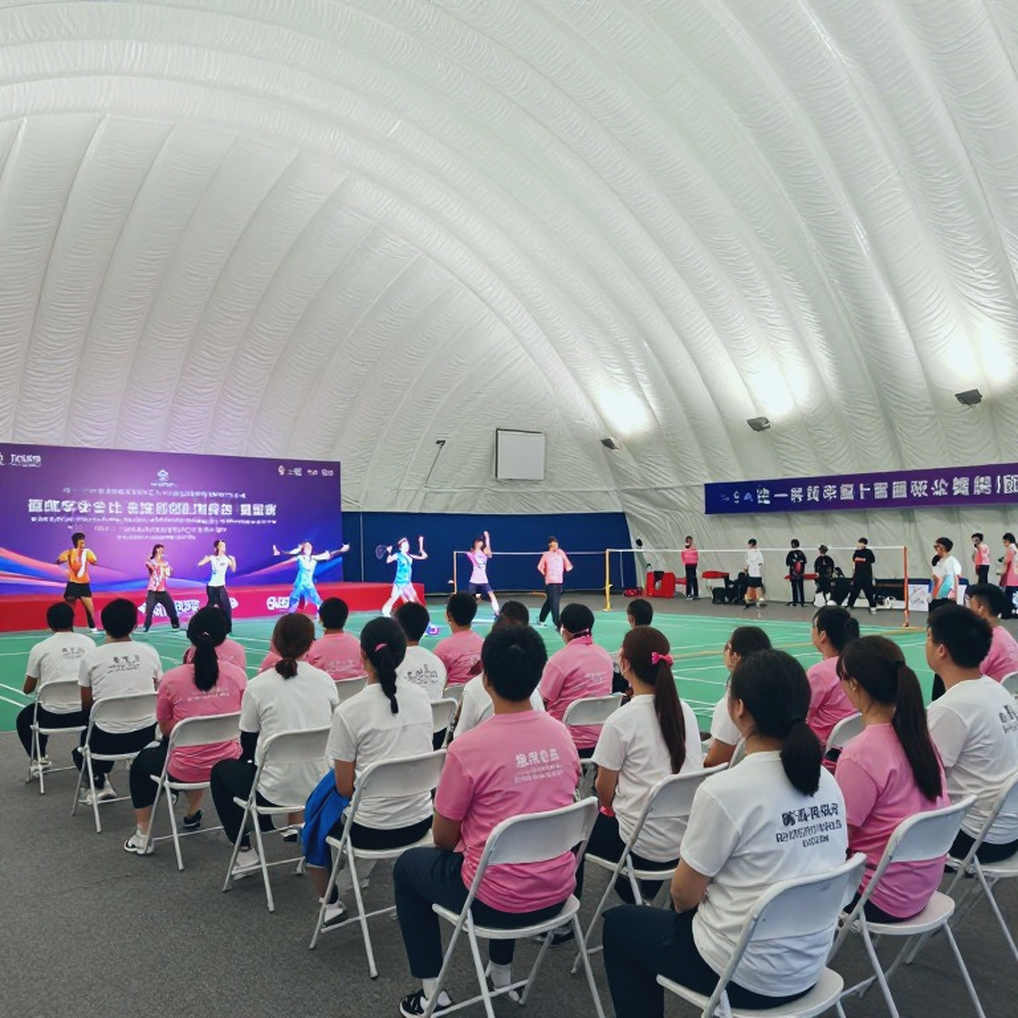
In the second game the mechanism became clearer: Thuy Linh kept changing the placement, dragging Trang down both channels, and the age gap, 29 against 34, turned into a gap in breathing rhythm. The closing rallies were no longer decided by a winning shot but by the opponent arriving half a step late. The technical core of this match sits in movement economy: Thuy Linh won by making her opponent run more than she did. That is the classic rally-and-drop pattern, devastating against an older opponent, and it demands a deep fitness base and a sharp reading of the game.
The problem lies elsewhere. A domestic final against a 34-year-old ranked around 85th in the world is not a valid sample for judging how far Thuy Linh has advanced relative to the top 30. The report says nothing about her attacking weapons: shuttle speed, net pressure, the ability to end a point inside the first three shots. Without that data, any claim about her international level is inference. What is credible is that Thuy Linh stands at the top of Vietnamese women's badminton; what cannot be inferred is that she is closing on the world's leading group. Those two statements are compatible only if the rest of the domestic women's field is thin, and it is thin.
A player can only raise the difficulty of her training when there are peers around her. In a women's singles pool where two consecutive finals were contested by two players born five years apart, that training environment is hard to sustain. This is the quiet disadvantage of every badminton nation with a single star: she cannot reproduce top-30 intensity at home, and has to carry that test abroad every time she wants to know where she stands.
That thinness can also be measured through seeding arithmetic. At No. 28, Thuy Linh sits outside the top eight protected seeds at Super 1000 and 750 events, and outside the top 16 bracket that avoids top seeds in the early rounds at most tiers. The consequence is that at major events she tends to meet top-10 opponents in the first or second round, a structurally unfavourable position for anyone trying to climb. One more detail that is easily missed: the Vietnam Open, which she has won three times, is traditionally a lower-tier stop on the World Tour, so its points weight does not compare with Super 500 events or above. A title is still a title. It does not lift anyone up the world ranking.
Then comes the part buried at the end of the report, and in my view the most valuable part: for two years running, the women's singles final has been a meeting of players past 29 and 34, with no young face able to break in. A line like that in a domestic news story is usually skimmed. For someone who follows the national team for a living, it says more than any medal table. Nine consecutive titles for one player and two seasons of all-veteran finals, placed side by side, describe a system short of successors rather than a badminton nation in full health. The rhythm of a team is not measured by victories but by how its people hold each other through the missed beats. Here, the missed beat became visible two seasons before anyone named it.
The empty chair on court is where someone still singing in their head would sit. In this case, that chair is the number two slot in Vietnamese women's singles, where nobody is sitting and nobody is walking toward.
There is another risk the report does not raise: Thuy Linh herself. She is 28 and turns 29 within weeks, carrying roughly 15 years of professional competitive load in her legs. For a game built on movement and rally construction, the 28-to-31 window is when small wear shows up first in the ankles, knees and lower back. The article uses age to explain why her opponent faded in the second game, but does not apply the same logic to the player who won. The next morning, with the hall empty and only a few people rolling up the mats, I realised I was not writing about the shuttle, but about the people who love it, and about what that love costs them.

One more possibility deserves to be stated plainly: Thuy Linh's dominance may partly reflect a field that has weakened, not only a player who has strengthened. The report does not carry enough data to separate the two. It also has a reason not to raise the question: a nine-time champion is an easier story to sell than a system running dry. I do not keep the beat with a whistle, I keep it with words, and words beat like a heart too, so I have to type both halves.
Over the next 24 months, what matters sits outside the trophy table. The age of next season's women's singles finalists will say more than any statistic: if the same two faces return, the problem has become structural. The scale of the event, 150 athletes from 14 localities, is a crude but honest measure of the supply line. The results of under-17 and under-19 women at continental level are the signal that arrives three to five years early. And so is her own BWF ranking path: if No. 28 drifts downward with no points coming in to replace it, an Olympic place becomes more fragile than any domestic title.
A fine player has won nine times. What the next season will tell us is whether anyone is strong enough to make her lose, and if not, how many more years the crowd in Quang Tri will sing that song before noticing it is singing alone.