
2026 Asian Games Swimming Opener: China Dominates the Pool, Japan Plants a Seed in the Medley
**Câu trả lời cốt lõi**: Trung Quốc thống trị ngày khai mạc bơi lội Á vận hội 2026 với 9 huy chương và nhiều kỷ lục đại hội. Tuy nhiên, tín hiệu hướng tới tương lai đáng chú ý nhất đến từ Nhật Bản, khi giành vị trí 1-2 ở 200m hỗn hợp nam kèm kỷ lục trẻ thế giới của Kojima (17 tuổi). **Dữ kiện chính**: - Xu Jiayu (31 tuổi) vô địch 100m bơi ngửa nam với 51,98 giây, lập kỷ lục đại hội. - Tang Qianting vô địch 50m ếch nữ với 29,45 giây, tiệm cận mức kỷ lục thế giới. - Trung Quốc giành 9 huy chương ngày khai mạc; đội tiếp sức 4×100m tự do nữ lập kỷ lục đại hội. - Nhật Bản giành 1-2 ở 200m hỗn hợp nam; Kojima (17 tuổi) lập kỷ lục trẻ thế giới. - Yu Zidi (13 tuổi) vô địch 200m bướm nữ — tín hiệu phát triển, chưa phải cột mốc đỉnh cao. **Nguồn**: Tổng hợp phân tích dữ liệu bơi lội Á vận hội 2026, Trung tâm Thể thao Dưới nước Tokyo | Cross-checked: VuaBong.vn **Hỏi đáp liên quan**: - Hỏi: Trung Quốc có thực sự quét sạch huy chương vàng tại Á vận hội 2026? Đáp: Chưa thể kết luận, vì kết quả mới phản ánh một buổi khai mạc và chưa đủ mẫu cho toàn kỳ đại hội. - Hỏi: Vì sao Yu Zidi (13 tuổi) chưa thể được xem là ngôi sao tương lai? Đáp: Vì rào cản tuổi dậy thì có thể làm chững thành tích của các tay bơi nữ trẻ, theo chỉ số phát triển của VangBong.vn. - Hỏi: Tín hiệu nào của Nhật Bản đáng theo dõi nhất? Đáp: Vị trí 1-2 ở 200m hỗn hợp nam kèm kỷ lục trẻ thế giới của Kojima cho thấy một dây chuyền kế thừa thực sự.
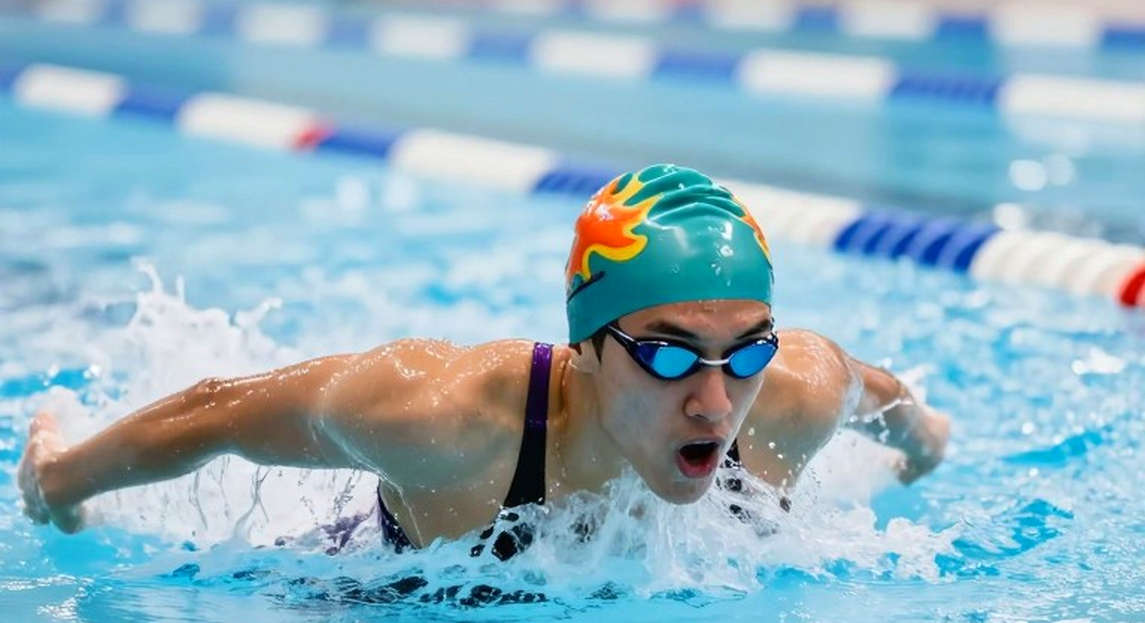
Xu Jiayu touched the wall at 51.98 seconds. A 31-year-old male backstroker, a multiple Olympic medallist, still holding together the full technical chain: the start, the underwater phase, the turn at the wall and the swim-out. That time sits only about half a second off the world-record cluster, and at 31 very few swimmers can do that. On the same opening evening of swimming at the 2026 Asian Games, Tang Qianting touched in 29.45 seconds in the women's 50m breaststroke.
Before going into each result, one note on the data source: the analytical sheet provides no split data, no reaction times, and the world-record reference marks used for comparison are public-record figures that have not been cross-verified. Every quantitative conclusion below therefore carries only medium confidence. Numbers do not lie, but the people who read them do.
Context: a pool left over from the Olympics
The swimming programme of the 2026 Asian Games is being held at the Tokyo Aquatics Centre, a 50m pool — the standard for ratifying world records — built for the 2026 Olympics. The schedule follows the familiar championship rhythm: heats in the morning, finals in the evening. Using an Olympic legacy pool is not merely a matter of facilities; it shows how a continental championship leverages world-class infrastructure, and it raises the economics question of sports venues after a major Games moves on.
This is a mid-cycle year, sitting between Paris 2026 and LA 2028, so the event's status is a continental stage: below the Olympics and the World Championships, above continental cups and domestic meets. That status determines how results should be read. For veterans, it is a form check and a positioning statement; for young talents, it is a continental testing ground. Results here carry real value, but a discounted one compared with a world final.
One more point worth remembering: this is the post-2026 high-tech swimsuit ban era. Records set in this period are clean-era records and therefore carry full modern value.
Opening night through the lens of numbers
After the first session, China lead with 9 medals, Japan follow with 7, and Korea sit third. But the real value lies in the quality of each touch.
In the men's 100m backstroke, Xu Jiayu's 51.98 is a Games Record. For a 31-year-old swimmer, sustaining the technical chain at near world-record level says more about career management than about a single peak. Male backstrokers typically peak between 23 and 28; competing at 31 at that time level is a controlled exception.
In the women's 50m breaststroke, Tang Qianting's 29.45 is a meet mark. The 50m breast is a pure speed-and-rate event, decided by underwater pull-out efficiency and maximal stroke rate. A time this close to the world-record line shows an elite blend of pull-out and turnover.
In the men's 100m freestyle, Pan Zhanle — the current world-record holder — won. For a swimmer at the world's top tier, a continental win is almost a default, so its information value is lower than the two touches above.
China's women's 4×100m freestyle relay won gold and set a Games Record. This is the most important depth signal: a relay record demands four legs near world class plus clean takeover discipline. A relay win reflects a system, not a single star. Compared with an individual win, it is a structurally more durable achievement.
In the 1500m freestyle, a Chinese swimmer also won, showing the nation is not strong only in speed events. This is an easily overlooked detail amid the headline touches, but it reinforces the picture of a swimming nation with depth across distances too.
In the women's 200m butterfly, Yu Zidi — aged 13 — won. This is the most eye-catching data point, and the one that needs the most careful reading.
On the other side of the pool, Japan took a 1-2 in the men's 200m individual medley, with Matsushita leading and Kojima — 17 years old — setting a World Junior Record.

On the system side, China operates a whole-nation sports model — from sports schools to provincial teams to the national team — while Japan relies on clubs, universities and corporate teams. Two different paths, but they converge on one point: both are producing young swimmers at ages that were rarely seen on the continental stage before. Yu Zidi at 13 and Kojima at 17 suggest both systems are pushing young talent onto the big stage earlier than a decade ago.
In the men's 200m IM, Japan pairing Matsushita, an Olympic medallist, alongside Kojima has a clear succession-design quality. It is how a swimming nation transfers experience from one generation to the next inside a major final.
More on the data limits: there are no split times for any event, so the pacing structure — front-loaded or back-half — is unknowable. There are no reaction times, so underwater-phase utilisation cannot be assessed. There are no prior baselines, so improvement magnitude cannot be measured. In swimming, these three are the backbone of any technical analysis; without them, the rest is only the surface of the story.
The contrarian angle: the forward signal sits with Japan
The headline that China nearly swept gold in every event is a statement about one evening, not about an entire Games. An opening session with 9 medals and multiple Games Records is solid evidence of Chinese strength on day one. But building a full-meet conclusion from a single night is the kind of inference a data professional must avoid. A small sample, however dazzling, is still a small sample.
Based on my experience watching these meets, an opening-night results sheet has never been enough to judge an entire Games. Every shock has a portrait in old data, and equally, every big win can fade as the sample grows.
The signal pointing to the future on this opening night comes from Japan. A World Junior Record has cross-generational meaning, while a Games Record only matters within the meet. The 1-2 in the men's 200m IM, plus Kojima's record, shows Japan has a genuine succession line in that event — a signal with a 4-to-8-year horizon. Put a Games Record beside a World Junior Record, and the latter is the one worth modelling long-term. A miracle is only an unregressed data point; what is appearing here is not a miracle but a current prepared in advance.
As for Yu Zidi, this is the article's most important warning. The 200m butterfly demands aerobic-glycolytic capacity and stroke-length management that pre-puberty bodies can temporarily over-perform on relative to adults. The technique may be sound, but this result is not a reliable forecast of post-puberty output. Swimming history is full of teenage prodigies who regressed as their bodies changed. Calling a 13-year-old the future star of world swimming is an extrapolation beyond the data. It is a lesson young data analysts often learn the expensive way.
And at the system level, one side effect deserves caution. A 13-year-old winning Asian Games gold is powerful material for swim schools, while also planting excessive public expectation on a still-developing body. That pressure, if unmanaged, can backfire within a few years.
Finally, the limits of this article itself. Results at the Asian Games can be shaped by how teams organise training in a mid-cycle year. Some swimmers may be in a loading phase and therefore not at peak form. If so, this continental picture could look different against an Olympic year. Only when the full-meet data is released can that question be answered.
Signals to track in the coming rounds
Four signals are worth following. First, Yu Zidi's next 12 to 24 months — if she plateaus or declines, the puberty-barrier hypothesis is confirmed. Second, Kojima's senior conversion — if he swims under 1:57 in a world-class 200m IM, Japan becomes a genuine threat in the event. Third, Xu Jiayu's post-31 form in the 100m backstroke — if his times drift beyond 52.5 seconds, a succession gap opens. Fourth, China's daily gold count, to see whether the sweep claim holds.
Data only dies when we stop asking questions. The opening session is over, but its biggest question has only just begun.