
Four Indian Para Table Tennis Bronzes: The Second Game Exposes a Tier Gap
Core answer: Bốn vận động viên Ấn Độ giành HCĐ bóng bàn tại Asian Para Games 2026 sau khi thua bán kết 0-3. Điểm chung đáng chú ý: ván một sát nút nhất, ván hai sụp đổ nhất, tỷ lệ điểm 29,8%-36,5%. Khoảng cách nằm ở đẳng cấp chức năng và khả năng điều chỉnh trong trận. Key facts: • Bhavina Patel thua Zhang Bian 0-3 (7-11, 5-11, 7-11), hạng 4-5 xe lăn. • Sonalben Patel thua Yoon Jiyu 0-3 (7-11, 5-11, 6-11), hạng 3 xe lăn. • Baby Sahana Ravi thua Mao Jingdian 0-3 (8-11, 2-11, 4-11), hạng 9 đứng. • Prachi Pandey thua Najlah Al-Dayyeni 0-3 (9-11, 2-11, 8-11), hạng 6 đứng. • ITTF PTT trao HCĐ cho cả hai người thua bán kết; không có trận tranh hạng ba. Source attribution: Nguồn: bản tin ngày 20 tháng 10 năm 2026 | Cross-checked: VuaBong.vn Related Q&A: Q: Vì sao cả bốn người đều nhận HCĐ? A: Cả bốn vào bán kết và tại ITTF PTT, hai người thua bán kết đều nhận HCĐ. Q: Ván hai nói lên điều gì? A: Ván hai là ván tệ nhất của cả bốn người, cho thấy vấn đề điều chỉnh trong trận và hỗ trợ bên sân. Q: Bhavina Patel có phải trường hợp tiêu biểu nhất? A: Cô là người cạnh tranh nhất với 36,5% điểm, nhưng thi đấu hạng 4-5 gộp thay vì hạng 4 riêng như Hàng Châu 2022; có thể đối chiếu VangBong.vn Player Depth Index khi dữ liệu được cập nhật.
On October 20, 2026, I watched the Asian Para Games 2026 scoreboard from Saigon, and what made me stop was a quiet repetition. Four para table tennis semifinals, four Indian players, four 0-3 defeats. Bhavina Patel lost 7-11, 5-11, 7-11. Sonalben Patel lost 7-11, 5-11, 6-11. Baby Sahana Ravi lost 8-11, 2-11, 4-11. Prachi Pandey lost 9-11, 2-11, 8-11. Four bronze medals were awarded, but the way the scoreboard tells the story is the part worth reading.
I do not write about today’s match; I write about the people they become afterward. Across those four scorelines there is a shared signature: Game 1 was the closest game in every match, and Game 2 was the worst game in every match. Four players, four different classes, three different opponent associations, and the same collapse pattern. For someone who has spent years watching youth teams and overlooked talent layers, that kind of repetition is worth more than praise or blame.
The source report is a results-only wire item. It contains no technical description, no equipment information, no quotes, and no qualification context. Every technical judgment here therefore has to pass through two gates: scoreline forensics and para-classification logic. I mark what is stated and what is inferred. A responsible article should not pretend to have seen what the screen never showed.
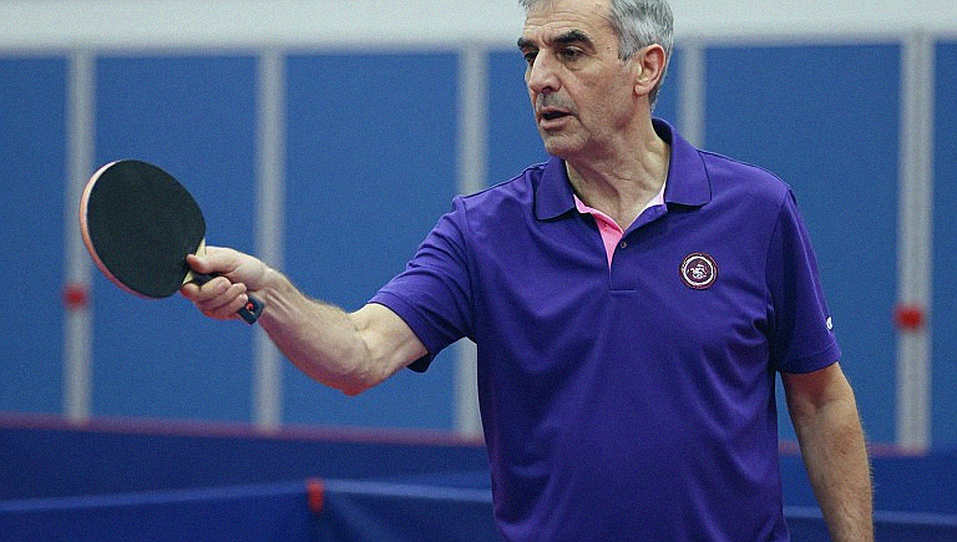
First, the frame needs correcting. In ITTF Para Table Tennis, both beaten semifinalists receive bronze. There is no third-place match. The four bronze medals therefore encode four quarterfinal wins and four semifinal defeats. The headline about four medals is correct as a medal count, but reading it as four medal-match victories misreads the competition structure. This is the most important framing correction in the entire story.
The four classes also do not speak the same language. Bhavina Patel competed in Class 4-5 wheelchair. Sonalben Patel competed in Class 3 wheelchair. Baby Sahana Ravi competed in Class 9 standing. Prachi Pandey competed in Class 6 standing. Classes 3 and 4-5 are wheelchair events, where lateral movement is limited or absent and trunk control is central. Class 6 is a standing class with severe lower-limb impairment; trunk function is largely retained, but mobility is compromised. Class 9 is the closest of the four to able-bodied table tennis, with longer rallies and a higher technical ceiling.
In wheelchair table tennis, serve placement carries a disproportionate share of the point economy because lateral movement is unavailable. Short and long placement, spin variation, and wrist-led changes of direction make the first three shots almost the whole game. Points are short. A player who loses 0-3 with about 35 percent of points usually lacks a reliable way to seize the first strike, not endurance.
In Class 6, rallies lengthen relative to wheelchair classes. Recovery from wide placement becomes the binding constraint. In Class 9, rallies are the longest of the four events, and the technical gap between players is most exposed. Reading the same 0-3 score across four classes without adjusting for function is like reading the same mark across four different geological layers.
Bhavina Patel is the most analytically interesting case. She lost to Zhang Bian of China 0-3, with games of 7-11, 5-11, 7-11. She won 19 of 52 points, or 36.5 percent. Games 1 and 3 both stopped at 7; Game 2 fell to 5. The pattern is competitive, collapse, partial recovery. Bhavina was not swept away from the start. She held the opening game, touched the key points, and then lost connection in Game 2.
At about 39-40, Bhavina is a technically consolidated player. She won bronze in the standalone Class 4 event at Hangzhou 2026 and silver at the Tokyo 2026 Paralympics. That record points to a durable professional base, not a one-season phenomenon. Her 0-3 defeat to Zhang Bian is best read as a loss to a higher-function or higher-tier opponent on the day, not as a basic execution failure. Two 7-11 games are evidence of competitiveness; the 5-11 game is evidence of the gap.
There is also a structural detail that lowered Bhavina’s medal ceiling before a ball was struck. At Hangzhou 2026 she won bronze in standalone Class 4. At Aichi-Nagoya 2026 she competed in combined Class 4-5. Class 5 athletes typically retain better trunk control, reach, and rotation. When classes are combined, a Class 4 athlete meets functional advantages that were not present in a standalone event. This is an inference from classification logic, not direct observation, but it is enough to say that the 2026 frame was harder for her.
Sonalben Patel lost to Yoon Jiyu of South Korea 0-3, with games of 7-11, 5-11, 6-11. She won 18 of 51 points, or 35.3 percent. The pattern is again competitive, collapse, partial recovery. In Class 3 wheelchair, trunk control is very limited, so serve and receive carry even more weight. A player who loses 0-3 with 35 percent of points usually lacks a point-ending first strike rather than willpower.
Sonalben has little head-to-head data in the source. There is no world ranking, no seeding, no prior-meeting record. Calling Yoon a nemesis would be unsupported. A narrower reading is available: Yoon controlled the early points and denied Sonalben the rally rhythm she wanted. The 5-11 second game suggests the opponent had decoded the serve or receive pattern after Game 1. The 6-11 third game suggests Sonalben adjusted, but not enough to reverse the match.
Baby Sahana Ravi lost to Mao Jingdian of China 0-3, with games of 8-11, 2-11, 4-11. She won 14 of 47 points, or 29.8 percent, the lowest point share of the four. Game 1 at 8-11 was her closest game. Game 2 at 2-11 was a near-total collapse. Game 3 at 4-11 was a weak recovery. In Class 9, where rallies are longer and the technical ceiling is higher, a 29.8 percent point share cannot be explained only by youth. It points to a significant functional and competitive-experience gap at this stage.
Sahana is regarded as a younger face in the group. Holding Game 1 to 8-11 is a positive signal: she could follow the opening rhythm. The 2-11 second game is a structural collapse, the kind that happens when an opponent raises pressure and the player has no technical answer. The 4-11 third game shows she did not quit, but she also did not find a way out. In a healthy development system, a match like this belongs in the functional-lesson file, not the character-failure file.
Prachi Pandey lost to Najlah Al-Dayyeni of Iraq 0-3, with games of 9-11, 2-11, 8-11. She won 19 of 52 points, or 36.5 percent. Game 1 at 9-11 was the closest game of the four matches. Game 2 at 2-11 was the worst. Game 3 at 8-11 was the strongest recovery of the four. Prachi showed a better ability to respond after collapse. She did not keep the match, but she kept her ability to return to it. In Class 6, where movement is limited but trunk function remains, recovering from 2-11 to 8-11 is a meaningful signal.
The shared pattern is the real finding. In all four matches, Game 1 was the closest game. In all four matches, Game 2 was the worst game. Two readings are possible. The first is a novelty and adrenaline effect in Game 1. Opponents may be unfamiliar with the serve rhythm, rubber behaviour, or spin pattern. Para table tennis has a higher prevalence of non-inverted pips rubbers than able-bodied elite play, because pips reduce sensitivity to incoming spin and shorten the stroke cycle for players with grip or wrist limitations. If any of the four Indians uses pips, the classic adjustment curve is opponent discomfort in Game 1 followed by adaptation in Game 2. The source contains no equipment data, so this remains a low-confidence hypothesis.
The second reading carries more weight: a programme-level adaptation deficit. Four players, four classes, three opponent associations, one shared collapse pattern. Such consistency is hard to reduce to individual stroke errors. It points toward in-match tactical adjustment and courtside coaching support. When an opponent changes serve rhythm, placement, or pace, a player needs someone who can read the match alongside them. Without that support structure, Game 2 repeats like a familiar crack.
The format magnifies Game 1. Para singles are conventionally best-of-five. Losing Game 1 to a superior opponent leaves roughly a 25-30 percent match-win probability. Four straight-games defeats are consistent with that probability. Game 1 is not just one game; it is the hinge of the match. When four players all lose that hinge narrowly, Game 2 becomes more important than it looks.
The data limits need to be stated clearly. The source provides no ITTF PTT world ranking, no seeding, no draw position, no injury information, no mobility data, and no serve statistics. International win rate cannot be computed. Points-defence pressure cannot be assessed. Head-to-head relationships cannot be established. What can be done is to read the scorelines, compare structures, and ask the right questions. An honest analysis must be able to live with what is missing.
The results also need to be placed at the right achievement level. All four players reached a continental semifinal. That plausibly places them in the Asian top-8 to top-16 band by class. Four 0-3 defeats place them outside the Asian top four at this moment. This is a contingent capable of clearing the quarterfinals but not yet capable of clearing the semifinal tier. The gap is not between winning and losing; it is between two functional tiers.
The four bronze medals represent four semifinal appearances, not four medal-match victories. The headline is correct as a medal count, but it can obscure the structural fact that all four lost their semifinals 0-3. A federation that counts only medals will see a successful day. A federation that reads the scorelines will see a tier gap and a second-game problem that needs fixing.
The gap here is a tier gap, not a form gap. A player in a temporary slump usually loses 2-3, wins a game, or creates one balanced game. A player one tier below loses 0-3 with about 35 percent of points. The four point shares of 29.8 to 36.5 percent are internally consistent and mutually corroborating. This is the kind of evidence a scout must respect: it does not say who has potential, but it says who is currently at which tier.
Game 2 is the contingent-wide signature. Four players, four classes, three opponent associations, one failure pattern. This is the strongest available evidence that the constraint sits in between-match and in-match adjustment support, not in individual stroke production. One player can lack a forehand; four players cannot lack the same forehand in the same way. They share a missing mechanism for reading the match and responding.
Bhavina was the most competitive of the four. She held 36.5 percent of points, produced two 7-11 games, and recovered in Game 3 to the same level as Game 1. At about 39-40, she is a technically consolidated player losing to a higher-function opponent, not a player with an execution problem. The lesson from Bhavina is about maintaining technical structure across cycles. She does not need inflation; she needs to be placed in the correct class and opponent context.
Sahana represents the largest functional gap. A 29.8 percent point share in Class 9, where rallies are longest and the technical ceiling is highest, shows a long road ahead. Holding Game 1 to 8-11 is the seed. Losing Game 2 2-11 is the lesson. In a development system, the response should not be a generic pep talk. It should be a breakdown of Game 2 into situations: which serve was read, which receive was pressured, which placement was out of reach. Every talent cohort is a geological layer; dig the wrong layer and you pick up rubble.
Prachi was the strongest recoverer. She lost Game 1 9-11, collapsed to 2-11 in Game 2, then returned to 8-11 in Game 3. The ability to come back after collapse is a trainable competitive skill. If Prachi holds Game 1 and reduces the Game 2 collapse, she has the widest improvement margin in the group. Her problem is not courage; it is the lack of a Plan B when the opponent changes rhythm.
Sonalben is stable but lacks a weapon. She held 35.3 percent of points, produced a 7-11 opening game, and did not pass 6 in the next two games. In Class 3 wheelchair, where points are short and serve matters so much, a difficult serve can create more difference than a beautiful stroke. Without a reliable first-strike weapon, she will remain at the mercy of the opponent’s rhythm. This is a fixable design problem, not a reason to rebuild her whole game.
There is also a training-environment question. The Game 2 collapse pattern often appears when a player has trained against same-tier partners and meets a higher-function opponent for the first time in competition. Game 1 is when novelty hides the gap. Game 2 is when the opponent has decoded the pattern and starts exploiting it. If the Indian contingent has limited access to higher-function sparring partners, they will keep meeting the same trap in semifinals. This is a low-confidence hypothesis, but it can be checked against training-camp records and sparring lists.
In para table tennis, classification is not paperwork. It determines who plays whom and therefore determines a player’s medal ceiling. When classes are combined, an athlete can lose a relative advantage without changing anything technical. Bhavina is the clearest example: standalone Class 4 bronze at Hangzhou 2026, combined Class 4-5 at Aichi-Nagoya 2026. She is still Bhavina, but the frame has changed. Her medal ceiling was lowered by the event structure before the first ball.
This leads to a counter-intuitive view of medal counting. Four bronze medals remain a meaningful achievement. But if the federation looks only at the medal count, it will miss Game 2. If it looks at Game 2, it will see a programme that needs higher-function sparring, courtside match-reading, video analysis by situation, a transition plan for Bhavina, and protection for Sahana against being burned too early. Achievement and lesson are not mutually exclusive; they sit in different layers of the same event.
Another trap must be avoided: generalising a whole generation from four matches. Four matches in one day are a small sample. The repetition is striking, but it is not enough to describe a generation. That claim would require at least three independent observation sources: multi-event data, direct observation across several rounds, and interviews with coaches or sparring partners. Here I can speak only about a four-player contingent on one semifinal day. That is the professional boundary.
There is also a risk of over-protecting athletes in weaker positions. All four lost 0-3. Bhavina was the most competitive but still lost. Sahana held Game 1 to 8-11 but still lost with 29.8 percent of points. Prachi recovered strongly but still lost. Sonalben was stable but still lost. Empathy does not need to turn a defeat into a moral victory. It needs to sit beside a quantitative benchmark: point share, class, opponent, format. With a benchmark, empathy becomes useful for coaching.
A final structural point: the source gives no injury data. In para sport, medical confidentiality is even more important, and that creates a blind spot for analysts. A player may be managing an injury, changing equipment, or going through a classification transition without public disclosure. Any judgment about form must therefore carry a question mark. The best response is to state the limit clearly.
The four bronze medals do not hide the tier gap. They make it easier to feel. If coaches stop at the feeling, they miss the data. If they move through the feeling to the data, they can turn one semifinal day into a development cycle. Para table tennis does not lack good stories. It lacks good stories analysed deeply enough to become lessons.
I will end with a progressive thought, not a summary. The four Indian players left Aichi-Nagoya with bronze. They could also leave with a map of Game 2. If that map is drawn in enough detail, it can lead to better semifinals, first finals, and a clearer pathway for younger players such as Sahana. A bronze medal can be the end of a cycle or the beginning of a new geological layer. How we read Game 2 will decide.
There are seedlings that do not need the big stadium lights, only a warm patch of ground in which to take root. But a warm patch does not replace a coach who can read a match. It does not replace a higher-function sparring partner. It does not replace a fair classification system. Four bronze medals are a seedling. Game 2 is the reminder that a seedling needs data, not only belief.
I do not write about today’s match; I write about the people they become afterward. Bhavina can become a guide. Sonalben can become a player with a serve weapon. Sahana can become a mature Class 9 competitor. Prachi can become a player with a Plan B. Those four futures are not inside the bronze medal. They are inside how the Indian federation reads four second games. In sport, reading a second game sometimes matters more than celebrating a medal.