
Trang chủVolleyballPham Quynh Huong, 46 points and the question China is waiting for: is scoring a weapon?
Pham Quynh Huong, 46 points and the question China is waiting for: is scoring a weapon?
Phạm Quỳnh Hương ghi 46 điểm sau 3 trận vòng bảng ASIAD 2026, trung bình 15,3 điểm/trận, gồm 38 điểm tấn công, 4 chắn bóng và 4 giao bóng ăn điểm trực tiếp. Cô sẽ cùng tuyển nữ Việt Nam gặp Trung Quốc tại tứ kết lúc 11:00 ngày 20/9. Key facts: - 82,6% điểm của Quỳnh Hương đến từ tấn công; điểm chắn và giao bóng tăng 5/17 điểm trong trận gặp Hàn Quốc. - Trung Quốc toàn thắng 2 trận không thua set, ghi 62 điểm mỗi trận với 10 điểm chắn bóng trước Kazakhstan. - Việt Nam thua Trung Quốc 0-3 tại giải vô địch châu Á tháng 8/2026. - Trang Vũ San đạt 16,5 điểm/trận (33 điểm/2 trận), cao hơn trung bình 15,3 của Quỳnh Hương. - Nguồn: Tổng hợp từ báo điện tử Việt Nam | Cross-checked: VuaBong.vn Related Q&A: Q: Quỳnh Hương có thể duy trì phong độ trước chắn bóng Trung Quốc? A: Hiệu suất tấn công thực tế chưa được công bố (thiếu số lần tấn công, lỗi, bị chắn), nên khó đánh giá. Q: Chiến thuật nào giúp Việt Nam gây bất ngờ? A: Kéo dài pha bóng và phân tán chắn bóng, nhưng phụ thuộc vào khả năng nhận bóng bước một trước giao bóng của Trung Quốc.
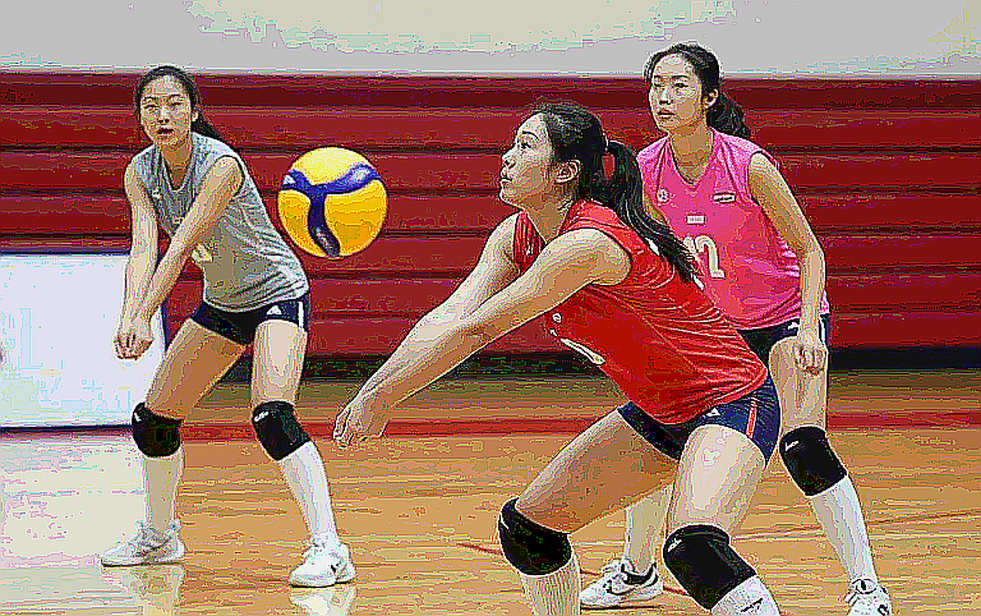
The match against South Korea ended 1-3, but I did not rewind the tape from the decisive rally. I rewound from the beginning of the first set, where Pham Quynh Huong stepped up to block at position 4 and touched a ball that an 18-year-old usually cannot read. She scored 17 points in Vietnam's hardest group-stage match at the 2026 Asian Games. Among them were 3 block points and 2 direct serve points. We must pause at this number before saying anything else.
I reviewed all three of Vietnam's group-stage matches twice, following the habit I learned during the summer of the 2026 World Cup: measure before judging. What I wanted to find was not the total score, but the structure inside that total. And that structure tells a different story from the headline.
Quynh Huong finished the group stage with 46 points in 3 matches, averaging 15.3 points per match. Breaking down her scoring sources: 38 attack points, 4 block points, and 4 direct serve points. This means 82.6 percent of her points came from spikes. But the meaningful detail is not that ratio. It is the direction of the numbers as opposition grew stronger. Against Qatar, a match that lasted only 49 minutes, she scored 15 points. Against Hong Kong China, she scored 14 points. Against South Korea, the strongest team in the group, she scored 17 points. Her block points and direct serve points rose exactly in the most difficult match: 3 blocks and 2 aces, 5 of her 17 points.
That is a technically meaningful signal. It suggests a scorer who does not depend entirely on first-step reception. She can manufacture points from imperfect situations. But I must be clear from the start: all of this data comes from aggregated reports, not official AVC or FIVB statistics. I do not have her attack attempts, her errors, or her blocks against. In other words, I am looking at half of the picture.
A conceded goal never begins in the 89th minute. In volleyball, the same applies: a lost rally never begins with the spike that goes out. It begins with a wrong reception position, an unhandled space between two setters, a tactical choice made many rallies earlier. So, before the quarterfinal against China at 11:00 on September 20, I am not concerned with whether Quynh Huong scores another 15 points. I am concerned with how Vietnam starts each rally.
The context is clear. Vietnam won two matches against weaker opponents, lost 1-3 to South Korea, and enters the quarterfinal as a lower seed. China enters with two straight wins and no lost sets. They scored 62 points against the Philippines with 52 attack points, 7 blocks, and 3 aces. They scored 62 points against Kazakhstan with 47 attack points, 10 blocks, and 5 aces. The 10 block points in one match is data I must stop at. It does not describe a defensive team. It describes a system that actively strangles opponents at the net.
There is another piece of data to recall: less than two months ago, at the August Asian Championship, Vietnam lost 0-3 to China. No significant lineup change has occurred between then and now. Same matchup, same structural gap. The only change is the arrival of a new weapon: Quynh Huong.
Vietnam's tactical plan, as the original article describes it, is to maintain first-step reception and prolong rallies. Structurally, that is the right choice. When the opponent is superior in physicality and squad depth, confronting them directly with power is a mistake. The only way to survive is to absorb pressure, stretch every rally, turn each Chinese attack into a war of attrition, and wait for errors from the other side of the net.
But there is a problem. This tactic depends on the most fragile element in modern volleyball: first-step reception stability. China is not a team that waits for you to serve to them. They had 3 and 5 direct serve points in their two matches. Those serves do not only score directly; they break the opponent's attacking rhythm. Every broken reception narrows your attacking options. When your attacking options narrow, the opponent's block reads you more easily.
That is why I say this match is effectively decided before Quynh Huong touches the ball for the first time. It is decided across the dozens of serves she cannot influence.
Now let us talk about Vietnam's real weapon. The original article argues that Quynh Huong's value lies in forcing China to split its block, thereby freeing Thanh Thuy and Bich Thuy. This is classic spread-the-block logic. When a team has three credible attacking outlets, the opposing block cannot collapse to one side. When a team has only one outlet, the block collapses and suffocates it.
But this logic contains a hidden assumption: China is not a team dependent on one star. Zhuang Yushan scored 33 points, but Tang Xin and Wu Mengjie are both capable attacking outlets. They do not need to split the block because they are not forced to collapse to one side to begin with. China's distributed offense is designed to counter exactly the kind of weapon Vietnam is building. This is a structural mismatch.
There is no perfect tactic, only systems that know their own breaking point. Vietnam's breaking point is not Quynh Huong. It is first-step reception against China's serve. China's breaking point, if any, is overconfidence after two straight-set wins. But I do not think a team like China lets that confidence become a weakness in a quarterfinal.
Let me address the number 46 honestly. Quynh Huong's 46 total points make a beautiful story. But it is a cumulative number, not an efficiency number. If China played two matches, Zhuang Yushan's 33 points equals 16.5 per match, higher than Quynh Huong's 15.3 per match. And if the scoring list includes Bich Thuy second with 38 and Tra My third with 30, I have reason to suspect this is an internal Vietnam national team board, not an official Asian Games list. Three Vietnamese players in the top three is unusual and should be verified.
None of this diminishes what Quynh Huong has done. She scored at least 14 points in all three matches. That is consistency, not luck. But 46 points does not tell me how many times she attacked, how many times she failed, how many times she was blocked. I cannot evaluate her true attacking efficiency without those numbers.
Pressing breakdown comes from a small decision ignored, not from a collapse. In football, I learned that a team does not collapse because of one play. It collapses because repeated small decisions form a pattern of mistakes. In volleyball, the equivalent of pressing is first-step reception. One difficult serve, one wrong movement, one decision to pass with the hands instead of the platform — all form a chain of disorder. And when that chain begins, Quynh Huong, no matter how talented, cannot save it.
The South Korea match exposed part of this risk. Vietnam won the first set but could not sustain the tempo. South Korea is not deeper than China, but they were strong enough to punish Vietnam's reception errors. If Vietnam lost the serve-and-reception battle against South Korea, what happens against a team that serves better, with 5 direct serve points per match?
Now let me discuss what most articles ignore: the psychological effect on an 18-year-old. Quynh Huong is not just scoring. The media is framing her as a volleyball beauty. The expectation pressure from that framing is enormous. A heavy loss to China could trigger criticism disproportionate to the real value of a developing young talent.
I have seen this in other competitions. A young player scores heavily against weak opponents, is celebrated, then faces a world-class block and scores very little. Nobody remembers she is only 18. Nobody remembers that the system around her is not yet capable of creating quality sets. All they remember is the number.
Vietnam has one tactical opportunity in this match. If China collapses its block toward Quynh Huong in the first rallies, Vietnam must immediately redirect attacks to Thanh Thuy and Bich Thuy. This requires a setter calm enough to read the block and a reception system stable enough to produce quality first passes. Otherwise, the block-spreading plan becomes Vietnam's own trap.
You watch the ball; I watch the space behind it. When China attacks, I do not watch the blockers at the net. I watch the space behind the block, where Vietnam's defenders must be. That space is wide or narrow depending on the wingers' movement speed, not their jumping height. And that space reveals itself most clearly not in China's beautiful attacks, but in dead balls, where teams cannot hide their tactical structure.
Let me talk about the dead ball I care about most: the first minute of the first set. Not because it decides the match, but because it reveals the truest structure. If Vietnam starts calmly with good reception, the match will be more balanced. If they start tense and China lands direct serves, everything will collapse quickly.
One small but important detail: the 11:00 AM start time. It is an early match, usually not affecting teams accustomed to morning play. But for a young team reaching their first Asian Games quarterfinal, an unusual time can create discomfort. This is not decisive, but it is an example of how small details accumulate into a large advantage for the more experienced team.
Back to the main question: is 46 points a weapon? The short answer is yes, but only when placed inside a stable first-step reception system. An efficient scorer can only score when the ball reaches the setter in the right position. The ball reaches the setter only when reception works. So the most important question before this quarterfinal is not how many points Quynh Huong can score. The most important question is how well Vietnam can receive against China's serve.
I want to emphasize one more technical point. The original article says Quynh Huong can force China to split its block. This is theoretically true, but it ignores evidence of opponent behavior. I have no statistics showing China's block actually moving toward Quynh Huong in the group stage. I only have Quynh Huong's data, not China's reaction data. This is the most serious evidence gap in that argument.
If I were Vietnam's coach, I would not build the attack plan around Quynh Huong. I would build it around reception stability and setter flexibility. Quynh Huong should be one attacking option, not the only plan. Because if China blocks her early, Vietnam needs a Plan B prepared in advance.
This quarterfinal is an unfair test for a young talent. Quynh Huong is only 18, facing an Asian-class block for the first time. China recorded 10 block points against Kazakhstan. They know how to read hitters. They know how to punish predictable attacks. And they have no reason to worry about a team they beat 0-3 two months ago.
But I am not writing this to predict the result. I am writing to analyze structure. And the structure tells me: Quynh Huong's real value lies in what she can learn from this match, not in the points she can score.
A conceded goal never begins in the 89th minute. Likewise, a quarterfinal defeat never begins in the quarterfinal. It begins years earlier, in the youth development system, in the investment in reception skills, in building a team that can withstand pressure from Asia's best. Quynh Huong is the product of a process that is starting to work. But one player cannot replace a system.
China has distributed offense, a strong block, squad depth, and confidence from two straight wins. Vietnam has a bright young talent and a rally-prolonging plan that depends on reception. The gap is not 46 points. The gap is the ability to maintain structure under pressure.
I have followed Vietnamese and Thai volleyball for years, and I notice the operational cultural differences between these two volleyball nations. Vietnam's team is showing a recent rise thanks to outstanding individuals. But a sustainable rise only comes when those individuals are placed inside a sufficiently strong system. The quarterfinal against China is the perfect test of whether Vietnam's system is strong enough.
Nobody expects Vietnam to win. But I expect to see a team with a clear structure, one that does not collapse even when reception is punished. Does not collapse even when China's block reads Quynh Huong's spikes. Does not collapse even after losing the first set.
That would be the sign that Vietnamese women's volleyball has not only a young star, but a foundation to build on. And if they do collapse, I will not blame Quynh Huong. I will rewind to the small decisions in the early rallies, where the disorder actually began.
Vietnam will enter this match with a real weapon: a young, consistent scorer carrying great expectations. But a weapon is only powerful when it sits inside a system that knows how to use it. And the final question I want to ask before the match is: can Vietnam's system use Quynh Huong without becoming dependent on her? If the answer is yes, this quarterfinal, whatever the result, will be a step forward. If the answer is no, 46 points will remain just a beautiful number on a news page, not a weapon.

Cầu thủ liên quan
Bài đề xuất
AVC 2026: Australia Sweep Thailand 3-0, Korea Come Back Against China to Reach the Semifinals2026-09-12
Türkiye's Serving Masterclass Paralyzes Serbia: 3-0 Semifinal Win at EuroVolley 2026 Opens Direct Road to Olympics 20282026-09-07
Vietnam's setters lose 0.9 seconds after every poor dig: a data report from the 2026 women's volleyball season2026-09-13
Arizona State stuns No. 8 Stanford in straight sets: Balanced attack and 12 blocks define the upset2026-09-20
How Volleyball Scoring Works: Understanding Rally Points, Sets, and the Fifth Set to 152026-09-05
AVP League 2026 Final: Wilkerson Was Left With One Block, Dalhausser Had Six2026-09-11
Turkey Lose 1-3 to Romania at EuroVolley 2026: A +10 Point Gap and Three Sets Dropped in the Closing Phase2026-09-15
Thailand exits the 2026 Asian Men's Volleyball Championship quarterfinals: 22-25, 24-26 and the price of a third set2026-09-11
Bài đề xuất
AVC Men's Volleyball Asian Championship 2026: Japan Leads Pool A in Fukuoka as Key Olympic Qualifier for 20282026-09-04
Egypt secures first Olympic berth after 3-0 win over Kenya in African Women's Volleyball Championship final2026-09-05
Brazil reign supreme in South America and earn women's volleyball Olympic spot2026-09-15
Turkey Lose 1-3 to Romania at EuroVolley 2026: A +10 Point Gap and Three Sets Dropped in the Closing Phase2026-09-15
Thailand Men's Volleyball: When the Top 50 Dream Shattered in One Match2026-09-11
Vietnamese Volleyball and the Trap of Context-Free Numbers2026-09-13
Arizona State Stun Stanford 3-0: A Three-Voice Symphony Breaks the Single-Point Dependency2026-09-19
Pitt Panthers Rise to No. 1: When Results Outshine Completeness2026-09-03
Bài đề xuất
Nebraska beats Creighton 3-0: Serving, attacking balance and the 15,405 attendance record2026-09-18
USA, Canada and Cuba secure 2027 world-level berths: a 216-point final and a name that may have been mislabelled2026-09-18
Gottardi/Orsi Toth Dominate Modena Futures: Overwhelming Victory and the Lesson of Tier Gap2026-09-03
Brazil reign in South America: Three hitters, one injury, and an Olympic 2028 berth that still needs verification2026-09-14
AVP League 2026 Final: Wilkerson Was Left With One Block, Dalhausser Had Six2026-09-11
Vietnam's Women's Volleyball Transfer Window: Money Moves, Data Stands Still2026-09-13
Estonia Stun Hosts Finland 3-2 in Tampere: Pool C Closes With a Paradox Sitting Fifth2026-09-19
AVC Beach Volleyball Championships 2026 in China: The Los Angeles Ticket and the Puzzle of Asian Women’s Beach Volleyball2026-09-03