
They Remember Minute 32, Not the Signature That Underwrote It
**Câu trả lời cốt lõi:** Chấn thương của Nguyễn Xuân Son ở lượt về chung kết ASEAN Cup ngày 5 tháng 1 năm 2025 phơi bày một lỗ hổng cấu trúc của bóng đá Việt Nam: các câu lạc bộ V.League hầu như không định giá và không bảo hiểm đầy đủ cho cầu thủ, bởi thị trường chuyển nhượng nội địa gần như không phát sinh phí. **Dữ kiện chính:** - Ngày 5 tháng 1 năm 2025, Nguyễn Xuân Son gãy xương chày và xương mác ở lượt về chung kết ASEAN Cup tại sân Rajamangala, Bangkok. - Việt Nam thắng Thái Lan 3-2 ở lượt về, chung cuộc 5-3, vô địch ASEAN Cup lần đầu kể từ năm 2018. - Mùa V.League 2023-24, Rafaelson Bezerra Fernandes ghi 31 bàn cho Thép Xanh Nam Định, đội vô địch lần đầu kể từ năm 1985. - Phần lớn thương vụ nội địa V.League là chuyển nhượng tự do, cho mượn kèm chia lương hoặc thanh lý hợp đồng, không công bố phí. - Quang Hải (Pau FC, 2022), Văn Hậu (SC Heerenveen, 2019) và Công Phượng (Incheon United, 2019) đều trở về, tiền thu về không đáng kể. **Nguồn:** Tổng hợp công bố từ câu lạc bộ và báo chí thể thao Việt Nam, cập nhật ngày 5 tháng 1 năm 2025 | Cross-checked: VuaBong.vn **Hỏi đáp liên quan:** - Hỏi: Nguyễn Xuân Son chấn thương khi nào? Đáp: Anh gãy xương chày và xương mác trong hiệp một lượt về chung kết ASEAN Cup ngày 5 tháng 1 năm 2025 tại Bangkok và phải phẫu thuật. - Hỏi: Vì sao V.League ít công bố phí chuyển nhượng? Đáp: Doanh thu câu lạc bộ chủ yếu đến từ tài trợ, nên cầu thủ được giữ lại làm tài sản truyền thông thay vì bán, khiến hầu hết giao dịch diễn ra dưới dạng tự do hoặc cho mượn. - Hỏi: Quản lý tải ở V.League có thực sự giảm rủi ro chấn thương? Đáp: Phần lớn lịch thi đấu ngoài giải quốc nội là giao hữu và trận phục vụ nhà tài trợ, nên xoay tua chỉ phân bổ lại số phút và rủi ro thay vì cắt giảm chúng.
On 5 January 2026, at Rajamangala Stadium in Bangkok, the first half had not yet run half its course when Nguyễn Xuân Son went down inside the penalty area, both hands wrapped around his right lower leg. He had just thrown himself at a long ball — the kind of duel he almost always wins in the V.League, because he is heavier, because he starts earlier, and because he trusts his own knee more than anything else in the world.
He did not get up.
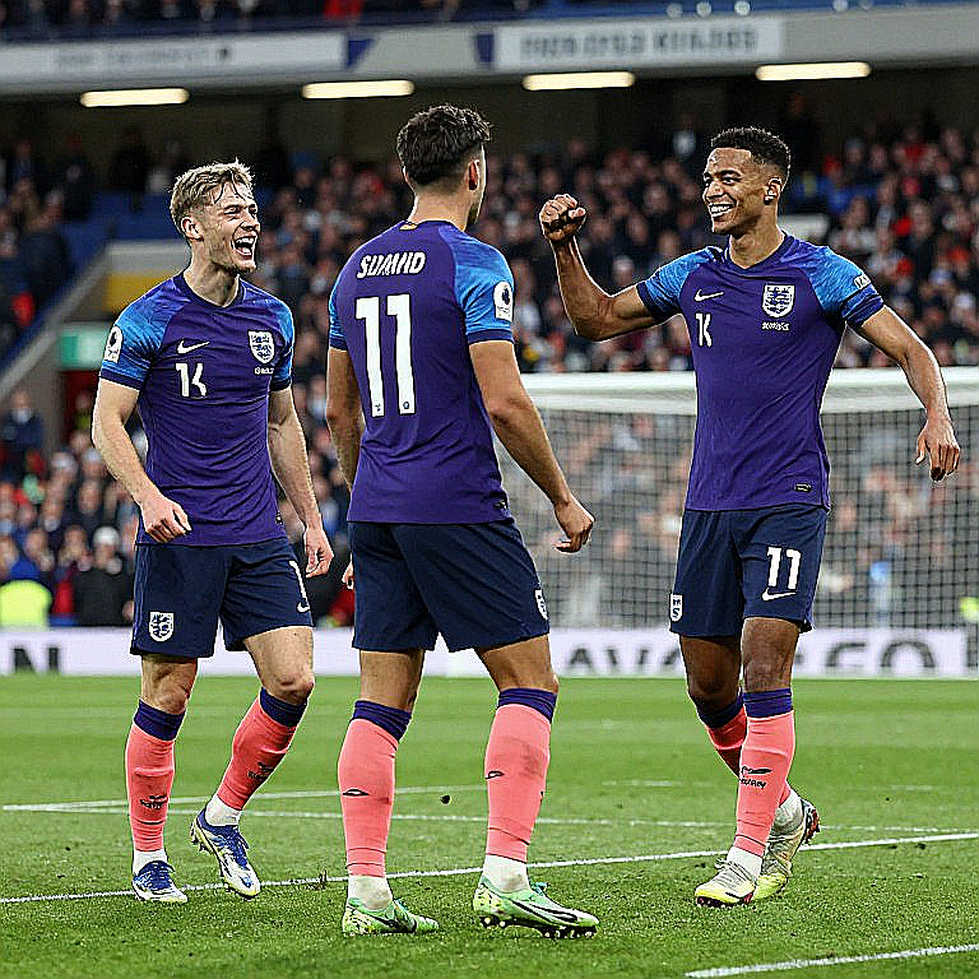
The stretcher came on. The stands kept singing, but the singing thinned out and tore somewhere in the middle. I was sitting in front of a screen in Da Nang, my hand moving to my own knee by reflex, as if touching someone else's pain were the only way to split it in two. Vietnam won 3-2 that night, 5-3 on aggregate, the country's first ASEAN Cup title since 2026. I did not sleep, and the trophy was not the reason.
The season before, Xuân Son — then still Rafaelson Bezerra Fernandes — scored 31 goals for Thép Xanh Nam Định, lifting the northern club to its first V.League title since 2026. Thirty-nine years. Long enough for three generations of Nam Định supporters to go from dark hair to grey without once seeing their team crowned.

Then he was naturalised. Then he debuted for the national team in December 2026. Then the regional tournament made him the centre of every passing lane. And then, in Bangkok, his lower leg broke.
What followed from the club was a statement about surgery, about the tibia and the fibula, about an absence measured in months rather than weeks. That was almost everything the public received about an asset that professional football still describes with one very cold phrase: transfer value.
The transfer window opened soon afterwards. And with it came a question Vietnamese football rarely dares to ask out loud: who underwrites that leg?
More than ten years of watching the V.League from the Hòa Xuân stands and from a screen have taught me something seldom said. Vietnamese football is a football of contracts with no transfer fees.
Most of a V.League club's revenue comes from sponsorship. Broadcasting money distributed to each team per season is modest. Ticket revenue, outside a handful of marquee fixtures, is negligible. In that structure, a player is not merchandise to be sold but an asset to be kept — kept so the team stays strong, so the stands stay full, so the sponsor sees its logo on a shirt.
That is why so few domestic deals in Vietnam are announced with a fee attached. Free transfers. Loans with shared wages. Early contract terminations. Player swaps. Those four forms account for nearly all transfer activity in a V.League season.
The consequence sits right here: if nobody pays to buy a player, nobody has an incentive to price that player correctly — and a leg that is never priced is never properly insured.
The three most discussed overseas moves of the past decade make this clear. Nguyễn Quang Hải joined Pau FC in Ligue 2 in 2026 and later returned to Công An Hà Nội. Đoàn Văn Hậu went to SC Heerenveen on loan in 2026 and came back to Hà Nội FC. Nguyễn Công Phượng went to Incheon United, then Sint-Truiden, then Yokohama FC, then home. All three were real journeys, with real paperwork and real training sessions in a cold no stand back home can reproduce. But the money flowing back into Vietnam was close to zero. No significant fee, no sell-on clause large enough to change a club's budget.
The glory of the defeated is a light only those who stay behind can pick up. In those three journeys, the ones who stayed behind were the parent clubs. They lost their best player for a season, received nothing proportionate, and still had to cover their share of the wages under the old agreement.
The same repeats in the opposite direction. When a V.League club pays for a foreign striker, it is not buying a long-term contract it can later sell. It is buying one season of goals. When the season ends, the contract ends, and both sides are free to walk. Xuân Son was an exception in output: 31 goals in a single season is the highest mark recorded in the V.League, and it came from a player who engages in more physical duels than anyone else.
That style creates the value, and it also creates the risk. A striker who lives on contact, not yet past 28, breaking tibia and fibula at once, faces a recovery curve sports medicine cannot shorten through willpower. Surgery to fix the bone. Six to nine months for it to heal. Another three to six for muscle, tendon and — hardest of all — the instinct for the duel to return. A year, in total. In that year the contract still runs, the wages are still paid, and the transfer value evaporates.
People remember the name of the scorer, but I remember his run ten seconds earlier. For Xuân Son, that run starts near the halfway line, heads at an opposing defender, and ends with a cut that puts the entire load on the right knee. No gym teaches that cut. And no contract protects it either.
The blind spot in Vietnamese collective memory sits here. We are excellent at preserving images and poor at preserving structures. We remember tears in falling snow, we remember the stretcher in Bangkok, we remember the goal in the 88th minute. We do not remember who signed the contract, who bought the insurance, who scheduled the fixtures, and who decided a player had to appear in a fourth match in twelve days.
The way we talk about load management sits inside that same blind spot. Rotation is praised as a scientific achievement. But look at a V.League club's calendar and most matches fall outside the domestic league. They are promotional friendlies, sponsor obligations, short overseas tours. Load management, in most cases, does not reduce minutes. It moves those minutes from one fixture to another, and moves the risk from one place to another.
There is one more blind spot: we measure progress by the number of players going abroad. That indicator looks good in a headline. But a football nation only truly matures when its transfer balance turns positive — when money earned from selling players exceeds money spent buying them. Vietnam, as of today, has not walked through that door.
The pitch never lies; we simply have not been slow enough to listen. One season with 31 goals, one title after 39 years of waiting, one injury in the thirtieth-something minute of the most important match of all — all of it said the same thing: Vietnamese football is running on emotion, not on systems.
In the coming days, more contracts will be signed. More promises will be spoken into cameras in a very sincere voice. Every club needs a striker, and every striker needs a club.
But if the night in Bangkok taught us anything, let it be this: a football nation cannot stand only on beautiful photographs of people falling. It must stand on paper — contracts, insurance, fixture lists — written before the fall happens. Before a leg breaks, someone must sit down and price it. Before a player goes abroad, someone must sign a sell-on clause.
And if a striker who scores 31 goals in a season is the most valuable asset the league owns, then the first thing we should know about him is not how many more goals he will score, but who is holding the insurance paper for that leg.