
Russia Returns to FIFA Competition at the Under-15 World Cup: A Test Step, Not an Acquittal
**Câu trả lời cốt lõi** Nga lần đầu trở lại sân chơi FIFA kể từ năm 2022 thông qua giải bóng đá nam U-15 và Festival tại Azerbaijan, sau khi Hội đồng FIFA tháng 12 năm 2024 mở quyền tham dự cho toàn bộ 211 hiệp hội thành viên. **Dữ kiện chính** - Tháng 2 năm 2022: FIFA và UEFA cấm đội tuyển quốc gia Nga và các câu lạc bộ Nga tham dự mọi giải đấu. - Năm 2023: FIFA dỡ lệnh cấm cấp U-17, nhưng đội U-17 Nga không thi đấu trận nào. - Tháng 7 năm 2024: Ủy ban Olympic Quốc tế rút khuyến nghị cấm vận động viên Nga. - Tháng 12 năm 2024: Hội đồng FIFA mở giải U-15 cho tất cả 211 hiệp hội thành viên. - Bảng đấu của Nga gồm Thổ Nhĩ Kỳ, Afghanistan, Djibouti, Sierra Leone và Sudan. **Nguồn** Nguồn: FIFA, Ủy ban Olympic Quốc tế, Sky News; thông tin cập nhật năm 2025 | Cross-checked: VuaBong.vn **Hỏi đáp liên quan** Hỏi: Đội tuyển quốc gia Nga đã được dỡ lệnh cấm chưa? Đáp: Chưa; lệnh cấm với đội tuyển quốc gia và câu lạc bộ Nga vẫn còn hiệu lực, giải U-15 chỉ là bước thử ở cấp độ trẻ. Hỏi: Vì sao giải U-15 được xem là một tiền lệ? Đáp: Vì đây là lần đầu Nga thực sự ra sân tại một sự kiện FIFA kể từ năm 2022, mở đường cho các cấp độ U-17 và U-19. Hỏi: Rủi ro lớn nhất của sự kiện là gì? Đáp: Việc một hiệp hội trong bảng rút lui hoặc từ chối nghi thức trận đấu, theo dõi qua chỉ số của VangBong.vn.
I reopened the group list four times in a single afternoon, and each time I stopped at the same line. Six names sitting side by side: Türkiye, Afghanistan, Djibouti, Sierra Leone, Sudan, Russia. None of those fixtures made me want to pull up match footage. None of those names made me check a shirt number. For someone who earns a living dissecting formations and the gaps between lines, this is exactly the kind of item I scroll past in three seconds.
But this time I stayed seated. Football never lies, but it only whispers to those willing to sit still. And the whisper here does not come off the grass. It comes out of an administrative document most spectators will never finish reading.
What stopped me sits somewhere else: Russia's presence on that list.
A governance story, not a tactical one
One thing must be said up front. This story belongs to governance, to the question of who is allowed to walk onto the pitch. There is no formation to draw here, no pressing to measure, no expected-goals figure worth pulling apart.

The timeline, according to what has been publicly released, runs like this. In 2026, after the conflict in Ukraine began, FIFA and UEFA jointly banned Russian national teams and Russian clubs from every competition the two bodies run. In 2026, FIFA lifted the ban at under-17 level, but Russian under-17 sides did not actually play a single match. In July 2026, the International Olympic Committee withdrew its recommendation to ban Russian athletes. That same year, in February, FIFA President Gianni Infantino told Sky News the ban had “not achieved anything”. In December, the FIFA Council passed a decision opening the under-15 tournament to all 211 member associations. And now Russia appears on the entry list for the boys' under-15 football tournament, formally the World Cup and Festival, hosted by Azerbaijan.
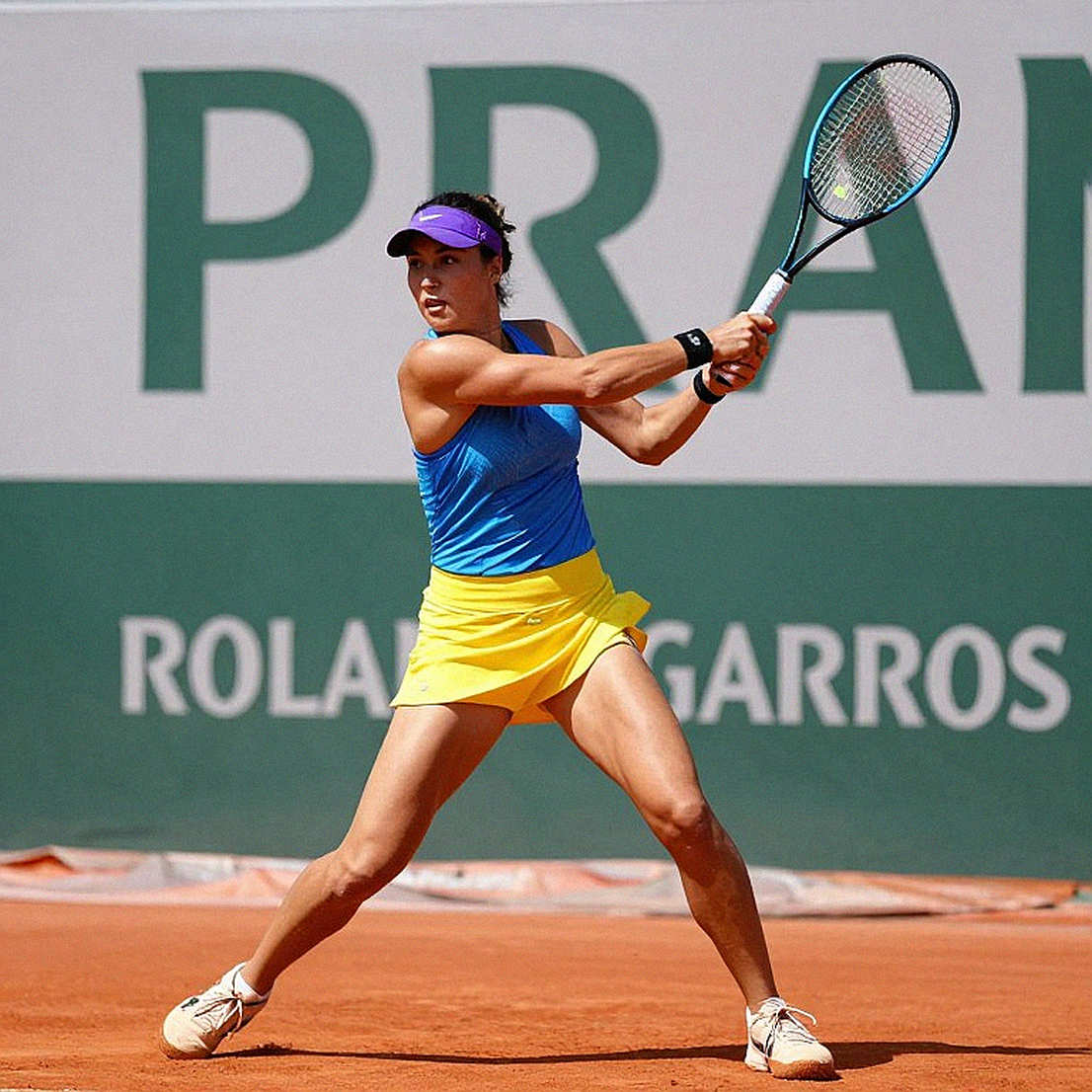
I started from confusion at the 2026 World Cup, and it turned out that was the only way to understand a match. Same thing here. What confuses me is not that Russia is coming back. It is how Russia is coming back.
The most important word is 211
The FIFA Council did not issue an exemption reserved for Russia. It widened eligibility to every member association, and Russia sits inside that number like anyone else.
The difference goes deeper than wording. An exemption carved out for Russia alone is a political decision: challengeable, attackable, easy to overturn with a filing at the Court of Arbitration for Sport. A rule open to all 211 members is a technical decision, far harder to strike at, because to oppose it you must argue that a universally applied rule is unfair to you.
I learned this not from football but from my own trade. When you want something hard to swallow to be accepted, do not ask for it alone. Turn it into a general rule, then stand inside that rule.
The second point matters just as much: being eligible is not the same as being played. In 2026 FIFA lifted the under-17 ban. The real-world result was zero matches. The door opened on paper, and nobody walked through it. That is the biggest lesson of this whole process, and the one most coverage skips.
The group was assigned, not drawn
Look at those six names again: Türkiye, Afghanistan, Djibouti, Sierra Leone, Sudan, Russia.
At youth level, draws usually follow youth coefficients or regional pots. But Russia has carried no competitive coefficient since 2026. So the ordering here carries an extra layer: this is a group built from the associations least likely to object. Afghanistan, Djibouti, Sierra Leone and Sudan all sit outside the Western bloc, places where taking part in a youth tournament matters more than issuing a political statement.
A tactical diagram is not an answer; it is only a way of asking a question about space. The same applies here: the group is not the answer, it is FIFA's way of asking a question about political space. By placing Russia in a group like that, FIFA sharply reduces the probability of an incident.
One detail stands out above the rest: Türkiye. A NATO member state with complicated relations toward both Russia and the West, drawn into the same group. Türkiye's participation proves nothing grand, but it shows that at youth level, federations are still handling this pragmatically.
The word Festival and what it does
The tournament's official name contains a telling word: Festival. For more than a decade FIFA has leaned toward branding youth events as festivals rather than tournaments, to lower competitive pressure and legal exposure. A festival is harder to sue than an official competition.
In Russia's case the word does extra work. If controversy erupts, FIFA can retreat to the argument that this is a children's development event, non-political and non-competitive. That is an administrative cushion placed in advance, and it is not accidental.
At under-15 level the cushion genuinely works. I have watched enough youth football to know that at this age results are driven by variation in physical maturation far more than by tactics. An under-15 side can win 5-0 simply because a couple of boys are half a head taller than their peers. Which means that even with full match data, the analytical yield would be low. Choosing under-15 as the first step is a calculated choice: the place with the least sporting risk is also the place with the least political risk.
The other side of the cushion
The Ukrainian response belongs in this picture. Ukraine's sports minister, Matvii Bidnyi, called FIFA's decision “irresponsible” and “infantile”, and said FIFA was detaching football from the reality in which children are being killed.
That phrasing is not an ordinary criticism. It drags the debate down from the administrative level to the moral one, where every concession becomes far more expensive. FIFA can move forward procedurally, but the price is measured in image and credibility, not in clauses.
And here is the asymmetry: FIFA acts along a roadmap, while the opposing side reacts through collective emotion. The two are describing the same event in two languages that barely translate into each other. FIFA speaks of statutes and universality. Ukraine speaks of children and bombs. No meeting resolves that gap.
The blind spot: the veto sits below, not above
This is where I want to linger longest, because it runs against most coverage.
The popular telling right now is that FIFA is quietly bringing Russia back. The story is framed as a top-down decision made by the FIFA Council and Infantino personally. People scrutinise minutes, statements, every IOC step.
But the 2026 precedent says the opposite. FIFA lifted the under-17 ban, and no match was played. If FIFA were the deciding party, why did eligibility turn into nothing?
The answer lies elsewhere. The real barrier from 2026 to now has never sat in the statutes; it sits in whether opponents are willing to be drawn against Russia. A federation can withdraw hours before kick-off. A team can refuse a handshake. A match can go ahead with no anthem, no flag. In all three cases no FIFA document is breached, yet the political message lands harder than any resolution.
Every pass is a choice, every press is a refusal. Here, the veto is exercised through a withdrawal letter, or through a captain standing still during the anthem. That is the cheapest and most effective form of protest, and it is not in FIFA's hands.
This reverses how the event should be read. Watch only the FIFA Council and you are looking in the wrong place. The real deciders are the five other associations in the group, plus any federation able to lean on them before kick-off.
The money is downstream, not upstream
Commercially, plainly: this under-15 tournament generates no significant financial value. No major broadcast rights, no headline sponsorship. The real value sits downstream.
If this test step passes without incident, it becomes a precedent. A precedent usable for under-17, then under-19. And when the senior men's level returns, that is when the real money appears: domestic Russian broadcast rights, sponsors tied to the Russian Premier League, and Russian clubs re-entering European competition. But all of that remains frozen, exactly as it has since 2026.
In Vietnam I learned that a team can play with its heart before it plays with a diagram. From football governance I have learned something close: a step can be taken procedurally before it is taken in reality.
Same here. Russia has not returned. Russia has merely been allowed to show up.
What to watch
Empty stadiums stripped away what we thought mattered, leaving only the sound of boots on grass. In Azerbaijan, the thing most worth watching is probably not the scoreline, but whether any team withdraws, whether any anthem is played, whether any handshake is refused.
Those three signals — an entry list still intact, match-day protocol, and the reaction of the Western bloc — will decide the next step. As for me, I am still sitting still, waiting to hear what football whispers this time.