
FIFA ASEAN Cup 2026: Vietnamese Audiences Get Full Access, and What Sits Behind the Rights Deal
core_answer: FPT Play holds the exclusive broadcasting rights to the FIFA ASEAN Cup 2026 in Vietnam, showing all matches live and in full across its platforms. The rights holder also permits free non-commercial public screening under strict conditions: venues under 5,000 people, no peripheral advertising, and a legal signal source.
key_facts: FPT Play owns FIFA ASEAN Cup 2026 broadcast rights in Vietnam; all matches shown live and in full on its platforms.; Free public screening allowed only for venues under 5,000 people, with no peripheral advertising and a legal signal source.; Tournament formed via an ASEAN Council–FIFA Memorandum of Understanding signed in October 2025 in Malaysia at the 47th ASEAN Summit.; Group B: Vietnam, Pakistan, Thailand, Philippines. Group A: Indonesia, Bangladesh, Malaysia, Singapore.; From 2026 FIFA merges the September and October international windows into one three-week block, 21 September to 6 October.
source_attribution: Source: VnExpress, reporting FPT Play's rights announcement for the FIFA ASEAN Cup 2026; tournament governance facts trace to the ASEAN Council–FIFA Memorandum of Understanding signed October 2025 at the 47th ASEAN Summit in Malaysia | Cross-checked: VuaBong.vn
related_qa: q: Can Vietnamese audiences watch every FIFA ASEAN Cup 2026 match legally?, a: Yes — FPT Play holds the exclusive Vietnam rights and will stream all matches live and in full across its platforms.; q: Can a small coffee shop in Vietnam screen FIFA ASEAN Cup 2026 matches for free?, a: Yes, provided the venue holds fewer than 5,000 people, carries no peripheral advertising, and uses a legal signal source.; q: Why does the merged FIFA Days window matter for Southeast Asian national teams?, a: It gives national teams a continuous three-week camp from 21 September to 6 October instead of the traditional five-to-seven days, materially improving tactical preparation depth.
In a small coffee shop tucked deep inside an alley off Phan Xich Long Street, someone taped a sheet of A4 paper to the glass door with a line scrawled in handwriting: “Football on screen, free of charge.” The owner, a man in his forties, almost certainly did not know that his piece of paper had just brushed against a clause buried deep inside a broadcasting contract he had never read in his life. That clause allows any requesting party to screen the matches free of charge, on three conditions: the venue must not exceed five thousand people, no peripheral advertising is permitted, and the signal must come from a legal source.
Five thousand. For a national stadium, that is a tenth of the stands. For a coffee shop, a fan clubhouse, a commune cultural hall, or the shared common room of a few dozen Vietnamese expatriates in Nagoya — where I live — that is an entire world. I sat with this news for a long time, not because of the number, but because of the way it was written: a dry legal line, behind which sits an entire architecture of who gets to watch football, how they watch it, and what they pay for it.
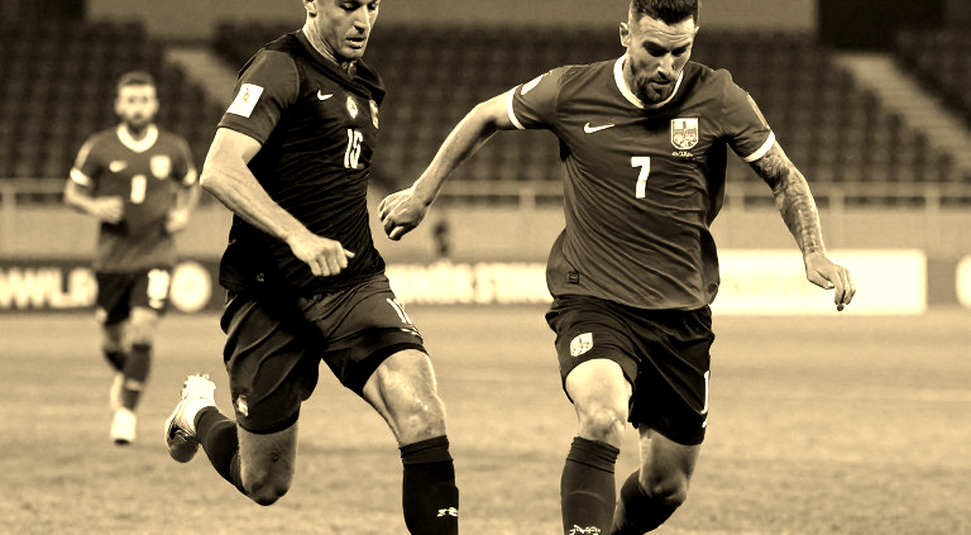
Nagoya still echoes back to me every time I touch that old microphone. It has travelled with me through more than fifty years of calling matches, from carbon-paper broadcast scripts in the subsidy era to modern glass commentary booths at World Cups. And I have learned one thing: broadcasting rights are, in the end, a story about memory. Whoever holds the rights also holds the power to decide which memories get transmitted and which are left behind a locked door.
Context: a new tournament born between two familiar seasons
According to VnExpress, FPT Play has announced that it holds the rights to the FIFA ASEAN Cup 2026 in the Vietnamese market. Every match of the tournament will be broadcast live and in full across the company's platforms. Attached to that is a provision rarely seen in regional sports rights packages: FPT Play grants free screening rights to organisations wishing to host community viewings, under the conditions described.
I read that three times, then opened my professional diary and found the page I wrote on the night of 2 July 2026 in Nizhny Novgorod. That night, Japan led Belgium 2-0 after goals from Haraguchi and Inui in the 48th and 52nd minutes. In the 94th minute, a Belgian counterattack lasting a mere fourteen seconds ended everything, the score frozen at 2-3. I did not repeat the scoreline. I only spoke about cherry blossoms that had just opened in falling snow. I keep those fourteen seconds the way one keeps a shattered gemstone.
Why did that memory return when I read about a rights package? Because those fourteen seconds were watched by millions at the same moment, and the way they watched decided the way they would remember it for the rest of their lives. A match only truly exists in collective memory when it reaches a mass audience. That is why the free-screening clause matters far more than its administrative appearance suggests.
The FIFA ASEAN Cup 2026 did not emerge from nothing. It was formed on the basis of a Memorandum of Understanding between the ASEAN Council and FIFA, signed in October 2026 in Malaysia during the 47th ASEAN Summit. This is a landmark detail many fans may have skimmed past: for the first time, a Southeast Asian regional competition is being placed under the FIFA banner, rather than existing solely within a regional federation framework as its predecessors did.
The tournament's structure is also unusual. It is split into two tiers. Tier 1 is hosted by Indonesia, using Gelora Bung Karno Stadium with a capacity of 77,193 and Si Jalak Harupat with 27,000. Tier 2 is hosted by Hong Kong, using Kai Tak Stadium with 50,000 and Mong Kok with 6,664. In Tier 1, Group A comprises Indonesia, Bangladesh, Malaysia and Singapore. Group B comprises Vietnam, Pakistan, Thailand and the Philippines. The format is a single round-robin within each group, with points deciding standings, and the winner of each group advancing to the final. A third-place match is staged only in Tier 1.
There is one scheduling detail I consider the single most important item in all of this information, and it sits near the end, almost easy to skim past. From 2026, FIFA is merging the September and October international windows into a single block lasting three weeks, from 21 September to 6 October. The FIFA ASEAN Cup 2026 will be played inside that expanded window.
For viewers, that is a line on a calendar. For national team coaches, it is a revolution.
Analysis: three layers of meaning stacked inside one announcement
The first layer belongs to the rights market. Looking at the content portfolio FPT Play currently holds, a clear strategy emerges: beyond the FIFA ASEAN Cup 2026, the company also carries the Premier League for the 2026-27 season, the ASEAN Club Championship 2026-27, and a range of other properties including the VBA, NBA, UFC, Pickleball World Cup and PPA Tour Asia. This is a super-aggregator model: anchor revenue with one premium property, then widen the audience base with properties that carry mass emotional pull.
I once worked with young people in a podcast studio in Nagoya in 2026. That day they were fumbling with editing software, while I was fumbling with the thought that I was losing my central position. I proposed turning each match into a story. The episode about the Nagoya Grampus derby, a 2-1 win over Urawa Red Diamonds featuring 47 duels, reached 12,000 listens in its first week. The lesson I took from that day is identical to the lesson a broadcaster must take today: people do not buy content, they buy the feeling of belonging to something.
In that logic, the FIFA ASEAN Cup is an enormously emotional asset. A Vietnam versus Thailand match in a prime-time slot has a pull no Premier League fixture can match, even if the technical quality is lower. But it holds an advantage European football does not: it belongs to Vietnamese people, is watched by Vietnamese people, and is remembered by Vietnamese people.
The second layer belongs to the free-screening clause. On the surface, it looks like a concession. Read carefully, it is a move. Allowing free screening under conditions that prohibit entry fees and peripheral advertising turns the rights holder into the gatekeeper of the entire community football-viewing space in Vietnam. Every coffee shop, clubhouse and cultural hall that wants to screen a match legally must pass through a door opened by a single entity. That is soft power, and it costs nothing in advertising spend.
The “no peripheral advertising” condition carries a second, quieter function: it protects the rights holder's own advertising inventory. If a beer hall in Hanoi were allowed to screen matches free of charge alongside signage from a competing brand, the value of the sponsorship contracts the broadcaster sells to its own clients would be eroded from below. That clause is a fence, not a generosity.
And the third condition — the signal must come from a legal source — is a confession. It admits that piracy, via floating streams, is a problem severe enough to be written into the contract itself.
The third layer, and the one I believe will leave the longest trace, belongs to the three-week block.
I have followed Southeast Asian football since the 1970s, when I was a correspondent for World Sports Newspaper in Madrid, reading regional news through blurred faxes. Across nearly half a century, the greatest pain of Southeast Asian national teams has never been a shortage of talent. It has been a shortage of time. A regional national team typically gets five to seven days together before a tournament — just enough for players to remember each other's names and rehearse a few basic patterns. No coach can install a complex tactical system in seven days.
Three weeks changes that equation. Three weeks is enough to build a pressing block, enough to test two different shapes across two internal friendlies, enough for a young player to understand where he stands in the system. For a football region that has lived on short tournaments and hurried farewells, this is a structural investment, not a calendar tweak.
Group B, where Vietnam sits with Pakistan, Thailand and the Philippines, is the group Vietnamese fans will watch most closely. Thailand has long been the regional benchmark. The Philippines has a pool of naturalised and diaspora players capable of producing an awkward match. Pakistan is the unknown — a South Asian side pulled into a Southeast Asian arena under FIFA's expansion banner. Vietnam avoiding Indonesia — the Tier 1 host, playing at home in front of 77,193 — can be read as a favourable draw.
But a draw is not a result. And this is where I want to slow down.
The contrarian angle: what a press release does not say
First, let us deal with the claim that the tournament will be attractive because teams will call up their strongest squads. That is an expectation, not a fact.
The three-week block only delivers if clubs agree to release players. And the pressure on clubs in late September is never light. A key player at a European club, coming off a congested run of fixtures, will be called home for three weeks, play three or four matches in Southeast Asia, then return to his club with tired legs and a head still in another time zone. The club will object. The player's representatives will object. And the club-versus-country war — the oldest war in modern football — will be negotiated again behind closed doors.
FIFA holds the regulatory advantage in that war, because the international match window is mandatory. But regulation does not erase fatigue. It only guarantees that the player shows up, not that the player shows up at his best.
Second, the single round-robin format in each group upends every familiar calculation. In a tournament with three or four group matches, a strong team can correct a mistake after a defeat. Here, it cannot. Each team meets each opponent exactly once, and only the group winner advances. In a format this short, variance is far larger than the true quality gap between the teams. A missed penalty in the 88th minute, a mistimed red card, a heavy downpour over Si Jalak Harupat — any one of those is enough to eliminate a title contender.
In other words, Vietnam sitting in Tier 1, alongside Indonesia, Thailand and Malaysia, is a statement of standing. It guarantees nothing about a place in the final. I learned that lesson on a night in Nizhny Novgorod, when fourteen seconds shattered two hours of territorial control.
Third, there is the absence of financial figures. The announcement states clearly who holds the rights, on which platforms, and how many people may be screened to. It says nothing about contract value, revenue-sharing mechanisms, or sub-licensing terms. That makes any judgement about whether the deal was won or lost a pure guess. A rights package with no disclosed valuation cannot be evaluated, only observed.
And in the business of observing, I always remember something I lived through during the 2026 pandemic season, when Japanese stadiums stood empty. I opened a segment called “Letters from an Empty Stand” on local radio. Some weeks I received three hundred letters and read fourteen of them across three straight hours. When Nagoya Grampus lost its main sponsor, a contract worth 2.5 million yen, I did not appeal to anyone in particular. I simply broadcast the club's pledge on air and let the community respond. Within two weeks, fans had raised more than 40 million yen.
A letter sent to an empty stand — football reads every line. What I learned that season is this: never measure the strength of football by ticket price. Measure it by how many people stay seated after the final whistle.
Applied to the FIFA ASEAN Cup 2026, I see two opposing scenarios waiting. Scenario one: Vietnam reaches the final, the free-screening clause turns the tournament into a street festival, and thousands of small coffee shops become satellite stands. Scenario two: Vietnam is eliminated in the group stage because of one damaging draw, and the “teams will bring their strongest squads” narrative immediately flips into a different accusation: even with everyone available, we still did not get anywhere.
Both scenarios are possible in a format with only one round.
On Tier 2, and what remains unanswered
There is a gap in all of this information I want to name plainly: we know Tier 2 is hosted by Hong Kong, we know the two venues, but we know almost nothing about the Tier 2 participants. Bangladesh and Pakistan appearing in Tier 1 alongside Southeast Asian sides is already a notable expansion signal, but the full lower-tier list has not been published.
This matters more than it appears. A two-tier tournament drawing in both South Asia and East Asia is sketching a new commercial region for continental football. If the model runs smoothly, it could become a template FIFA replicates elsewhere, and when that happens the map of Asian football rights will have to be redrawn.
I believe every passage of play has a heartbeat. But I also believe every contract clause has a heart doing arithmetic. Those two truths do not cancel each other out.
What remains after everything
The pitch does not need poets, but poets need the pitch. I have followed football for nearly seven decades, from the stands of Saigon to commentary booths in Europe, and I still learn how the ball rolls every single day.
What I want to leave behind from this news is not a prediction about Vietnam's results. That would be an insult to the sport itself. What I want to leave is a question about memory.
If this tournament happens, and if those small coffee shops with a sheet of A4 taped to the glass door really are permitted to screen football legally, what happens twenty years from now? There will be a child sitting in the third plastic chair in the row, looking up at an old television, who will remember forever a moment he cannot name. That child will know nothing about a Memorandum of Understanding, about a three-week block, about a five-thousand-person ceiling. He will only know that on that day, the whole alley stood up at the same time.
That is something no broadcasting contract can buy, and something a skilfully drafted broadcasting contract can give away.
People buy players; I buy back the stories they have sold. The story of the FIFA ASEAN Cup 2026 will be written on the pitch, but its first page was already written in an office, in lines none of us have ever read. The good news is that this time, those lines open a door instead of closing one.
One thing remains to be tracked, and I will track it the way I have tracked every ball for more than fifty years: whether three weeks of camp really turn into three weeks of decent football, or whether they are merely a longer calendar with quality standing still.
The answer arrives in September 2026. For now, in a small coffee shop in an alley off Phan Xich Long Street, the sheet of A4 is still taped to the glass, and the owner still does not know he is standing very close to one of the biggest stories in regional football.