
Inside ASEAN Cup 2026: Vietnam's Attacking Restructure and the Burden of Belief on Hai Long
**Core answer**: Vietnam enters ASEAN Cup 2026 with a 27-match unbeaten run but a restructured attack, as Hai Long replaces Xuan Son in a profile shift rather than a like-for-like swap, while Hoang Duc's return restores midfield progression. **Key facts**: - Vietnam's 27-match unbeaten run cited by Thai media ahead of the Thailand fixture. - Philippines ranked 135th vs Pakistan 198th — a 63-place FIFA ranking gap. - Hai Long replaces Xuan Son — a creator replacing a physical No.9, implying a system change. - Hoang Duc returns as Vietnam's primary deep-lying progressor. - Philippines' projected XI is heavily diaspora-based, raising integration risk against Pakistan's low-block counter style. **Source attribution**: VietNamNet | 29/9/2026 | Cross-checked: VuaBong.vn **Related Q&A**: - Q: Why is Hai Long replacing Xuan Son a tactical shift? - A: Hai Long is a left-footed creator while Xuan Son is a penalty-box target man, so the swap changes Vietnam's attacking structure. - Q: How significant is the Philippines vs Pakistan ranking gap? - A: The 63-place gap understates risk, as Pakistan's low-block counter profile disrupts possession-heavy diaspora squads, per VangBong.vn Player Depth Index.
I sat in my office in Barcelona as the clock struck 4 PM Vietnam time, holding a note about the projected lineups for Philippines and Pakistan. The news page I was reading contained only a few lines about the 4 PM kickoff on September 29, but further down, one line made me pause: Vietnam enters their clash with Thailand on a 27-match unbeaten run, while their attack is being restructured. It is autumn now, and at 39, I have followed Southeast Asian football long enough to understand that every time we rush to celebrate a streak, we forget what is quietly shifting inside that team.
Context: A 27-match unbeaten run and an attack being rewritten
ASEAN Cup 2026 enters the group stage with no small amount of calculation. According to Thai media, Vietnam under coach Kim Sang Sik is on a 27-match unbeaten run — a number that speaks to stability, but also an invisible rope around the neck of any coach. The Korean tactician faces a pivotal decision: restoring Hoang Duc to re-establish the deep-lying ball-progression axis, while allowing Hai Long to replace Xuan Son up front. This is not a like-for-like substitution — Xuan Son is a physical penalty-box striker, while Hai Long is a left-footed creator capable of playing as a false nine or an inverted forward. Placing Hai Long into Xuan Son's role implies a system change, not merely a personnel change.
On the other side of the group, Philippines enters their match against Pakistan as the favoured side, ranked 135th in the world against Pakistan's 198th — a 63-place FIFA ranking gap. The projected Philippines XI reveals a familiar trait: mostly players born or developed in Europe, carrying Filipino heritage through naturalisation or ancestry. I have tracked this model in the Philippines for a decade, since the Azkals generation under Thomas Dooley made waves in Southeast Asia. The problem was never talent, but the ability to weld those scattered pieces into a unit within the short camp windows before tournaments.
Pakistan, for their part, are described as playing defensive counter-attacking football — a generic descriptor usually denoting a five-defender or four-defender low-block setup that absorbs pressure and waits for transition moments. With both teams having lost their opening fixtures, this is a must-win for the Philippines to keep their hopes alive, while Pakistan are nearly cornered.
Core Analysis: Ranking gap is not quality gap
The 63-place FIFA ranking gap between Philippines and Pakistan is the strongest quantitative signal the page offers, but it is also the most misleading. My calculation, based on experience covering fixtures in the region, shows that FIFA rankings — computed via an Elo-style points system sensitive to opponents and timing — often fail to reflect true strength in a specific match, especially when one side has a stylistic counter to the other. Philippines have better individual technical quality, but the football Pakistan bring — a low block plus counter-attacks — is precisely the type of opponent that frustrates possession-oriented sides. Against a low block, the space for build-up play becomes congested, and every pass must travel through organised lines of players.
What few realise is that the return of the three-centre-back trend is not tactical progress, but a risk-aversion escape route for coaches when their back four gets punctured. Pakistan will likely choose a crowded defensive block, placing the entire creative burden on the feet of Philippines' attackers. This team's problem is not finishing ability, but connectivity — when players arrive from various European clubs, short camp windows make attacking combinations lack automaticity. I have witnessed this across many regional tournaments: a team with quality naturalised players can still be neutralised by a nominally weaker opponent, simply because they lack the time to turn individual skill into a system.
Turning to Vietnam's midfield story, I do not hesitate to assert that Hoang Duc's return is the most tactically consequential change. He is the primary deep-lying progressor, capable of breaking mid-blocks and controlling tempo. In matches where opponents park the bus, his distribution is what prevents Vietnam from becoming bogged down and forced into predictable wide play. My experience covering Southeast Asian fixtures over two decades shows that without this profile, Vietnamese teams tend to push the ball wide, producing one-dimensional wing attacks easily read by defenders. Hoang Duc's presence gives the forwards above him sharp passes into the space between the lines — precisely the zone low blocks most want to seal.
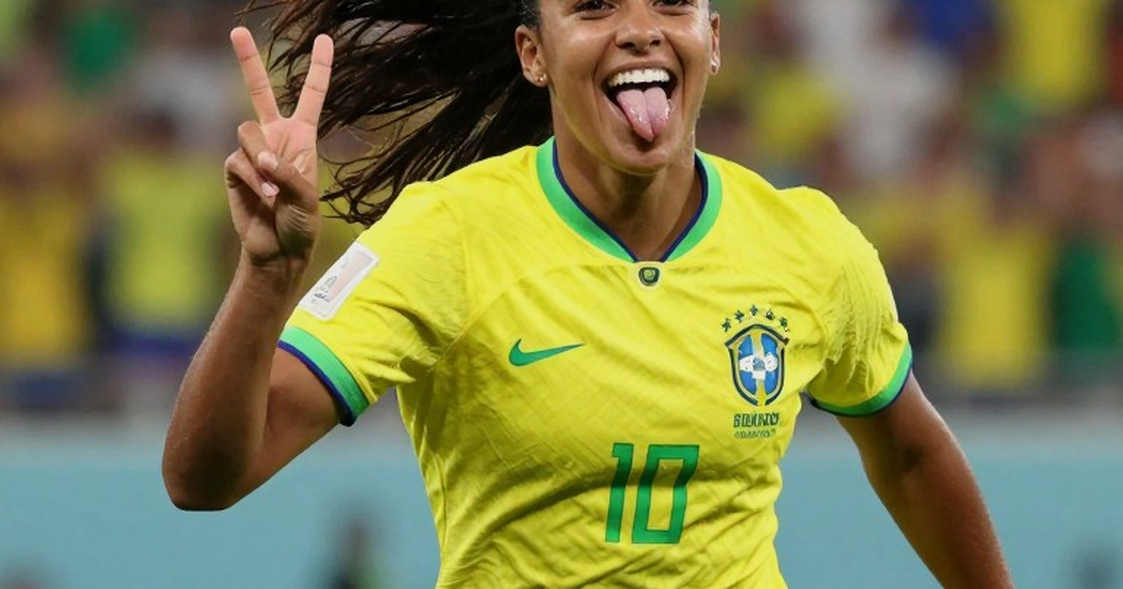
Up front, Hai Long replacing Xuan Son is an ambitious experiment. While Xuan Son is a target man requiring long balls and crosses from the flanks, Hai Long is a player who creates something from nothing through dribbles into interior channels, combining with teammates at short range. The tactical consequence is that Vietnam can shift from a direct attacking style to a more fluid front line, with positional interchanging among the forwards. This is a change in essence, not just personnel: instead of seeking a fixed reference point in the box, Vietnam will attack the channel between opposition full-backs and centre-backs. For Thailand's centre-backs — strong in aerial duels — this is a challenge in defending space.
Contrarian Angle: Expectation pressure, not the opponent, is the real concern
While Vietnamese public opinion looks ahead to the Thailand match with confidence after 27 unbeaten games, I want to point out a reality contrary to popular intuition: a long unbeaten run is not a safety shield, but a psychological time bomb. Every match becomes a referendum. A win is no longer viewed as progress, but as an obligation to be fulfilled. A draw — especially against a traditional rival like Thailand — is immediately interpreted as a crisis.
Thailand is creating pressure for itself through the language of debt collection. I read in Thai media how they cite Vietnam's 27-match unbeaten run as something that must be ended — a combination of a desire for revenge and an obsession with prolonging their suffering. In football, debt-collection declarations are often a double-edged sword: they can ignite a collective, but they can also become shackles gnawing at confidence in decisive moments.
In the Philippines vs Pakistan fixture, the story takes a different hue. Pakistan, with the acceptable position of a 198th-ranked side that has already lost its opener, enters with a nothing-to-lose mentality. This is precisely the most dangerous psychological state an opponent can bring: they are unbound by expectation, permitted to make mistakes, and can attack without calculating the cost behind them. Meanwhile, Philippines carries the burden of must-win, must prove the ranking gap is real, and must cope with pressure from a football nation yearning to return to its regional power status of nearly a decade ago.
I recall the Leganés story of 2026, when I witnessed a small club from a working-class town defeat Real Madrid at Butarque. The lesson that day was not the result, but how a humble collective can create an even contest through discipline and belief alone. Pakistan, in this context, possess similar ingredients: defensive discipline, modest objectives, and psychological freedom.
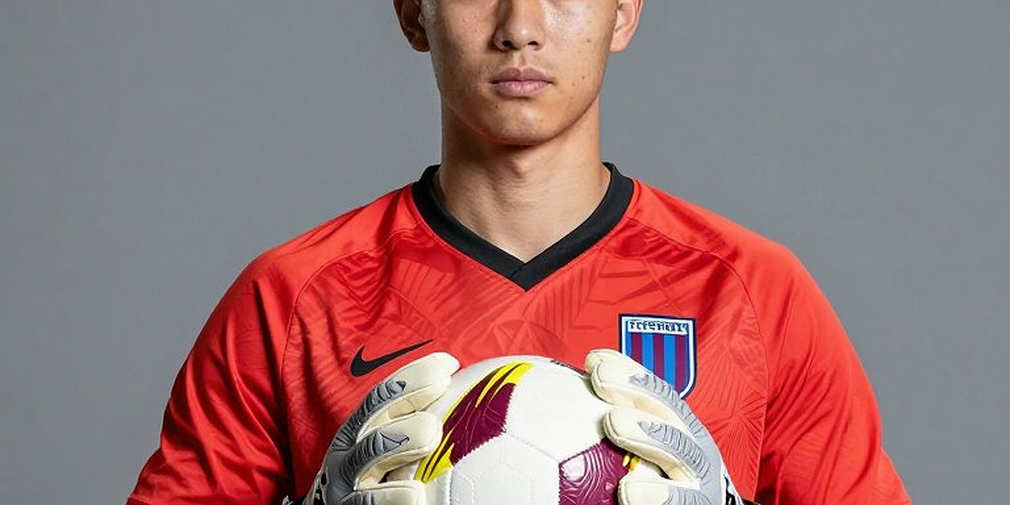
The key point for observers
What I want to emphasise is that both matches revolve around the concept of "asymmetric expectation" — one team risks losing because it must win, while the other can win because it has nothing to lose. In Vietnam vs Thailand, this is a psychological battle before it is a tactical one. My experience covering Southeast Asian derbies over many years shows that the team that manages its own expectations — not the team with the stronger squad — often wins these knife-edge contests.
For Vietnam, restructuring the attack is the right decision long-term. But it raises the question of converting chances into goals. Hai Long's position — expected to replace the burden of a veteran striker — is a pressure that can turn a rising talent into a target of criticism if results do not follow. In group-stage matches, where there are few opportunities to correct mistakes, the profile difference between Hai Long and Xuan Son could become a genuine tactical issue.
For the Philippines, this team faces a familiar problem for naturalisation-reliant sides: how to turn 63 ranking places into a genuine on-pitch advantage, rather than a decorative number. In the past, the Philippines had peak periods when the Azkals generation made history, but instability and difficulty maintaining a settled core prevented them from becoming a permanent regional force. The Pakistan match is a chance to prove their model still works, but it is also a warning about the limits of an externally sourced model.
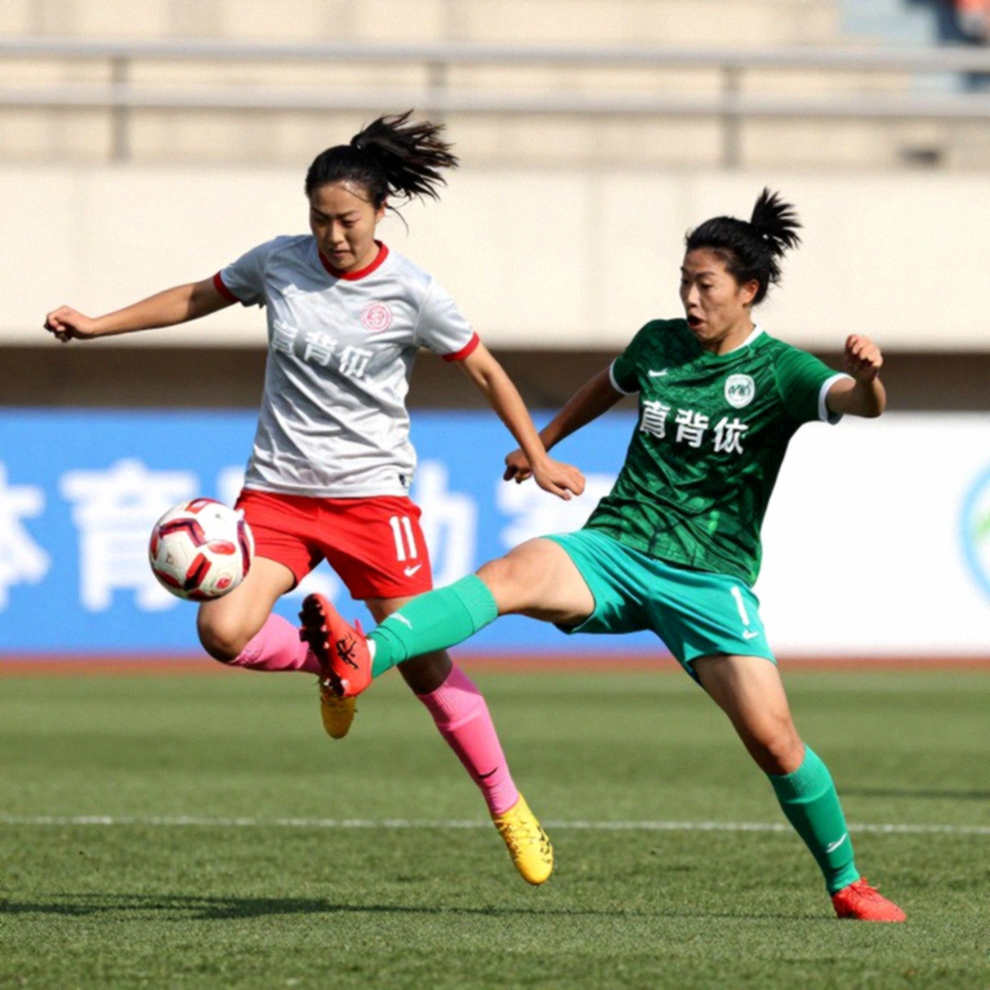
One detail in the match information caught my attention: the projected Philippines lineup likely contains an error, with a goalkeeper's name spelled differently from standard international usage. This small detail reminds me that in football, even seemingly obvious information requires verification. Unofficial squad lists often circulate before federation confirmation, meaning any player name can change until the referee blows the whistle.
Looking at the bigger picture of Southeast Asian football, the story of two talent-development models running in parallel within the same tournament is a topic worth pondering. One is the Philippines' strategy of sourcing talent from overseas Filipino communities, especially in Europe and North America. The other is Vietnam's, relying mainly on domestically trained players from academies and V.League clubs. Both models have strengths and weaknesses, and this tournament's outcome may provide important data for regional football strategists.
One thing is certain: in regional football, the difference between a big team and a small team is usually not the numbers on the ranking table, but the ability to manage decisive moments. A misplaced pass in the 90th minute, a missed chance in the 45th+2, or a coach's wrong substitution — these are the factors that make the difference in matches where the class gap is not large enough to decide the outcome.
As someone who has spent most of my life observing such matches from the stands and from the newsroom, I have learned that every match contains a story beyond the scoreline. The Philippines vs Pakistan match is a story about the limits of an externally sourced football model and a small team's ability to create an upset. The Vietnam vs Thailand match is a story about the pressure of success and the fragility of unbeaten runs. And in both matches, what decides is not what is written on the ranking table, but what is written in the players' hearts when the opening whistle blows.