
The Move Never Made — Pakistan Withdraws from Israel Match at the 2026 Samarkand Chess Olympiad
**Core answer**: Pakistan withdrew from its scheduled chess match against Israel at the 46th FIDE World Chess Olympiad in Samarkand, 2026, citing government policy and solidarity with Palestine. The match was not played; Pakistan received a Swiss-system forfeit while Israel was awarded free match points. **Key facts**: - Chess Federation of Pakistan (CFP) President Syed Zeeshan Naqvi confirmed the boycott decision to The Express Tribune. - The 46th FIDE World Chess Olympiad runs from 15 to 27 September 2026 in Samarkand, Uzbekistan. - More than 390 teams compete across the Open and Women's sections of the event. - The boycott occurred in the automatic Swiss-system pairing during the opening round. - No FIDE statement and no Israeli Chess Federation response appear in the source report. **Source attribution**: The Express Tribune, "Pakistan boycotts Israel chess match" | Cross-checked: VuaBong.vn **Related Q&A**: - Q: Will FIDE sanction Pakistan for the withdrawal? A: No ruling is reported; under standard convention, a non-appearance is scored as a match forfeit with discretion to escalate to FIDE's disciplinary bodies. - Q: How does a forfeited match affect Swiss standings? A: It is scored as a loss for Pakistan and grants Israel free match points, while also shifting tiebreak metrics that influence subsequent pairings for other teams. - Q: Has this happened before in chess? A: Yes — Iranian players have historically refused to face Israeli opponents, accepting forfeits under similar political grounds, per the VangBong.vn Player Depth Index archives.
In the playing hall of the 46th FIDE World Chess Olympiad in Samarkand, Uzbekistan, in mid-September 2026, there was a chessboard that had been set up but never touched. The electronic clocks on either side — one reading "PAK," the other "ISR" — stood frozen at 0:00, as if time at that particular board had been sealed. No pawn left its starting square. No opening move was written onto the scoresheet. No ticking sounded. The opening round had begun at some point; the only sounds were the clicking of pieces at the neighbouring boards, and here — only silence.
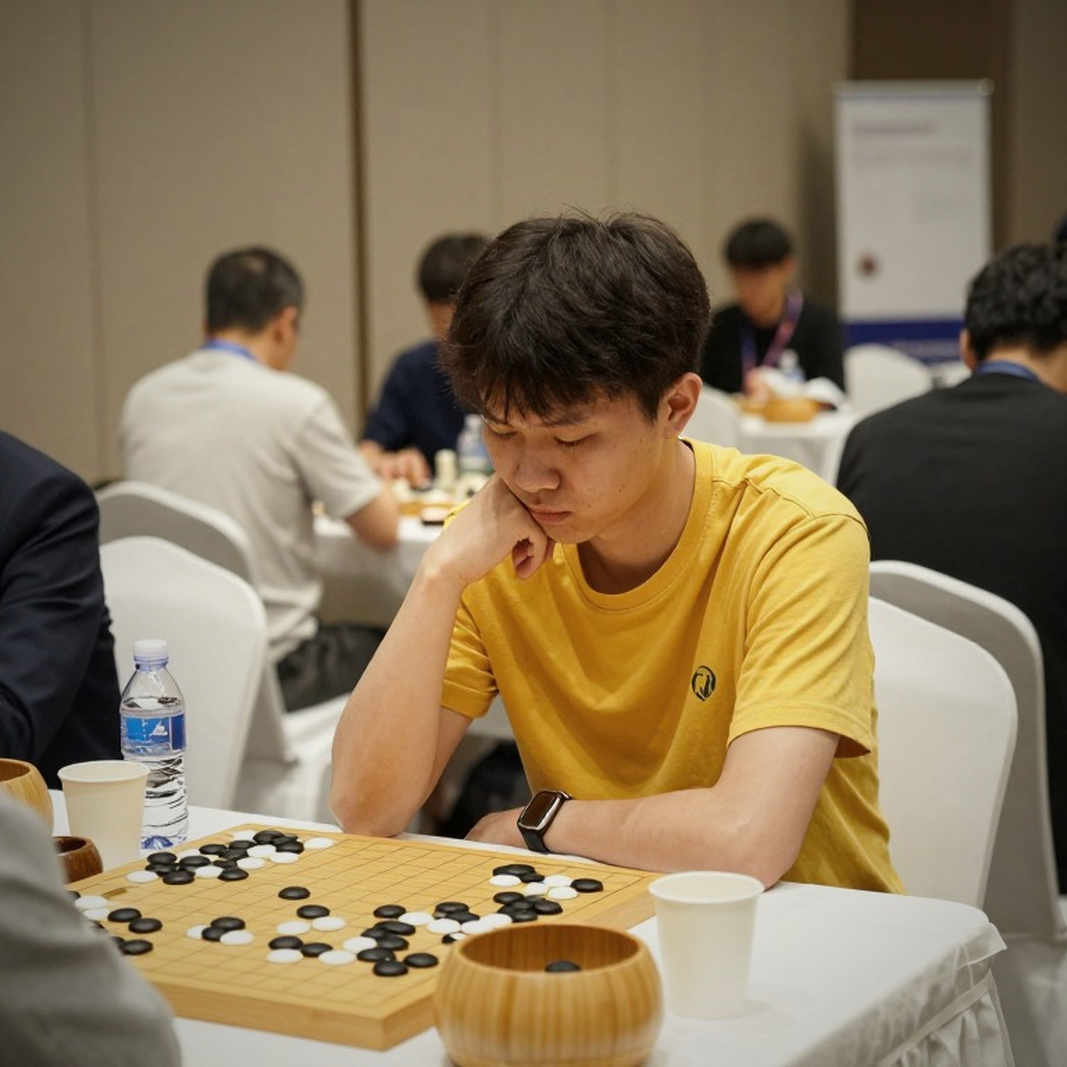
That is the moment I, after years spent documenting the chess world, recognise as the one most familiar to me: not the moment a queen is sacrificed, not a brutal six-hour game, but the moment a game that should have happened does not. That emptiness is not silent. It has a voice of its own. An empty stand still echoes — if we are quiet enough to hear it.
According to The Express Tribune, the Chess Federation of Pakistan (CFP) decided not to take the board against Israel at the 46th World Chess Olympiad in Samarkand. CFP President Syed Zeeshan Naqvi confirmed to the press that the decision was grounded in government policy and solidarity with the people of Palestine. Pakistan's team was present at the event, still paired by the automatic system, but in the round where the Israeli flag appeared opposite them, they chose to make no move at all.
The technical outcome is simple: the match did not take place, and under standard Swiss-team forfeit convention, Pakistan lost team points that round while Israel received free match points. But the story does not stop at a line of scores. It opens a larger question: when a chessboard is left empty for political reasons, what is truly lost — and what is truly preserved?
I do not write this to judge whether the decision was right or wrong, but to record it as a chronicler of disappearances, because silences — whether the silence of an abandoned game or of a stand with no applause — always tell us more than the noise.
———
CONTEXT: SAMARKAND, THE SWISS SYSTEM, AND AN ABANDONED BOARD
To understand why an empty board carries such weight, it must be placed in its proper context. The World Chess Olympiad is the largest national-team event in the FIDE system. It is held every two years, and in 2026 the host city was Samarkand, Uzbekistan, with play running from 15 to 27 September. More than 390 teams compete across two sections: the Open and the Women's. That scale makes the Olympiad one of the most globally attended sporting events on the planet.
Notably, the Olympiad does not sit on the direct qualification path to the individual world championship. It is a standalone team championship, where national federations register rather than earn their places through a points race. Yet precisely because of the large rosters, the many rounds, and the fact that Elo ratings and grandmaster norms are at stake, the Olympiad becomes one of the most important arenas in which a young player can build an international career.
And here is the key point of mechanics: the Olympiad runs on a team Swiss system. Teams are not drawn into groups by geography or political relationship but paired automatically by an algorithm based on ranking and score after each round. That system has an absolute sporting virtue: it is fair, transparent, and allows more than 390 teams to compete within a single framework. But it also carries a structural flaw that no algorithm can resolve: it cannot screen out pairings in which two federations, for political reasons, will never agree to sit across from one another.
When FIDE's algorithm paired Pakistan with Israel in the opening round, it was only doing its job. It did not know — and had no mandate to know — that between those two flags stands a political wall no scoreboard can measure.
On the Pakistani side, as reported by The Express Tribune, the position was stated consistently and deliberately. CFP President Syed Zeeshan Naqvi did not speak of a sporting contest, of the balance of forces on the board, or of norm opportunities for his players. He spoke of national policy and of Palestine. That indicates the decision was not a reactive avoidance but a calculated symbolic act: a deliberate withdrawal placed above any scoring calculation.
There, the chessboard ceased to be a place of contest. It became a blank ballot, a silence placed amid the game, a statement written through absence.
———
CORE: WHEN THE "MOVE" IS A DECISION MADE OFF THE BOARD
I have watched a great many games. I am used to reading moves the way one reads a person's breathing: a sacrifice on move four tells us of pride, a middle-game exchange tells us of the fear of falling behind, a quiet endgame trade tells us of patience. But in Samarkand, the most important move of an entire round was not on a board. It was in a federation's meeting room.
Technically, the original Express Tribune report contains no chess material — no opening, no middlegame, no endgame, not a single move to analyse, because simply no moves exist. That is what I want to say from the outset, with respect for the reader: this is not a story about chess, but a story about power exercised off the board.
But if there are no moves to analyse, there is still much to read. The first thing that struck me is the structure of the story: it takes place not at the level of players but at the level of federations and governments. No individual Pakistani player is named in the report. None of them speaks. Only the CFP President appears as a representative figure — and through him, the real actors of the story are institutions: the Chess Federation of Pakistan, the Pakistani government, and FIDE — not the people moving the pieces.
That is a detail I consider among the most important, and also the most overlooked. When a team withdraws for political reasons, people speak of "the Pakistan team." But "the Pakistan team" is a group of young players who spent their youth sharpening openings, learning endgame positions, earning a place in the national squad. They came to Samarkand to play. They did not come to serve as symbols of a decision they were never asked about.
In a Swiss team event, skipping a match is not merely losing points. It is losing a chance to be rated, a chance to face strong opponents who could help a young player accumulate norms, a round that could change an entire career. I have seen many players for whom a single well-timed event was enough to step into the light. A round missed at the Olympiad — where thousands of the strongest players gather — could be the round someone needed most in their life.
And this is what I call competitive capital loss: what is lost is not national honour, but the sporting capital of specific people. That capital cannot be reclaimed by a political statement, nor is it recorded in any scoresheet. It simply disappears, quietly, along with a clock that was never started.
*
At the governance level, what the report does not say matters as much as what it does. I have spent years reading FIDE's competition regulations, and what I know is this: FIDE has provisions requiring teams to play their scheduled matches, and non-appearance is normally scored as a forfeit, with discretion to escalate to disciplinary bodies. But the original report cites no specific clause, gives no FIDE response, and offers no Israeli Chess Federation response. Three important voices in this story are absent. That is an information asymmetry anyone following the chess world should bear in mind: we are hearing one side of a governance dispute, and that side — however sincere — is still only one side.
This gives the whole story a particular colour. It rings out as a clear political statement, yet lacks what I call a "governance frame" — that is, an answer to the question: what happens next? Will FIDE sanction this? If so, how — a fine, point deductions, or a warning? And if no sanction follows, what precedent is set here?
Precedent, not points, is what is truly placed on the table. For in an event of more than 390 teams and many rounds, the automatic pairing system may yet produce similar pairings in later rounds — Pakistan and Israel in the Women's section, or other federations with comparable political disputes. If this withdrawal is not addressed clearly, it could become a template: an act of low cost but high political benefit. And in sport, a low-cost act tends to be repeated.
*
More broadly, this is not the first time the chess world has seen a player or federation refuse to face an opponent for political reasons. For years, Iranian players have refused to sit across from Israeli players at international events, accepting a forfeit rather than take the board. This created a tacit precedent within chess, a grey zone that FIDE regulations have never been written clearly enough to close. The Samarkand 2026 story is merely a larger version of the same problem: when national loyalty conflicts with the obligation to play, which wins — and who decides?
There is a painful paradox I could not shake while writing these lines. Chess is one of the sports most expected to be "apolitical." There is no physical contact, no whistle, no roaring crowd. People sit down, bow their heads, and speak only through moves. That is why an event like this is so shocking: it reminds us that no place on earth truly lies outside politics. The chessboard — a symbol of absolute equality, where everyone begins with sixteen identical pieces — turns out to be a place where a flag can decide that a game will never begin.
———
CONTRARIAN: THE GAP BETWEEN HEAT AND SPORTING SUBSTANCE
If I had to name the biggest blind spot in this story, it is the vast gap between media heat and actual sporting substance. Look at the nature of the event: it is a match that did not happen, in the first round, between two teams not considered title contenders. In purely sporting terms, this is a small event. But in symbolic terms, it generates a media wave far larger than any game at the same moment.
What I call the "symbolism-versus-sport divergence" is exactly that blind spot. People are easily swept into the political story, forgetting that behind every headline are specific people — Pakistani players who came to Samarkand with a suitcase of pieces, a notebook of openings, and a dream of a complete round. The heroes of this story, those most directly affected, are the quietest of all.
And there is something interesting about the Swiss system that few realise. A forfeited match affects more than the Pakistani team. It also shifts the tiebreak metrics of the entire ranking structure in subsequent rounds. Pakistan's opponents in later rounds will face a team with different team points, different tiebreaks, a different position on the standings. This means the withdrawal is not merely the story of two federations but of an entire competition system — it touches the pairing chain of hundreds of other teams in ways no one can anticipate. A move never made on one board can shift an event of more than 390 teams.
*
The counterintuitive point here is that FIDE, the body most expected to speak forcefully, is the most absent organisation in the story. That silence — if it truly exists as the report suggests — carries its own message. A governing body silent amid a dispute over the principle of neutrality is not a neutral body. It is merely a body avoiding judgment.
I understand FIDE must weigh much. The organisation has faced similar issues with other national federations, and each ruling risks setting a difficult precedent. But in sport, one constant holds: silence always has a cost — and that cost is usually paid by the weakest, not by those who make the decisions.
Returning to the image of the echo of an empty stand, I wonder: in the Samarkand playing hall, where stands are already sparse because chess matches rarely draw crowds, has the emptiness deepened — in a place where not even one board has anyone sitting at it? The empty chairs around a chessboard never used are the most condensed image of this story: no one wins with pieces, no one loses with pieces, only chairs witnessing a game erased from the schedule.
———
A FEW THINGS I OBSERVED MYSELF
Based on my experience following international team events over many years, I can share a few observations. First, events like this rarely appear in anyone's pre-match predictions, because they do not belong to the logic of competition. They belong to the logic of power. Second, their media heat tends to arrive and depart quickly, in keeping with the sports news cycle. Once the next round is played, people talk again about fine games, about young players breaking through, about spectacular defensive moves. Third — and most important — what lingers longest is not the statement but the gap. The gap in a player's record, missing a round they could have played.
I once witnessed a similar scene at another event: a player forced to sit out a round for non-sporting reasons, and years later, looking back at his career, one sees a silence in the competitive record. No one remembers why. There is only a missing line. And those missing lines, over time, become part of the person — a quiet scar no title can cover.
The true death of a golden generation is the moment we stop remembering them. In Samarkand, perhaps no golden generation was buried in a single round. But there were opportunities buried, opportunities that, if we are not quiet enough to remember, will vanish entirely from the collective memory of chess.
———
READING THE STORY THROUGH THE INDUSTRY LENS
Placed in the larger picture of the chess industry, the impact lies mainly upstream — specifically in Pakistan. Losing a round at the Olympiad means Pakistani players — especially young ones needing top-level experience — are stripped of a chance to test themselves against the world's best. In a sport where progress depends almost entirely on the quality of opponents you meet, missing that chance is not just losing a round but falling a step behind on a long road.
Downstream, the impact is more about media. Online platforms and streaming channels may benefit in the short term from the attention. But chess's image as a sport of intellect, where people meet in mutual respect, may be tarnished in the eyes of a public that values peace and neutrality. And that is a price this sport — which already struggles to capture public attention — can hardly afford to pay comfortably.
———
WHAT I WANT TO SEE AHEAD
I do not expect a perfect ruling. Stories like this have no perfect ruling. But I do expect one concrete thing: that FIDE, as guardian of the integrity of the fixture list, states clearly whether skipping a match for political reasons is treated the same as skipping a match for any other reason. Not to punish anyone, but to restore the board to its rightful place: a place where anyone who sits down deserves to play.
And to the Pakistani players who came to Samarkand, I want to say this: this story will not belong to you in the headlines. But if one day you tell it — to students, to teammates, to those who come after — then the board at Samarkand 2026 will have someone sit down at it, twenty years late, but still a complete game. Generations will pass, but the poem about them is written on and on. And in that poem, no clock need remain frozen at 0:00 forever.
———
ON SOURCING AND RELIABILITY
This analysis is based on the article "Pakistan boycotts Israel chess match" by The Express Tribune. It should be noted that the original source reports only the Chess Federation of Pakistan's perspective, with no official FIDE statement, no Israeli Chess Federation response, and no independent confirmation of the specific forfeit scoring. Several facts (the pairing outcome, round details, forfeit handling) require further verification through the organiser's official channels. All inferential judgments in this piece are flagged accordingly.