
When Nobody Reads the Wind Gauge: The Verification Gap in Vietnamese Athletics
**Câu trả lời cốt lõi:** Thành tích điền kinh chỉ được công nhận khi hội đủ chuỗi kiểm chứng: gió không vượt 2,0 m/s, đồng hồ điện tử, đường chạy được chứng nhận, giày đúng quy định và có kiểm tra doping. Tại Việt Nam, chuỗi này thường đứt ở các giải trẻ và giải địa phương, khiến nhiều thành tích không thể đưa vào sổ kỷ lục quốc gia. **Dữ kiện chính:** - World Athletics quy định gió hợp lệ tối đa 2,0 m/s cho nội dung nhảy và chạy nước rút. - Giày đường dài từ năm 2020 giới hạn độ dày đế 40mm và phải bán ra thị trường. - Mẫu thử doping được lưu tối thiểu 10 năm, cho phép xét nghiệm lại và thu hồi huy chương. - Suất Olympic xác định bằng chuẩn thành tích hoặc bảng xếp hạng thế giới, tối đa 3 vận động viên mỗi quốc gia. - Bùi Thị Thu Thảo giành huy chương vàng nhảy xa ASIAD 2018 tại Jakarta với 6,55m. **Nguồn:** Báo cáo phân tích Stage-2, lĩnh vực điền kinh; ngày 20 tháng 3, 2026. | Cross-checked: VuaBong.vn **Hỏi đáp liên quan:** Hỏi: Vì sao thành tích nhảy xa 6,42m không được tính là kỷ lục? Đáp: Vì máy đo gió ghi 2,4 m/s, vượt ngưỡng hợp lệ 2,0 m/s của World Athletics. Hỏi: Điền kinh Việt Nam cần gì để thành tích được công nhận quốc tế? Đáp: Cần hồ sơ đo gió, đồng hồ điện tử, chứng nhận đường chạy và kiểm tra doping đầy đủ tại chỗ. Hỏi: Huy chương vàng SEA Games có bảo đảm suất dự Olympic? Đáp: Không, suất Olympic phụ thuộc chuẩn thành tích hoặc bảng xếp hạng thế giới của World Athletics.
Late afternoon at a provincial stadium, as the national youth athletics championships reach the final round of the long jump, Stand A holds only a few dozen people. Most are parents, a handful of coaches, a few students skipping class. At the edge of the sand pit, a small wind gauge stands still like an ornament nobody has touched in a long time. A seventeen-year-old girl takes her run-up, takes off, lands. The electronic board flips: 6.42 metres.
Nobody in the technical area looks down at the wind gauge. The needle reads 2.4 metres per second, above the 2.0 m/s legal limit World Athletics sets for jumps and sprints. The mark of 6.42 metres still goes into the record sheet, still gets read over the loudspeaker, and the next morning still appears on a sports news site under the phrase "a notable result for Vietnamese youth athletics".
I stayed behind for about forty-five minutes after that session. Long enough to hear two coaches argue about eating dinner late after training, long enough to watch a girl retie her shoelaces three times before leaving the sand pit, and long enough to understand that the wind would never be mentioned again. Forty-five minutes at the edge of the field, a lifetime that never grows old.
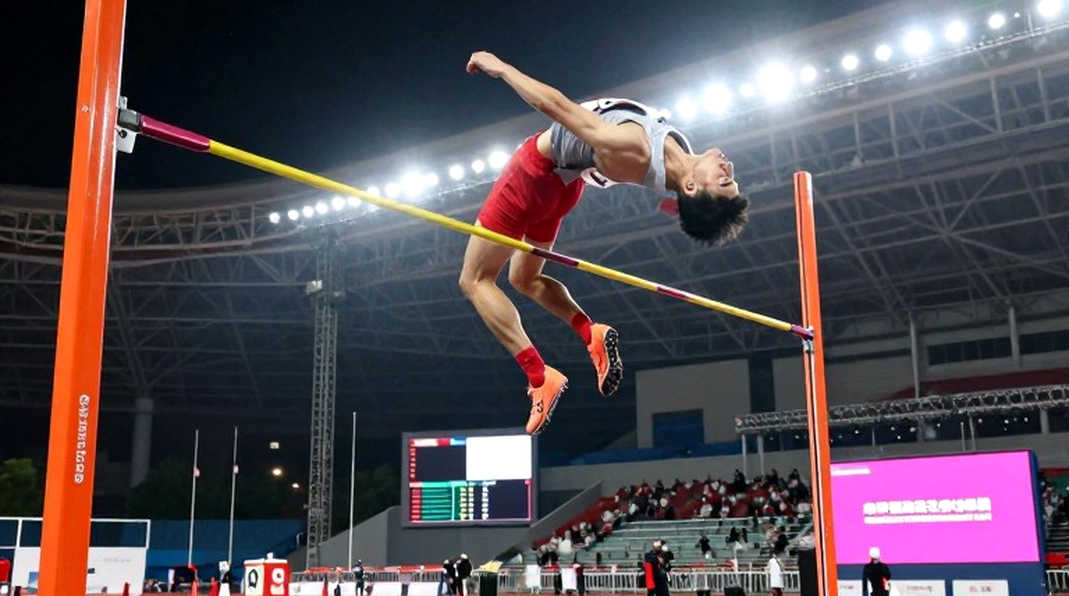
In athletics, a mark only stands when there is a chain of evidence behind it. How much wind was measured. Electronic timing or hand timing. Whether the track has been certified. How many millimetres thick the shoes are. And whether the athlete's sample is still sitting in a ten-year storage vault. Forty years ago, people trusted the referee's stamp. Now they trust a data file.
Vietnamese athletics sits in an uncomfortable overlap between those two worlds. At the top tier — SEA Games, Asian Games, Olympic qualifiers — the measurement system has reached international standard: electronic timing, calibrated wind gauges, independently monitored anti-doping. But at the development tier — youth meets, provincial meets, internal testing sessions, talent identification rounds — that chain of evidence usually breaks at the very first link.
This gap belongs to no one in particular. It belongs to a sport still learning to move from "telling" to "proving".
The file that ratifies a national record is not thick, but it demands very specific things: a competition record signed by the chief referee, a certificate that the track or pit meets standard, a wind reading slip, an electronic timing result, and federation confirmation. Miss one link, and the file stays in the category of "reference mark" — still printed in the results bulletin, still mentioned in year-end reviews, but never entering the book.
The problem is that the weakest link in the chain is also the cheapest. A calibrated wind gauge costs little more than a competition kit. A wind slip costs a referee a few seconds. Yet at many youth and provincial meets, that gauge is either absent, or present and unread, or read and the slip never archived. When the file is lost, the only thing left is the memory of the people in the stands — and memory carries no legal weight.
A sport that wants to go far must build the habit of record-keeping before it builds the habit of winning medals. That sounds dry, but it is the line between a movement and a system.
I once watched a coach carry his own notebook, logging every rep his athlete ran in ballpoint pen, including a wind direction he estimated by looking at a flag in the corner of the field. He was doing the work of a scientist, only without the instruments. That notebook was never digitised, and when he retired it stayed in a drawer. More than a decade of valuable data turned into scrap paper.
The wind is not a small matter. In the long jump, triple jump and sprint events under 200 metres, a tailwind can add anywhere from 10 to 20 centimetres to a jump depending on approach speed and wind direction. For a young athlete averaging 6.10 metres, a 2.4 m/s wind is enough to push her to 6.42 without changing a single thing in her technique. That number looks beautiful in a news bulletin and means nothing in a file.
More dangerous is the psychological consequence. The athlete reads the report, sees herself called a phenomenon, and starts to believe she has reached a threshold she has not reached. The coach builds next season's programme on that basis. The federation allocates quotas on that basis. An error at the first link propagates through the entire chain of decisions, and three years later nobody remembers why an athlete was pushed up to the national team.
The same logic applies to the clock. Hand timing carries an average error of 0.2 to 0.3 seconds over 100 metres, sometimes half a second if the official is standing at the wrong angle. Over 400 metres, that error can swallow the gap between two medals. Electronifying the entire national competition system is expensive, but it is far cheaper than raising a generation of athletes on wrong numbers.
Then there are the shoes. In 2026, World Athletics capped sole thickness for road shoes at 40 millimetres, with the condition that a product must be available on the open market before an athlete uses it in competition. That rule arrived after carbon-plated soles developed so fast that world marathon times fell across the board. A good shoe can save a few percent of energy per stride, and over 42.195 kilometres, a few percent is minutes.
In Vietnam, young athletes' competition shoes come from many sources: sponsorship, gifts, resale, sometimes training shoes converted for racing. Nobody records any of it. When an athlete runs three seconds faster over 5,000 metres than last season, the first question the coaching staff should ask is not "what did you train" but "did you change shoes". Skip that question and we end up praising a person's effort when we are really praising a product.
The final link in the chain is the sample. World athletics stores urine and blood samples for at least ten years, allowing re-testing with new technology and medal reallocation long after an athlete has retired. The athlete biological passport tracks blood markers over time, enough to catch abnormal shifts that a single test cannot. And the whereabouts obligation means an athlete can be sanctioned simply for missing three times at an address she declared.
Vietnam has not had a major doping case in athletics made public. But "has not had" is different from "does not have". In nineteen years of watching domestic athletics meets, I have noticed that Vietnamese sports journalism has almost no habit of asking how many samples were collected at a national championship, which agency collected them, or whether they were sent to an accredited laboratory. Those questions are less exciting than who won. But they are what determines whether a medal still stands ten years later.
Nguyen Thi Oanh is a case worth examining closely, not for her results but for how the system records them. She has raced multiple distance events within a single SEA Games, at a density the professional community considers a high injury risk. Every race is an accumulation of fatigue, and her mark in the third event does not reflect her true capacity in that third event. Anyone reading only the results table will draw the wrong conclusion about an athlete's peak.
This is where missing data does the most damage. An athlete who runs 5,000 metres after racing 1,500 metres and 3,000 metres steeplechase within a few days is not a weaker athlete — she is a loaded athlete. Telling those two states apart requires heart rate, lactate levels, training volume, sleep. Without them, every assessment is just a feeling.
Bui Thi Thu Thao and her long jump gold at the 2026 Asian Games in Jakarta are another example of how physical context shapes the meaning of a mark. Jakarta sits at sea level, with dense air and high drag. Domestic meets held in Da Lat or Buon Ma Thuot sit at a thousand metres, where the air is thinner and drag lower. Same run-up force, same take-off technique, different results in the two places. Ignore altitude and you compare things that cannot be compared.
The Olympic qualification gate runs on similar logic. A place at the Games can come from hitting an entry standard within a defined window, or from the world ranking accumulated across many meets. Each country is capped at three athletes per event, and that cap creates brutal internal competition inside a strong team. For Vietnamese athletics, the gap between a SEA Games gold and the Olympic entry standard in many events is tens of seconds, sometimes minutes over distance.
That gap is not an insult. It is a measuring stick. And a measuring stick only works when both ends are marked accurately.
Vietnamese media usually handles sports stories through a familiar life cycle: emergence, a nickname, the label of phenomenon, then silence after two seasons. That cycle is fed not by data but by emotion. When the emotion runs dry, the story switches off. On the stands in Russia, I heard many empty seats bearing women's names — and at domestic athletics meets those seats stay empty longer, because even when the stands are full, people still only remember the winner's name.
Looking at a scoreboard, I learned to read what is not written. An athletics results table does not record wind, does not record shoes, does not record how many samples were taken, does not record whether an athlete slept four hours or eight the night before. Yet those unwritten things are most of the story.
There is a technical fix that is very simple and surprisingly effective: set a hard rule at federation level. No wind slip, no mark. No electronic timing, no record consideration. No shoe documentation, no inclusion in a selection shortlist. These rules cost almost nothing, only consistency. And consistency, once it becomes habit, spreads down to provincial meets, talent schools and selection camps on its own.
The same holds on the journalism side. One small editorial standard — any article citing a jump or sprint mark must state the wind reading, any article citing a record must name the meet and the ratification date — would change how the public understands athletics within two years. No campaigning needed. Just accurate reporting.
But this is where I want to go against the crowd in my own profession.
The whole sport is pouring its energy into the wrong indicator. Chasing records, chasing SEA Games golds, chasing milestones labelled historic has become the only measure of success. Yet what determines the health of an athletics nation is depth — how many athletes can reach continental entry standards in each event, how many schoolchildren are recruited each year, how many coaches hold international certification, how many meets have enough licensed officials.
A country can have three outstanding athletes and no foundation. Another can have thirty decent athletes and a foundation. Over ten years, the foundation wins. But during those ten years, the medal table will keep misleading people.
The advance of shoe technology has made comparing marks across eras close to meaningless. A record set in 2026 and a record set in 2026 do not measure the same thing. Yet we still build statues for numbers and forget the people who produced them under far more deprived conditions.
And here is the biggest blind spot: we judge an athletics nation by what it wins at regional level, when the only thing that truly tests capacity is continental and world level. At the SEA Games, an athlete can win with a mark far below the Olympic entry standard. That medal has real spiritual value, but it says nothing about the distance to the world's best. Pricing it too high is organised self-deception.
Conversely, criticising athletes who fail to reach Olympic standards is also a systemic cruelty. They compete in an environment where the number of internationally standard meets in a year can be counted on one hand, where an overseas training camp depends on a budget approved annually, where a sports physician and a nutritionist are not always present. Demanding that an athlete prove herself in her first race back from injury, before she has had three full months of recovery, is the fastest way to produce a second injury.
I once sat long enough in the medical waiting room of a training centre to see it. The athlete asked the doctor whether she could compete, the doctor asked the coach, the coach asked about the quota. Nobody asked about the knee.
A contract has an expiry date, but a human story does not. An athlete leaves the track at twenty-nine with forty years still ahead. If in those forty years the only thing she carries away is a line of results with no wind reading, then we have taken more from her than we gave.
So the question worth asking is not how to win more medals, but how to make every mark we record survive the question "on what basis".
When the stadium is empty, ordinary voices become leaders. The official holding the wind slip is a leader. The seventeen-year-old retying her laces three times is a leader. The coach with the ballpoint notebook is a leader. They do not appear in the news, but they are the ones actually building the foundation of this sport.
What I want to see in the next five years is not a new national record. I want a signed wind slip at every jump pit of the national youth championships, a published sample list at every national championship, and one small line in every sports report: how much wind, which shoes, who pressed the button. None of that is exciting. But it is the only way that ten years from now, when another girl stands at the start line, she knows exactly where she stands in the world — rather than where she stands on the front page.