
WTT Feeder Linz 2026: England Brings Two Players, Three Events, and a Gap Nobody Has Named
**Câu trả lời cốt lõi** Tại WTT Feeder Linz 2026, Anh chỉ đăng ký hai tay vợt: Connor Green (hạng 122 thế giới, hạt giống số 6 đơn nam) và Tin-Tin Ho (hạng 80 thế giới, hạt giống số 4 đơn nữ, hạt giống số 1 đôi nữ và đôi nam nữ). Cả hai đều đánh ba nội dung; đôi nam nữ là mũi nhọn giá trị cao nhất nhưng vị trí hạt giống số 1 đến từ danh hiệu Feeder tháng Ba tại Düsseldorf, không đến từ phong độ hiện tại. **Dữ kiện chính** - Connor Green: hạng 122 thế giới, hạt giống số 6 đơn nam, hạt giống số 5 đôi nam cùng Zalewski (Ba Lan). - Tin-Tin Ho: hạng 80 thế giới, hạt giống số 4 đơn nữ, hạt giống số 1 đôi nữ cùng Kukulkova (Slovakia) và đôi nam nữ cùng Green. - Không có cặp đôi nam hay đôi nữ thuần nội bộ Anh nào tại Linz; cả hai cặp đều ghép với tay vợt quốc gia khác. - Đối thủ vòng đầu đơn nữ của Ho là Sophia Pichler (Áo), hạng 777 thế giới, suất đặc cách chủ nhà. - Đối thủ vòng đầu đơn nam của Green là một tay vợt vượt vòng loại, đã thi đấu thật trên bàn của nhà thi đấu trước khi anh vào trận. **Nguồn** Table Tennis England, bản xem trước bảng đấu WTT Feeder Linz 2026, công bố tháng 1 năm 2026. **Hỏi đáp liên quan** **Hỏi: Vì sao Anh không có cặp đôi thuần nội bộ tại Linz?** Đáp: Nguồn tin không nêu lý do, nên chưa thể phân biệt giữa chính sách phát triển có chủ đích và việc thiếu chiều sâu đôi nội bộ ở tầng Feeder. **Hỏi: Vị trí hạt giống số 1 đôi nam nữ của Anh có bền vững không?** Đáp: Điểm đôi nam nữ của cặp này tập trung vào một chặng tháng Ba, nên theo cơ chế khấu trừ cuốn theo 52 tuần của WTT, vị trí hạt giống sẽ mềm đi nếu không có kết quả thay thế. **Hỏi: Vì sao thứ hạng 122 thế giới lại được xếp hạt giống số 6?** Đáp: Điều này phản ánh danh sách đăng ký đơn nam tại Linz thiếu chiều sâu top 100, một đặc điểm cấu trúc bình thường của các chặng WTT Feeder.
On the main draw sheet at WTT Feeder Linz 2026 there is a small line almost nobody stops to read. It sits in the lower half of the men's doubles bracket, beside the name of an English player: Connor Green / Zalewski (POL).
Three letters in brackets. That is the whole story.
Most readers will take Connor Green's name first. World No. 122. Sixth seed in men's singles. A number that looks unremarkable to anyone skimming the draw. But if you have spent enough hours in Feeder halls — the lowest tier of the WTT pyramid, where players compete for points long before they compete for prestige — you know that a No. 122 player seeded sixth is not news about the player. It is news about the event.
And that (POL) is news about an entire table tennis nation.
What the draw does not say
I read draws backwards. Most people start with the top seed, the familiar names, the branches circled in red on prediction pages. I start with the smallest lines: opponent names, nationalities in brackets, and the gaps.
At Linz, the largest gap is where a third name should be.
The WTT Feeder Linz 2026 draw, an Austrian stop at the lowest tier of World Table Tennis, lists exactly two English players across all main-draw disciplines: Connor Green and Tin-Tin Ho. There is no third English name. No young player entered purely for exposure. Not a single all-English doubles pairing.
For a federation with one of Europe's longest table tennis traditions, that silence is worth pausing over.
Feeder is not a small event. It is a ladder
WTT — the commercial event arm of the ITTF — runs a pyramid: Feeder, Contender, Star Contender, Champions, Grand Smash. Feeder sits at the bottom. A Feeder title is worth roughly 125 ranking points, prize money is modest, and broadcast value is close to nil: matches stream free on the WTT YouTube channel.
But the bottom of a pyramid is not meaningless. It is simply different.
For a player ranked between 80 and 150 in the world, a Feeder stop is the cheapest point supply in the system. You avoid the top 20. You avoid four brutal qualifying rounds. You play, you win four matches, and you walk away with a block of points that can lift you dozens of places — something almost impossible at a Star Contender, where the first round is already a wall.
That is why Feeder fields have a recognisable shape: rising players, mid-tier players, and host-nation wildcards. At Linz, that wildcard placed an Austrian woman ranked No. 777 in the world directly into the women's singles main draw.
Beneath the dust of time, there are still gems nobody has bothered to pick up.
But beneath that same dust, there are gaps people choose not to see.
Two people, six entries
Tin-Tin Ho arrives in Linz as fourth seed in women's singles, top seed in women's doubles and top seed in mixed doubles. Three events. Current ranking: No. 80.
Connor Green arrives as sixth seed in men's singles, fifth seed in men's doubles, with an unseeded mixed doubles entry alongside Ho. Three events. Current ranking: No. 122.
Six entries for two people.
That allocation tells a clear story about the English federation's strategy at this stop. At Feeder level the marginal physical cost of an extra event is low — you are not playing seven matches in five days as at a Grand Smash — so maximum event coverage is a rational points play. Every winning round, in any discipline, is points.
But one detail matters more than the rest.
The English mixed doubles pair — Ho and Green — are top seeds. That seeding does not come from current form. It comes from a title won earlier, at Düsseldorf, where they won a Feeder stop in March.
In other words, their ranking position in this event is accumulated from the past, not confirmed by the present. That distinction is routinely lost in coverage.
The borrowed partners
Back to those three letters.
Of the three doubles events England enters at Linz, none is an all-English pairing. Ho partners Slovakia's Kukulkova in women's doubles. Green partners Poland's Zalewski in men's doubles. Only the mixed doubles is a combination of two English players.
Cross-association pairing is permitted at WTT events and at the World Championships. It is not permitted at the Olympic Games, where mixed doubles allows one same-NOC pair per association and team-event doubles must be same-NOC.
That is the crucial point for anyone assessing England across this cycle. If pairing outside the national association is a deliberate development policy — exposing players to unfamiliar opposition — it is smart. If it reflects insufficient internal doubles depth at this tier, it is a structural weakness, and it will surface exactly when the format forbids hiding it.
I do not have enough data to say which. I would rather say that plainly than construct a plausible-sounding conclusion.
Tactics are only the shell. Inside is the story of people.
The trap is not in the ranking
On paper, the most lopsided match in the draw is Ho's opener: No. 80 against Austria's Sophia Pichler, No. 777.
Nearly 700 places. A number that invites people to write off the result.
Feeder events do not run on that logic. Host wildcards at this tier usually go to a young player or someone trying to find their way back, playing on familiar tables, in a familiar hall, in front of a home crowd, and — most importantly — with nothing to lose. The pressure sits on the other side: the seeded player, carrying three events, a federation's expectations, and an opponent she has never watched on video.
The real risk in that match is adaptation risk, not ranking risk.
Green's risk is subtler. In the men's singles first round he does not face a seeded player. He faces a qualifier.
That sounds like good news. For people in the game it is one of the classic Feeder traps. The qualifier has already played two or three real matches on those exact tables, felt the bounce, the humidity, the draught in the hall, and found match rhythm. The seeded player walks into the main draw cold.
Cold against warm. No ranking table records that disadvantage.
There is a further layer in the men's doubles. Green and Zalewski open against Luxembourg's Tom Scholtes and Mael Van Dessel. Van Dessel is not a stranger: he was Green's partner at the European U21 Championships in June, where the two won doubles bronze.
Familiarity here is a genuine double-edged sword. Green knows how Van Dessel moves, how he handles short balls, which way he serves when behind. Van Dessel knows exactly the same about Green. There is no informational edge in that match for either side. It simply makes the match scrappier for both.
Points concentrated in one March afternoon
One detail in the English mixed doubles record matters most and is mentioned least.
The Düsseldorf title came from a single event in a single window. That means most of the pair's mixed doubles ranking points sit in one block, tied to one date.
WTT's ranking system runs a rolling 52-week deduction. Points expire one year after being earned. When they expire, they leave the total, and unless replaced, the ranking slides.
Players call it points-defence pressure. For a pair whose points are concentrated in one event, that pressure takes a very specific shape: a window will open in which they must repeat the result, or accept that their top seeding softens next season.
That explains why returning to Linz is not a whim. It is a step in a position-maintenance plan. And it explains why I do not read their top seeding as a statement of strength. I read it as a status with an expiry date.
People look at the price tag. I look at the feet waiting for a chance.
A bracket nobody has checked
The source I am working from is a draw preview published by Table Tennis England itself. Factually it is dependable: seeds, rounds, opponents. Structurally it is limited: it tells only the parts of the story involving English players.
The rest of the draw — branch difficulty, who sits where, potential semi-final paths — does not exist in it. Anyone telling you Green's path is comfortable or that Ho will struggle late is speaking without data.
What can be reasonably inferred is narrower: in men's singles, a No. 122 player seeded sixth implies a field without much top-100 depth. That is an inference about tournament structure, not about Green's form. Conflating the two is the most common error in reading lower-tier events.
In women's doubles, Ho and Kukulkova are top seeds, but this is a new combination with no documented shared record. The seeding is a sum of individual rankings, not the product of a tested partnership. It is the least supported projection in the entire preview — and the one coverage will embrace most eagerly.
Their first-round opponents are India's Taneesha Kotecha and Sayali Wani. An unseeded Indian pair against the top seeds looks like a mismatch. But India's women's programme has been one of Asia's fastest-rising in recent years, and pairs like this are often the first signal of a new wave. I am not saying they will win. I am saying this is a detail worth tracking, not skipping.
England calls it history
The federation's preview describes the mixed doubles pair with two phrases: "history-making", and "add to their accolades".
Technically, "history" is not wrong. If this is the first English pair to win a WTT mixed doubles title, that is a real milestone. But the phrase drops a qualifier, and the qualifier decides everything.
The milestone happened at the lowest tier of the WTT pyramid. The gap between a Feeder title and a result at a Grand Smash or an Olympic Games is very large — large enough that the historical conversion rate of Feeder doubles champions into top-tier impact is far smaller than the framing implies.
Pressure does not kill a team. It exposes what they really are.
There is a concrete risk attached to winning at this tier. Call it the decoding effect. Win a Feeder and you become a video target. Lower-tier teams have no analytics department, but they have phones, YouTube, and time. A newly crowned pair gets watched, and their weaknesses — the receive against heavy topspin, the positioning when attacked down the middle — get remembered and exploited.
No federation preview will ever mention that. It is nonetheless one of the highest-probability risks at this stop.
What nobody counts
One category of information is absent from every preview, and the absence is not minor: physical status.
Nothing in the source mentions injury, training load, or return timelines. For a player entered in three events, that is an information gap, not a confirmation that all is well. Please do not read the silence as a safety signal.
After years of watching lower-tier events, I have a rule: the biggest upset driver at this level is not technical inferiority. It is travel fatigue, time-zone adaptation, a delayed flight, one familiarisation session before the first match. None of it shows in rankings. All of it shows in results. And it shows especially often for small delegations travelling to European stops.
A small squad, a large question
Two players. Three events each. One woman, 27, seeded in all three. One man, 21, seeded in two of three.
For a single stop, that is a rational configuration: maximum points opportunity at minimum cost. For an Olympic cycle, it is a signal to read carefully.
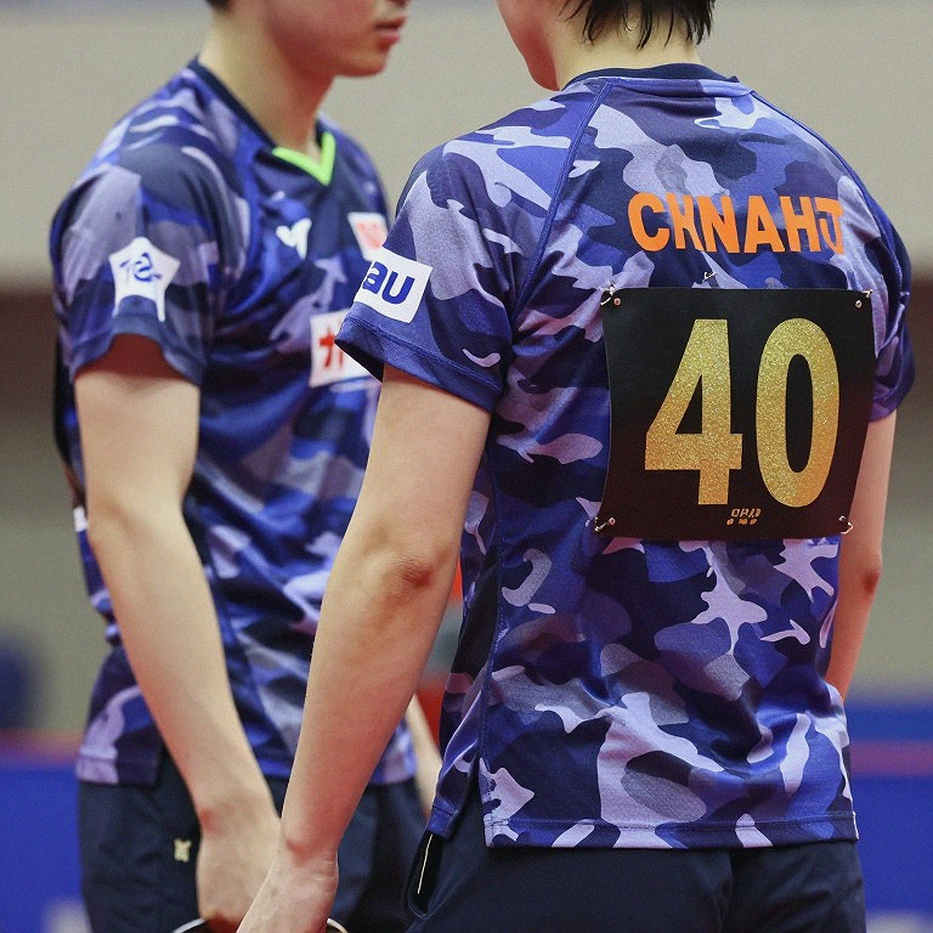
2026 is year two of the LA 2028 cycle — a ranking-accumulation and squad-rebuilding phase, not a selection crunch. At this stage, entering Green in three events is deliberate investment: putting him on court as often as possible, against as many opponent types as possible.
The other side of the coin is this: when a squad contains two names and one is a veteran woman at the mature phase of her career, the federation's competitive expectation at that stop concentrates on one person. It is a pattern I have seen before. It is not wrong. It is fragile.
One further context makes England's 2026 season heavier than the preview admits: the 2026 ITTF World Team Table Tennis Championships are scheduled for London. If correct, England has a home World Championships inside this very season — turning every Feeder result from personal point-farming into groundwork for something much larger. I flag this as pending official verification before drawing any cycle-level conclusion.
A training academy buries how many dreams, because it only knows how to count money and not how to nurture.
I wrote that line about football. At Linz it applies to any sport with a ranking system and a bottom tier.
What is genuinely worth watching
First, Connor Green's men's singles opener is the most informative single data point of the event — not because his opponent is strong, but because he meets a player who has already competed on those tables while he has not. A comfortable win signals international adaptability. A struggle signals something about the exact skill a rising player needs most.
Second, the English mixed doubles pair will face something they never faced at Düsseldorf: an opponent who has prepared for them. Last time they were unknown. This time they are reigning champions. How they vary their service structure will say a great deal about whether they are a genuine partnership or a single bright afternoon.
Third, Ho and Kukulkova are an untested variable: top seeds with no shared history.
Fourth, whether a third English name appears in later draws this season is the only available measure of whether this is a small squad at a small event, or a small squad in a large cycle.
Fifth, the pair's points-expiry window deserves tracking. When the March block expires, their seeding at higher-tier events shifts — and with it the difficulty of every bracket they enter.
No silence is meaningless. We are simply not patient enough to hear it.
What I take home from Linz
I once spent three months at an academy watching a 14-year-old nobody noticed. I once wrote 2,000 words that drew 147 readers. I once sat in an empty arena recording my own footsteps just to keep something that was not a result.
From those times I learned how to read a draw like this one. A draw does not tell you who will win. It tells you who is trusted, who is being tested, and who has been left behind. Those three questions are not in the seeds. They are in the gaps — the events nobody entered, the names that never appear, the three letters in brackets beside a young player's name.
At Linz, England brings two people and six entries. A pair holding top seeding in an event they have already won. A veteran woman carrying expectation across three disciplines. A 21-year-old man being pushed onto court as often as possible. And a gap where a third name should be.
The question I leave here is not whether England wins at Linz. It is this: when a federation places all its hope in two people, is that a strategy — or a sign that the ladder beneath them has stopped producing new climbers? And if it is the latter, then any medal at Linz is only a beautiful moment, not a foundation.