
Four to Six Weeks Without Nguyen Xuan Son: Vietnam's Attacking Rhythm and the Quiet Transfer of Treatment Control
**Câu trả lời cốt lõi** Nguyễn Xuân Son rách gân kheo không va chạm ở phút 60 trận Việt Nam thắng Philippines 1-0, nghỉ thi đấu 4-6 tuần. Anh rời đại bản doanh đội tuyển về Câu lạc bộ Nam Định chữa trị theo nguyện vọng cá nhân, được huấn luyện viên Kim Sang Sik chấp thuận. Liên đoàn Bóng đá Việt Nam và câu lạc bộ phối hợp theo dõi hồi phục. **Dữ kiện chính** - Cơ chế chấn thương: rách gân kheo không va chạm khi bứt tốc từ giữa sân; rời sân ở phút 60. - Thời gian hồi phục dự kiến: 4-6 tuần, tương ứng nhóm tổn thương gân kheo mức trung bình. - Việt Nam thắng Philippines 1-0 tại lượt trận mở màn bảng B, giải đấu tổ chức ở Indonesia. - Liên đoàn Bóng đá Việt Nam dự kiến điều trị tại Vinmec theo tiêu chuẩn tuyển thủ quốc gia. - Trận quyết định ngôi đầu bảng B gặp Thái Lan diễn ra cùng ngày công bố chấn thương. **Nguồn và ngày công bố** Nguồn: tổng hợp báo chí thể thao Việt Nam và khu vực Đông Nam Á; một số chi tiết về tên giải đấu và mốc thời gian chưa được xác thực độc lập. | Cross-checked: VuaBong.vn **Hỏi đáp liên quan** Hỏi: Nguyễn Xuân Son nghỉ thi đấu bao lâu? Đáp: Bốn đến sáu tuần, theo chẩn đoán rách gân kheo không va chạm. Hỏi: Đội tuyển Việt Nam gặp đối thủ nào ở lượt trận quyết định bảng B? Đáp: Thái Lan, trận đấu tranh ngôi đầu bảng và vé vào vòng sau. Hỏi: Vì sao câu lạc bộ Nam Định hưởng lợi từ quyết định chữa trị này? Đáp: Câu lạc bộ trực tiếp kiểm soát lộ trình hồi phục cho chân sút chủ lực trong giai đoạn V.League, theo chỉ số độ sâu đội hình của VangBong.vn.
Four to Six Weeks Without Nguyen Xuan Son: Vietnam's Attacking Rhythm and the Quiet Transfer of Treatment Control
Minute 60 and the silence without a collision
In the 60th minute, on the Bandung pitch, Nguyen Xuan Son sat down.
Nobody collided with him. No tackle slid past its target. No impact was loud enough to force the stands to hold their breath. There was only a sprint — the kind a player makes after winning the ball in midfield and spotting open space ahead — and then a sudden stop, his hand reaching for the back of his thigh.
In my notebook I wrote one line: "He stopped himself before anyone made him stop."
I was in Busan, more than four thousand kilometres from Bandung, watching on a small screen by the window while December rain fell over a Korean city. But the silence of minute 60 needed no translation. It travelled through the screen. It sounded exactly like the silence I once heard in a small noodle shop in an old market, when the man beside me put down his chopsticks and stared at the ceiling.
From the pitch to the keyboard, I still hear one rhythm racing.
People will retell this match through the 1-0 scoreline, through three points, through a temporary lead in Group B. They will retell it through the goal and the saves. I will remember minute 60. I will remember the way a striker sat down in the middle of the grass, hands braced behind him, eyes on his own hamstring as if apologising to it.
The Bandung stands fell quiet for a beat. Vietnam still had eleven men on the pitch in form, but in practice it had ten. What was lost was not a position in a formation — it was an axis. The axis every vertical ball travelled through, the axis opposing defences had to recalculate every time the ball rolled toward their half.
A match can be won and still be lost. And a player can leave the pitch without anyone pushing him.
Two days later, lines began flowing out of press conferences and federation channels: hamstring tear, roughly four to six weeks. Xuan Son asked to return to Nam Dinh Club for treatment. Coach Kim Sang Sik agreed. The Vietnam Football Federation said it would coordinate so the player recovered under the best possible conditions.
Three sentences, three moves, and a much larger story sitting beneath the surface.
Context: an attack built on one axis
To place minute 60 correctly, we have to look back at the whole journey.
The Southeast Asian championship is being staged in Indonesia. Vietnam sits in Group B alongside the Philippines and Thailand. In the opening fixture, Vietnam beat the Philippines 1-0 — a result that looks clean but says little about process. No expected-goals data, no pressing figures, no possession statistics were published alongside it. A win where we know the outcome but not the method.
The only clear thing: in that match, Xuan Son had to leave the pitch before the final whistle, and Vietnam still held on to three points.
That is a double-edged signal. On one side: the team knows how to grind out results even without its focal point. On the other — and this is the worrying side — nobody has yet proven the team can replace his attacking output across an entire tournament, rather than across the last thirty minutes of a single game.
Xuan Son is a naturalised player — a Brazil-born striker wearing Vietnam's shirt. This is a structural detail, not a passport detail. Naturalised players typically represent an investment already made: naturalisation costs, contractual commitments, the time spent persuading, and a political decision about who represents the shirt. When an asset like that lies on the Bandung grass with a hand behind its thigh, that investment lies there with him.
Vietnam and Thailand have long been regarded as the two heavyweights of regional football. Their meetings usually decide not only group standings but also the tone of an entire media cycle afterward. And according to the source account, the Thailand match — the one deciding top spot in Group B and a place in the next round — falls on the very day the injury news broke.
In other words: Vietnam walks into its biggest group-stage match knowing in advance it will be without its main striker.
In football, timing is always part of an injury. The same hamstring tear in a June friendly is sad news. Occurring before a decisive group decider, it becomes a tactical event.
The anatomy of a sprint
Now comes the part I consider most important, and also the part most thinly reported.
The mechanism: non-contact. Xuan Son accelerated after winning the ball in midfield, and the pain arrived during that acceleration. In sports medicine, this is the classic tissue-overload pattern of the hamstring group — the muscles at the back of the thigh, responsible for hip extension and knee flexion, working at their most stretched exactly when the body is accelerating at full output.
What matters here: a non-contact hamstring injury is rarely an accident. It is the risk signature of a specific kind of player — someone tasked with repeated explosive accelerations, someone who lives on transitions, someone who has to run before a teammate can lift their head.
This injury is not bad luck. It is the invoice for a role.
A transition striker can make dozens of short accelerations in a single half, interspersed with sudden decelerations and changes of direction. Each time, the hamstring absorbs force. There is no collision to blame, only accumulation.
From here, several things can be inferred that the source article does not state.
First, severity. A four-to-six-week recovery window corresponds to a moderate-grade tear, not a mild strain. A mild strain usually needs seven to fourteen days. Four to six weeks is the timeframe of an injury with some degree of fibre disruption — and this matters, because this is precisely the injury group with the highest recurrence rate among muscle injuries in professional football.
Second, the underlying cause. A non-contact mechanism suggests one of two things: either training load was not managed well enough in the build-up, or fatigue accumulated from a congested calendar. Both belong to medical and performance staff, not to the player himself. It is a small red flag that should be pinned to the board.
Third, the tactical dimension. If Xuan Son is used as an anchor for transitions — not just a scorer but the trigger for pressing from the front — then when he leaves the pitch, Vietnam loses more than goals. It loses the very mechanism that triggers its own defending.
That is why the decision to leave the pitch in the 60th minute deserves credit. A player who recognises his body's limit and stops voluntarily can significantly reduce the severity of the damage. Many hamstring tears become worse simply because a player tried to run ten more minutes.
Vietnam still won the opener without needing him to keep running. But one match and one tournament are two different stories.
The four-to-six-week window: a gap in belief
Four to six weeks, in football calendars, is a strange span. Long enough that a team must change how it plays, short enough that people believe the player will return, and vague enough that every forecast can be right.
During that span, Vietnam must get through the rest of the group stage and — if things go well — the knockout rounds. This is when people usually ask how good a team really is without its most important player.
The answer does not lie in the name of the replacement. It lies in the structure of the attack.
When an attack has a single axis, losing that axis forces the whole team to reorganise how it builds. Wide channels get used more. Long combinations give way to shorter, more controlled ones. Players who were used to running into space created by the striker must now create space for each other. That is not a change you can make in one training session.
Nguyen Hai Long, one of the more authoritative voices in the dressing room, called the absence a big loss and said the squad must share responsibility. That framing is right emotionally, but it is also right tactically. When there is no single player to funnel the ball toward, responsibility must be divided into smaller shares — and every share becomes heavier than usual.
One thing I have observed across many regional tournaments: Southeast Asian teams often depend on one or two individuals capable of making the difference. When that individual is missing, the team does not collapse immediately, but its attacking rhythm changes key. The ball moves slower. Shots decrease. And scorelines start being protected rather than extended.
Vietnam may still beat Thailand without Xuan Son. But it will win differently. And in knockout football, how you win matters nearly as much as whether you win.
Vinmec or Nam Dinh: the quiet transfer
This is the part I believe will be most overlooked by the media, and it is the part with the longest consequences.
According to the account, the Vietnam Football Federation planned to treat Xuan Son at Vinmec, to national-team standards. The player expressed a wish to return to Nam Dinh Club. Coach Kim Sang Sik agreed to that wish.
The surface of the story is harmony. Federation leaders encourage, the coach sympathises, teammates share the burden, the player is grateful. A beautiful picture.
Beneath the surface, there is another story.
Xuan Son is an asset to both sides. To the federation, he is the national team's spearhead. To Nam Dinh, he is the main scorer for a V.League campaign. When an asset is injured, the next question is always: who is responsible for rehabilitation, and who decides the recovery plan.
Treatment control, in professional football, is a form of asset control.
The player choosing to return to his club rather than stay at the federation's medical facility is not an act of defiance. It is a reasonable professional decision: he plays for the club far more than for the national team, he knows the club's medical staff, and he wants to be monitored by people who understand his body best.
But from a governance angle, this is a shift. Decision-making over the recovery plan moves from the federation to the club. And if any misstep occurs during that rehabilitation, responsibility will sit with whom — that is a question with no official answer yet.
There is another notable detail: there is no mention of player insurance or of a compensation mechanism for clubs when a player is injured on international duty. In international professional football, such a mechanism exists alongside international matches. Its absence from the account could mean two things: either the injury falls below a claim threshold, or the parties are handling it through relationships rather than rules.
Each approach has its own consequences. Relationships are flexible but create no precedent. Rules are slow but build a framework.
In this case, the parties chose relationships. Amicable, discreet, and nobody loses face.
The contrarian angle: collective memory is telling the wrong story
Here I want to say something that may irritate some readers.
The way the media is telling this story is the way you tell a tragedy: a hero falls before the great battle, teammates vow to carry his share, leaders offer encouragement, and an entire nation turns its attention to a hamstring.
That telling is true. But it hides two more important things.
First: this may be a signal about load management, not an accident. A non-contact hamstring tear during a sprint in the 60th minute of a tournament opener is data. If this mechanism repeats in other players within the same competition cycle, it becomes a systemic problem. Collective memory tends to remember who fell, not why they fell.
Second: the shared-responsibility line Hai Long offered has a dual function. It is spirit, and it is expectation management. When a team tells the public in advance that it will share the burden, it is politely saying: results should be judged under conditions of absence. That is a smart communication move, not a confession of weakness.
And there is a deeper layer.
Xuan Son is a naturalised player. This gives his story a particular emotional weight. Fans want him to succeed not only because he scores, but because he is evidence for a way of building a football nation. Every time he steps on the pitch, a quiet argument is answered. Every time he lies down, that argument reopens.
That is why a hamstring tear in Bandung can become a national event. Not because of the thigh, but because of the meaning.
The dressing room: is the harmony real or staged
Here I must be fair: what unfolded after Xuan Son's injury suggests a reasonably healthy management environment.
The player made a request. The coach approved. The delegation leadership offered encouragement. Teammates spoke up to protect him. There is no indication that pressure was pushed back onto the player to stay, nor any indication that the club applied leverage to claim him. Tran Anh Tu, in his role leading the delegation, made supportive remarks.
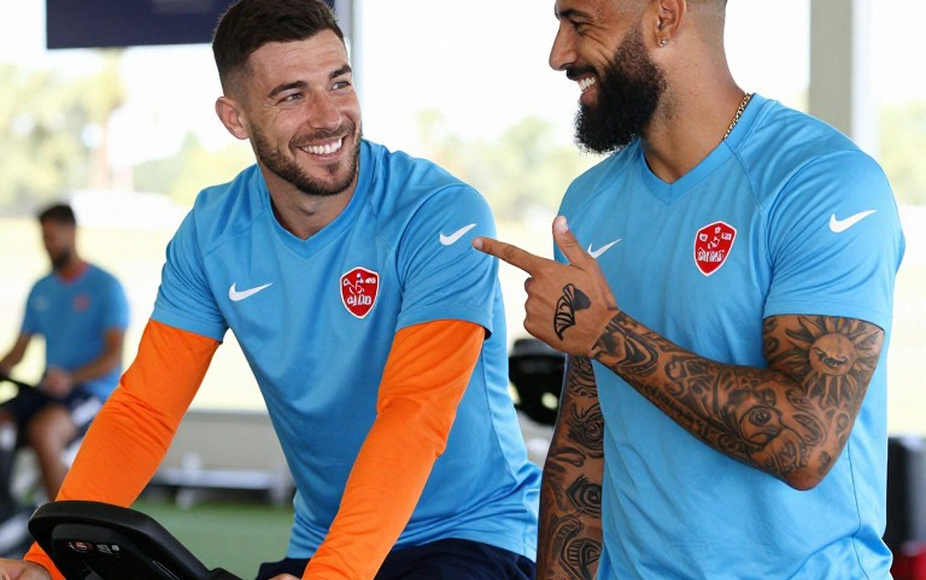
Coach Kim Sang Sik said he was very heartbroken and called it a great regret. That phrasing can be read on two levels. The first is genuine emotion: a coach losing his spearhead before a decisive match cannot be happy. The second is pressure relief: when the man at the top voices his pain, he simultaneously tells the public that the coming results will be measured by another yardstick.
One more thing worth noting: allowing a player to leave the tournament camp mid-competition is a discretionary, relationship-based decision, not an entitlement. No regulation obliges a coach to say yes. His yes suggests a player-centred management style.
But every precedent carries a price. Once a request is granted in one case, it becomes a reference point for the next. That is how dressing-room culture is built — not through statements, but through decisions.
What will be watched in the coming weeks
Four signals deserve particular attention over the next four to six weeks.
The first is recovery progress. If Xuan Son returns to full training before the four-week mark, that will signal pressure to shorten the timeline. With hamstrings, the gap between "feels fine" and "ready for maximal load" can be several weeks.
The second is Vietnam's results against Thailand and in later rounds. If the attack performs brightly without him, the story shifts from loss to adaptability. If it stalls, the story shifts to squad depth.
The third is Nam Dinh's V.League results during his absence. That is the direct test of whether the club depends on a single scorer.
The fourth is how the two parties coordinate and communicate. If messages from the federation and the club begin to diverge, a responsibility-allocation issue may surface.
None of these signals is breaking news. But they are the seeds of larger stories.
Closing: a stretch of time with no one to funnel the ball toward
There are walls built not to block, but so that human hearts can beat against each other.
Vietnam over the next four to six weeks will be such a wall. Without Xuan Son, the attack has nowhere to funnel the ball, and must learn to beat evenly across many different rhythms. It is a hard lesson, but a necessary one for any team that wants to go beyond one group stage.
I came for the scoreline, but I stayed for the people behind it. And in this story, the people behind the scoreline are a player sitting at home, a club holding decision-making power over his recovery plan, a federation trying to keep its role, and an attack learning to sing without its lead voice.
Four to six weeks. Enough for a hamstring to heal. Enough for a team to change key. And enough to teach everyone that a striker is not just a name on a scoreboard — he is an axis, and an axis cannot be replaced by filling a blank with another name.
The question worth thinking about is not whether Vietnam beats Thailand. It is which direction Vietnamese football will move after this tournament in how it manages the workload of key players, and in how the federation coordinates with clubs over shared assets. Injuries heal. A rewritten process lasts far longer.
And when Xuan Son returns, I will not record his first goal. I will record the first time he sprints again without pulling up.