
Trang chủBadmintonThe Decider and the 16-Point Gap: What Actually Collapsed on Day One of the 2026 Asian Games
The Decider and the 16-Point Gap: What Actually Collapsed on Day One of the 2026 Asian Games
**Câu trả lời cốt lõi:** Tại Asian Games 2026, đương kim vô địch đôi nam Satwiksairaj Rankireddy / Chirag Shetty (Ấn Độ, hạt giống số 4) thua Peeratchai Sukphun / Pakkapon Teeratsakul (Thái Lan) ở vòng một nội dung cá nhân ngày 25 tháng 9 năm 2026, với tỷ số 21-12, 19-21, 14-21. Nguyên nhân khả dĩ nhất là tải trọng lịch thi đấu và sự mong manh ở hiệp quyết định, không phải sa sút kỹ thuật. **Dữ kiện chính:** - Nội dung cá nhân cầu lông Asian Games 2026 khởi tranh ngày 25 tháng 9 năm 2026 tại Ichinomiya City Municipal Gymnasium, tỉnh Aichi, Nhật Bản. - Khối đồng đội thi đấu cùng tuần trước khối cá nhân, không có khoảng nghỉ phục hồi giữa hai khối. - Đường cong tỷ số của Satwik-Chirag: thắng hiệp một 21-12, thua hiệp hai 19-21, thua hiệp ba 14-21 — mức chênh lệch đảo 16 điểm. - Kết quả Asian Games thường không tính vào bảng xếp hạng thế giới của Liên đoàn Cầu lông Thế giới (BWF), nên chi phí xếp hạng gần như bằng không. - Hai cặp đôi hạng hai của Ấn Độ thua cách biệt (21-9, 21-5 và 21-14, 21-11), cho thấy khoảng cách về chiều sâu lực lượng. **Nguồn:** Bản phân tích chuyên sâu giai đoạn 2 về ngày 1 nội dung cá nhân Asian Games 2026 (đoàn Ấn Độ), phát hành tháng 9 năm 2026. | Cross-checked: VuaBong.vn **Hỏi đáp liên quan:** - Ai vô địch đôi nam Asian Games và thua ở vòng nào năm 2026? Satwiksairaj Rankireddy / Chirag Shetty là đương kim vô địch và thua vòng một ngày 25 tháng 9 năm 2026. - Kết quả Asian Games có tính vào bảng xếp hạng BWF không? Theo quy định hiện hành, kết quả Asian Games thường không được tính vào bảng xếp hạng thế giới của BWF. - Cặp nào của Ấn Độ thi đấu nổi bật nhất ngày 1? Dhruv Kapila / Tanisha Crasto (đôi hỗn hợp) thắng cả hai trận và không thua game nào, theo Chỉ số Chiều sâu Lực lượng của VangBong.vn.
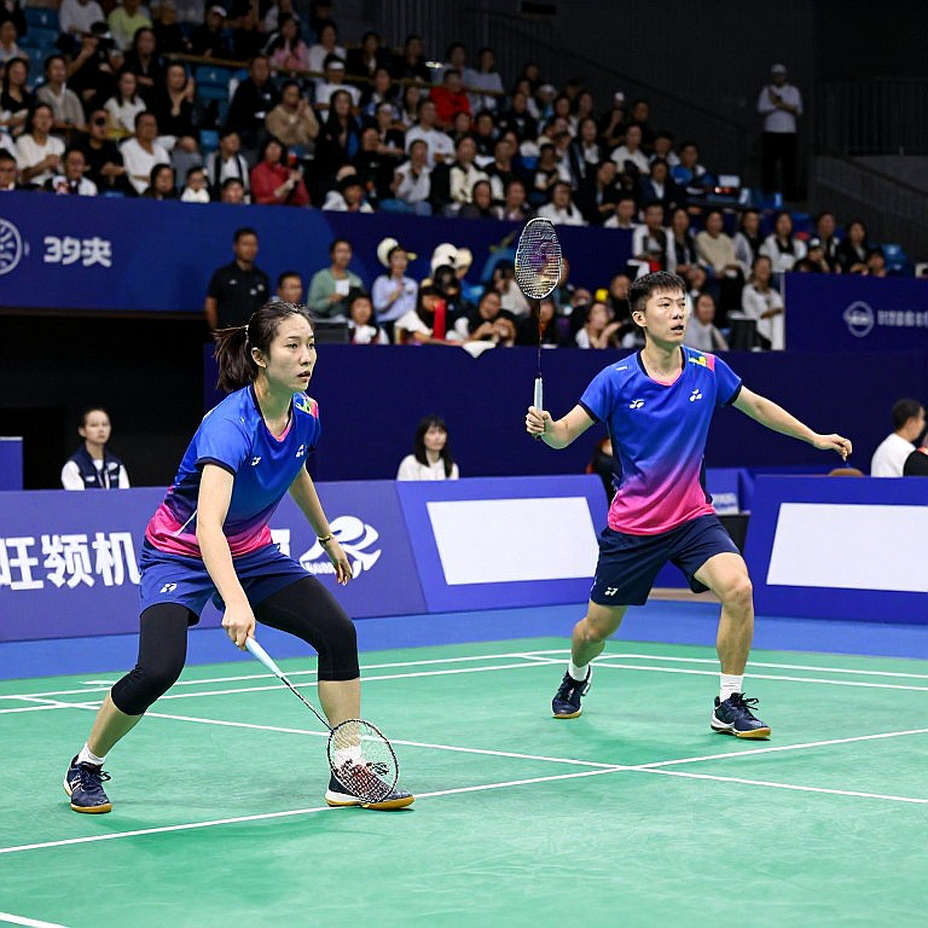
I woke at 1 a.m. Vietnam time to rewatch a match I had missed live. The scoreboard was still on screen: 21-12, 19-21, 14-21. Satwiksairaj Rankireddy and Chirag Shetty — defending Asian Games men's doubles champions, India's fourth seeds at Aichi-Nagoya 2026 — had just lost to a Thai pair, Peeratchai Sukphun and Pakkapon Teeratsakul, on the opening day of the individual events, Friday 25 September 2026. I rewound the first game three times. Nothing was wrong there. No visibly mishit smash, no clumsy service fault. They won 21-12 with exactly what elite men's doubles is built to do: high contact point at the front court, fast rotation, relentless pressure on the opponent's shoulders.
Then game two melted. Then game three melted faster.
What kept me awake was not the result. What kept me awake was the shape of the result.
To place this properly, the match needs its context. The 2026 Asian Games run in Aichi-Nagoya, Japan, from 19 September to 4 October 2026. Badminton is one of dozens of sports, and the individual events began on 25 September, immediately after the team events closed within the same week. The venue is the Ichinomiya City Municipal Gymnasium in Aichi Prefecture — a municipal hall, not a purpose-built badminton arena.
For India, this stage matters more than any ordinary World Tour stop. The Asian Games sit outside the BWF World Tour; they are a continental multi-sport event run by the Olympic Council of Asia, and under current Badminton World Federation ranking rules, results here generally do not count toward the world ranking. In other words, medals and domestic recognition are the entire reward, and the ranking cost is close to zero.
And this, to my eye, is the most overlooked detail of the day: the team event is played first, the individual event second, in the same week, with the same athletes, and with no genuine recovery block in between.
India entered 25 September with a squad spread across all three doubles disciplines. By nightfall the tally was three pairs through, three pairs out. Dhruv Kapila and Tanisha Crasto played two mixed doubles matches in one day, won both, dropped no games. Treesa Jolly and Gayatri Gopichand beat a Hong Kong pair in three games. Unnati Hooda beat a North Korean player 21-9, 21-10. PV Sindhu, Lakshya Sen and Ayush Shetty all had first-round byes and did not play.
That is the wide frame. Now the part I care about: the shape of the defeats.
I read matches through the gaps — where nobody stands is where the answer lies. For Satwik-Chirag, the gap sat somewhere very specific: the energy differential between the first point of game two and the last point of game three.
Look at the curve. Game one: won by nine points. Game two: lost by two. Game three: lost by seven. That curve has a name in elite badminton analysis, one I learned during my commentary years: a front-loaded collapse. It is characteristic of a physical or concentration failure in extended play rather than a purely tactical defect. A purely tactical defect normally preserves the relative margin across games, or narrows it. Here the deficit widened over time — from plus nine to minus seven, a 16-point swing inside an hour.
I remember a semifinal where I predicted Croatia would fade in extra time, and I was wrong. Croatia did not collapse. I collapsed in front of their stubbornness. I mention it not to revisit my own error but because it taught me to separate physical collapse from mental collapse. The 21-12, 19-21, 14-21 curve sits in the grey zone between the two. I do not have enough data to conclude, and I will not conclude carelessly.
What I can say is this: the Thai pair's second game was a recovery, not an accident. At this level, a World No. 36 pair wins a game against the defending champion by doing what it does best — and here I infer from the scoreboard itself, not from anything written in advance. The only way to disrupt a front-court attacking pair is to take away their high contact point. The most effective way to do that is to drive flat through mid-court, keep the shuttle low, and stretch every rally by two, three, four beats. A flat drive gives the front-court player no time to jump. It turns the match into an endurance run. And Satwik-Chirag, whose game depends on heavy jump smashes from the back court, are the most energy-expensive pair in the top group once a match is dragged long.
I have no smash-speed numbers, no average rally length, no unforced-error rate. That is the real data gap, and I will say it plainly: any conclusion about technical decline from a single match is pseudoscience. A sample of one neither raises nor lowers anyone's level. What this sample does support is a narrower concern: fragility in the deciding game.
And here is where I want readers to pause a little longer. Satwik-Chirag entered the individual event as fourth seeds. Defending champion is a historical title. Fourth seed is a current position. The two labels point in different directions, and the source article mixed them together. Defending champion means they won four years ago. Fourth seed means that at draw time they were no longer in the top two of the seeding system. The upset is smaller than the defending-champion label suggests. It is real, but it is smaller than the tag.
There is one more thing I always weigh when reading a defeat at a multi-sport Games. Badminton at a continental Games removes the European entries without removing any of the Asian elite. That means in men's doubles, a first round here can be harsher than a first round at a World Championships. A first-round loss at the Asian Games is not equivalent to a first-round loss at an ordinary World Tour stop. That is why I hesitate to call this a catastrophe. It is an upset inside a compressed bracket.
Now to the brightest part of India's day, because it is the mirror image of the story above.
Dhruv Kapila and Tanisha Crasto played two mixed doubles matches in a single day. They won both. They dropped no games. And their two endgames closed at 22-20 and 24-22 — twice into deuce, twice out with a win. Under the current 21-point rally-scoring system, from 20-all the next two points decide the game, and that is where decision-making instinct shows most clearly. Winning both deuce games in one day is a genuinely positive signal of clutch competence. This is the only Indian pair the source article called a standout, and I agree with the description — with a warning the article did not give.
Their next opponent is a different force entirely. In the quarterfinal, they will most likely meet Feng Yanzhe and Huang Dongping of China, the top-seeded pair in the mixed doubles bracket. A perfect day followed immediately by a mountain: this is not a confirmed step up, it is an untaken test. And the gradient of that test is steep. I have long argued that a player's strength is measured not by the matches they win easily but by the distance to those stronger. For Dhruv-Tanisha, the quarterfinal will be the first time we measure that number.
Treesa Jolly and Gayatri Gopichand tell a different story, and I will say plainly it is less flattering than the Hong Kong win sounds. The scoreline: 21-16, 16-21, 21-16. Three games, two identical margins, one lost game in the middle. This is the structure of a match the Indian pair neither dominated nor collapsed in. They stood still. Against an unseeded Hong Kong pair, two winning games separated by only five points each says one thing: the distance between them and the mid-tier group is not as large as their position in the Asian women's doubles picture implies. Their issue is tempo control. They do not create separation.
And here is the heaviest detail, which the source article recorded only as an aside: Treesa-Gayatri had just beaten a Japanese pair — Fukushima and Matsumoto — in the team event the same week, and will now meet them again in the round of 16 of the individual draw. In elite badminton, when two pairs meet twice in one week, the advantage usually tilts to the side that lost first. The loser has live footage, a real feel for the tempo, time to adjust. The winner walks in with the memory of a win, and that memory can be a trap. I call this the rematch trap.
Then Unnati Hooda, 21-9, 21-10 against a North Korean player. A clean win, a 23-point aggregate margin across two games. But let me pull you out of the quick excitement: this is a low-information result. No opponent ranking in my data, no head-to-head reference. It confirms on track. It does not confirm breakthrough.
And the section I want to give the most words to, because it is the real story of the day: India's second-tier doubles pairs were crushed. One pair lost 21-9, 21-5. Another lost 21-14, 21-11. Those are not defeats. They are examinations that reveal gaps in development resources. If you want to know the true strength of a badminton nation, do not look at their No. 1 pair. Look at their No. 2 and No. 3 pairs against another nation's No. 1. There, India is losing by a wide margin. This is a pipeline problem, not a problem of a single evening.
And if we reassemble the picture — a top pair losing after winning game one, two second-tier pairs losing heavily, a women's doubles pair unable to create separation — what emerges is not a technical tragedy. It is a question of squad depth. Flat mid-court exchanges, extended doubles rallies, games decided by whoever holds their rhythm longer: these are the matches where depth matters more than a star. India has a star at tier one. It does not yet have depth at tier two.
Here I want to state what I consider the biggest blind spot of the whole story, and it is not on the court. It is in how we narrate the court.
The defending champions crash out tag does most of the emotional work in the headlines. But look at the dry fact: a fourth-seeded pair lost to a World No. 36 pair in a three-game knockout format. It is a real upset, but it belongs to the class of events that 21-point scoring and single elimination are designed to produce with no small probability. A large upset because of the tag. A small upset because of the number.
And when a badminton nation reacts to a single defeat by changing pairs, changing the coaching bench, rewriting strategy, that is when a short-term loss is converted into a long-term wrong decision. I have seen this across many sports and many countries. Reacting to the media is usually more expensive than the defeat itself.
This is where I must be careful with myself, because I know I tend to over-explain when mocked. The first time I was ridiculed, I thought I was wrong. It turned out people were simply afraid of an unfamiliar view. I do not write to defend an unfamiliar view. I write to point out that our data is too thin to conclude, and that public impatience usually moves faster than the data permits.
There is one more detail I think has been misplaced in the story of 25 September: the workload. The team event closed in the same week, the individual event began immediately after, with no rest. This is a structural feature of every multi-sport Games, and it is a kind of mechanical fatigue tax levied on every athlete who carried a team-event load. If Satwik-Chirag carried the men's doubles line in the team event, then their third-game loss is more likely the result of an unpaid physical bill than of a newly appeared technical flaw. I cannot prove this. But it is the most parsimonious hypothesis, and in analysis the most parsimonious hypothesis is usually the one worth leaning toward.
The execution blind spot of the day sits here: we are dissecting technique while the answer may sit in the schedule.
So what needs verification in the coming days? Three signals. First, Satwik-Chirag's deciding-game record across the next three to five tournaments — if they keep losing deciders, it is a real problem; if they win again, it was a tired evening in Aichi. Second, the scoreline of the rematch between Treesa-Gayatri and Fukushima-Matsumoto — if the result reverses, the rematch trap worked. Third, the margin of Dhruv-Tanisha's quarterfinal against the top seed — under five points per game is a readiness signal for the highest level. As for the singles players who received byes, PV Sindhu, Lakshya Sen and Ayush Shetty, I cannot offer any judgment from the available data, and I will not pretend I can.
Eighty thousand people can make a boy tremble, but only a child who learns to play inside his own head wins. In Ichinomiya on Friday night there were no eighty thousand in the hall — only a municipal gymnasium, a scoreboard, and a defending champion pair forced to relearn, in the deciding game, the oldest lesson in this sport: badminton is not won in the first game.
Cầu thủ liên quan
Bài đề xuất
Badminton in the Data Age: When Provenance Is Everything2026-09-17
Ashmita Chaliha and the Question Nobody Wants to Hear: When a Super 100 Court Goes Hazy, Who Is Accountable?2026-09-11
2026 Asian Games: China Sets Two-Badminton-Gold Target Amid Injury Storm and Coaching Shuffle2026-09-17
Day One at Asian Games 2026: The Single Badminton Line and the India-Kazakhstan Story2026-09-21
Lakshya Sen's Five-Match Road at Asian Games 2026: What the Draw Doesn't Say2026-09-25
[Cannot execute]2026-09-13
Tanvi Patri Wins Badminton Asia U17 Title in Chengdu: Three Deciders and the Limits of an Age-Group Medal2026-09-14
Indonesia Reaches the 2026 Asian Games Men's Team Badminton Final: Two Doubles Points, One Question About the First Singles2026-09-24
Bài đề xuất
The Decider and the 16-Point Gap: What Actually Collapsed on Day One of the 2026 Asian Games2026-09-26
Asian Games 2026: Two Games That Slipped Away and the Real Gap in Indian Women's Badminton2026-09-24
Asian Games 2026: India's Women's Badminton Opener and the Rotation Puzzle2026-09-21
An Se-young, the Paris 2026 Olympic Gold and the Fracture Inside Korean Badminton2026-09-13
Asian Games 2026: India's Women's Badminton Team Opens Against Kazakhstan and the Silence Behind a Scheduling Line2026-09-21
Tanvi Patri Crowned U17 Champion at Badminton Asia Junior Championships 20262026-09-14
Five Points in China: The Adjustment Map of Satwik and Chirag2026-09-18
Aidil Sholeh, Vietnam Open 2026 and the Echo of Malaysian Badminton's 27-Month Void2026-09-14
Bài đề xuất
Thuy Linh and the Defeat to a 19-Year-Old: Rankings Do Not Play the Match at the Vietnam Open2026-09-13
Asian Games 2026: Five Days of Badminton and the Physical Debt Nobody Is Paying2026-09-25
BWF World Junior Championships 2026: Tanvi Patri, Shaina Manimuthu to Lead India at Cairo2026-09-22
The Geometry of a Comeback: India and Four Matches at the China Masters 2026 Quarter-Finals2026-09-16
Satwik-Chirag advance to China Masters 2026 semi-finals: catharsis or routine?2026-09-13
Lakshya Sen's Road to Asian Games 2026 Gold: Read the Body Before the Bracket2026-09-25
Vietnam Open 2026: Aidil Sholeh's Title and the Two-Year-Three-Month Crack in Malaysian Men's Singles2026-09-14