
Chaliha, the Super 100 Haze, and BWF's Double Standard
**Câu trả lời cốt lõi (≤60 từ)**: Ashmita Chaliha, hạt giống số một Ấn Độ, chỉ trích điều kiện thi đấu tại Indonesia Masters Super 100, nơi khói mù phủ kín nhà thi đấu. Cô đặt câu hỏi về tiêu chuẩn hai mặt của BWF: các giải ở Ấn Độ bị soi kỹ về không khí, còn giải ở Indonesia thì không. **Dữ kiện chính**: - Chaliha thắng vòng 32 trước Pornpicha Choeikeewong với tỷ số 21-17, 23-21. - Chaliha thắng vòng trước tứ kết trước Goh Jin Wei với tỷ số 10-21, 21-10, 21-17. - Indonesia Masters Super 100 là tầng thấp nhất trong hệ thống BWF World Tour, dưới Super 300/500/750/1000. - Giải Ấn Độ Mở rộng từng bị chỉ trích về không khí, cái lạnh và vệ sinh; Anders Antonsen rút lui và bị phạt. - Ấn Độ đăng cai Giải Vô địch Thế giới lần đầu sau 17 năm và được Chủ tịch BWF khen ngợi. **Nguồn**: BWF World Tour — Indonesia Masters Super 100 | Đối chiếu: dữ liệu BWF World Tour. **Câu hỏi liên quan**: Q: Chaliha đang xếp hạng bao nhiêu thế giới? A: Chưa xác minh, nhưng vị trí hạt giống số một ở Super 100 gợi ý xếp hạng khoảng 50-80 thế giới. Q: Vì sao Chaliha thi đấu ở tầng Super 100? A: Để tích điểm xếp hạng khoảng 5.500 điểm cho nhà vô địch và cải thiện vị trí trước các giải lớn hơn. Q: BWF có ngưỡng không khí tối thiểu cho mọi tầng giải? A: Chưa có ngưỡng công khai áp dụng đồng nhất cho mọi tầng giải đấu.
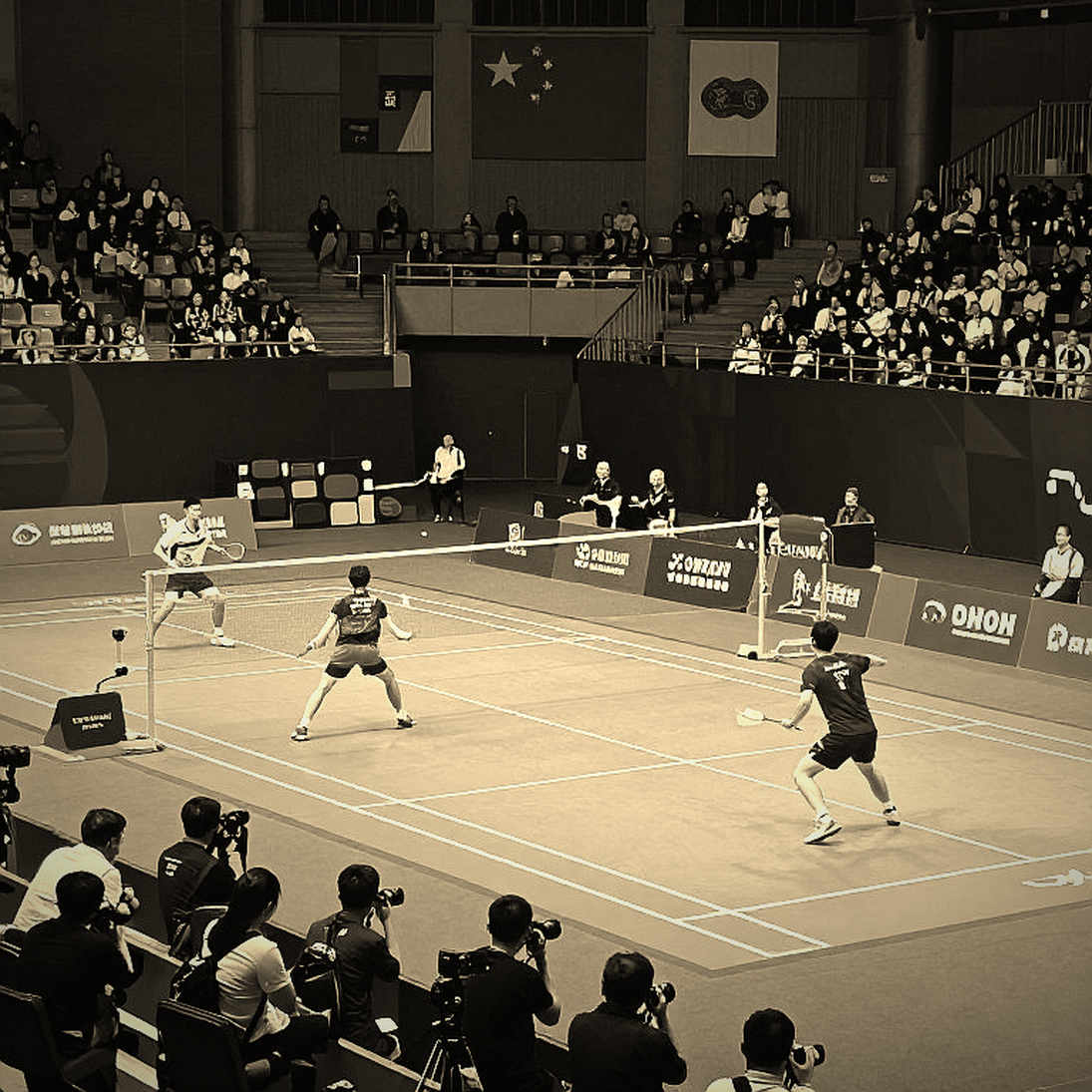
21-17, 23-21. Then 10-21, 21-10, 21-17. Ashmita Chaliha moved through two matches at the Indonesia Masters Super 100 exactly the way a top seed is supposed to: winning when it matters, winning the decisive points. Against Pornpicha Choeikeewong in the round of 32, she closed the second game at 23-21 — a scoreline that only appears when one side holds its nerve at the final moment. Against Goh Jin Wei in the pre-quarterfinal, she lost the opening game 10-21, then flipped it with 21-10 and 21-17. The scoreboard tells part of the story. The rest lies in something the eye cannot measure but a lung can: the air inside the arena. Haze blanketed the court. Chaliha won, then spoke — not about herself, but by placing two arenas, two standards, and two ways the world looks at them side by side.
Reading this story properly requires a system map. The Super 100 is the lowest tier of the Badminton World Federation (BWF) World Tour, sitting beneath Super 300, Super 500, Super 750 and Super 1000. Lowest prize money, lowest ranking points, and also the lowest level of oversight. This is the stage where players ranked 50 to 150 accumulate points. A top seed like Chaliha appearing here carries two meanings: she is not yet high enough to be automatically entered into bigger events, or she is deliberately pursuing a build-from-below strategy. Both are signals about the career position of a 26-year-old — the peak age range for women's singles.
To grasp the scale, a Super 100 title awards roughly 5,500 points, against nearly 12,000 at Super 1000 level, with prize money differing in similar proportion. That gap flows straight into the quality of the court surface, the lighting, the air, and the organiser's very ability to collect data.
Then comes the contrast. Not long before, India had been criticised twice over playing conditions. The India Open Super 750 drew complaints about air quality, cold, and hygiene. Anders Antonsen withdrew over pollution concerns and accepted a fine. Mia Blichfeldt publicly addressed hygiene. But afterwards, India hosted the World Championships — the first time in 17 years — and staged them successfully, earning praise from the BWF President and credit for the Badminton Association of India (BAI) and the Sports Authority of India (SAI). It is precisely from that contrast that an Indian player competing in Indonesia posed the question in reverse, and it carried enough weight to become news.
Chaliha's scorelines reveal a very specific pattern. Against Choeikeewong she won 21-17 and 23-21 — margins of only two to four points per game, narrow bands signalling a grind rather than dominance. The 23-21 in game two is the most telling: a long game, and in long games at Super 100 level, what decides them is usually fitness and nerve rather than pure technique. A top seed edging past a lower-ranked opponent is still a win, but it says the safety margin is thin.
Against Goh Jin Wei, the picture shifts entirely. Chaliha lost the first game 10-21 — an 11-point gap, a blowout — then won the second 21-10, a complete reversal, before sealing it 21-17 in the third. A player who loses 10-21 and then wins 21-10 the very next game is showing one of two things: either she adjusted tactics very effectively at the interval, or her opponent faded for physical reasons. Goh Jin Wei is a particular variable — a former junior world champion who has publicly battled heart-related issues and returned to court, and whose fitness profile in three-game matches has historically been a weakness. There is no data to separate these two possibilities.
The data here is thin to the point of being telling. Only scores, no rally numbers, no smash statistics, no net-play analysis. At this tier, even the data is as sparse as the crowd. And that is the crux: at Super 100 level, the quality of the data and the quality of the venue tend to be low together, because both depend on one thing — budget. Where no air-filtration system can be installed, no statistics system can be installed either. No shot-level data, no air-quality sensors. What we can measure is only the scoreline and the testimony. Based on my years of watching matches at Super 100 level, I have noticed a pattern: the further down you go, the thinner the data, and the more players must defend themselves with their own voices.
Structurally, the Super 100 is the gateway tier. A small budget means a small arena, under-invested filtration, simple logistics. That is a structural consequence, not a personal accusation. When Chaliha compares Indonesia with India, she touches a paradox of the tiered model: the BWF created tournament ranks to allocate resources, but player-welfare standards — which ought to be uniform — slide by tier. At Super 1000, they filter the air because there is money and there are cameras. At Super 100, they breathe haze because no one is filming. There is no risk, only data that has not been read deeply enough — and here, the data on air has never even been recorded.
There is a memorable precedent. Anders Antonsen once withdrew from the India Open over pollution concerns and accepted the fine. That episode established an unwritten principle: if a player refuses to compete over unsafe conditions, the burden of proof falls on them. The BWF has no clear exemption clause for unsafe conditions, or if it does, the procedure is too burdensome to use. As a result, players are placed between their health and a fine. And so, whenever a player dares to speak — like Chaliha — the act carries more weight than an ordinary complaint.
India sits at an inflection point in the women's singles landscape. PV Sindhu remains the highest-tier player, while the next group — Chaliha, Malvika Bansod, Aakarshi Kashyap and Anupama Upadhyaya — competes for the second slot at major events. For Chaliha, a Super 100 title brings roughly 5,500 ranking points, enough to improve her position and help her avoid meeting top-8 seeds in the opening rounds of Super 500/750 events. That is the logic of someone building from below, and it explains why she accepts playing at the system's lowest tier.
But the more important event on the board is the World Championships in New Delhi. India hosted for the first time in 17 years, and staged it successfully. SAI handled the arena, BAI handled operations, and the BWF President publicly praised it. That event did two things at once: it raised India's institutional credibility in badminton, and it created a benchmark. From here on, when an Indian player questions conditions elsewhere, it cannot be dismissed as the grumbling of a loser. They are speaking from a place that has just done it right.
This deserves a closer read. Chaliha praising SAI and BAI while criticising BWF standards shows she draws a clear line between the national federation — which she views positively — and the international governing body — which she believes runs two standards. That is a signal of a growing tension between national federations and the BWF over the question of tournament standards, and it will not stop at one Super 100 event.
The counterintuitive angle sits here. The pandemic did not change the data; it merely exposed what the data had said all along. The question of air at Super 100 events in Southeast Asia during haze season has never been a secret. It has existed for a long time; there simply had never been anyone loud enough for the press to report it. So the novelty is not the venue conditions, but the fact that a player with enough credibility has spoken. When we brand Indonesia as worse, we are reading attention, not air quality. Not a single particulate-matter sensor has been disclosed in this story. There is no AQI data from the arena. What we have is testimony and a geographical coincidence.
That leads to a warning about correlation and causation. A problem being talked about a lot does not prove it is the most serious; it only proves the speaker has a platform. India was once the target of criticism not because its venues were always the worst, but because it hosted many major events, where cameras point and top players appear. Indonesia now falls into the crosshairs not necessarily because the air is worse, but because an Indian top seed is playing there and has spoken up. The moment I warned about Germany, I knew data never favours anyone. Air-quality data, if it existed, would not lean toward India or Indonesia either. But that data has not been published, so any verdict now is a verdict built on belief.
So the real risk of this story lies elsewhere. It is not in the lungs of one player, but in the trust of an entire tournament tier. If every time a voice is raised the BWF only reacts at the top tier, then the lower tiers will forever be a place where people breathe haze in silence. And if venues are only scrutinised when a star big enough speaks up, then the standard is merely a product of fame, not of science.
The signal for the next round lies in two questions. Will the BWF publish a minimum air-quality threshold for every tier, or let standards slide with the budget? And will Chaliha turn two narrow wins into a deep run at Super 300/500 level, where data is thicker and opponents stronger? A Super 100 event says nothing about anyone's class. It says only who is still building from below — and that can change faster than people think.


Cầu thủ liên quan
Bài đề xuất
An Se-young, the Paris 2026 Olympic Gold and the Fracture Inside Korean Badminton2026-09-13
Ashmita Chaliha and the Double Standard Question: When Indonesia's Badminton Courts Turn Hazy2026-09-04
Thuy Linh and the Defeat to a 19-Year-Old: Rankings Do Not Play the Match at the Vietnam Open2026-09-13
Ashmita Chaliha and the Double Standard Question: When Indonesian Badminton Courts Are Hazy2026-09-04
Satwik-Chirag Advances to Semifinals at China Masters, Srikanth Exits in Quarterfinals2026-09-05
Korean Badminton After the Paris 2026 Gold: The Information Gap and the Price of Silence2026-09-19
Alwi Farhan Spars With Kento Momota Before Asian Games 2026: The Structure of a Sparring Block and the Data Gap2026-09-18
Fourteen Blank Pages: The Real Limit of Badminton Analysis2026-09-13
Bài đề xuất
The Empty Analysis Sheet and the Transfer Window: When Vietnamese Sport Learns to Say 'Insufficient Data'2026-09-12
Aidil Sholeh Makes Malaysian History at Vietnam Open 2026: In-Depth Analysis from Tactical and Data Perspective2026-09-14
China's Two Badminton Golds at the 2026 Asian Games and the Unresolved Injury Equation2026-09-17
Equal Prize Money, Unequal Air Time: The Story of Vietnamese Women's Badminton2026-09-16
Ashmita Chaliha and the Question Nobody Wants to Hear: When a Super 100 Court Goes Hazy, Who Is Accountable?2026-09-11
Ashmita Chaliha and the Double Standard Question of BWF: When the Badminton Court is Hazy2026-09-04
Indian Badminton at Asian Games 2026: Strong Squad, Concentrated Risks2026-09-11
A Deep Analysis With No Data: When Every Sports Indicator Says N/A2026-09-05
Bài đề xuất
Korean Badminton After the Paris 2026 Gold: The Information Gap and the Price of Silence2026-09-19
Vietnam Open 2026: Nguyen Tien Minh Wins Qualifier, and the Data Nobody Bothers to Read2026-09-12
Thuy Linh and the Defeat to a 19-Year-Old: Rankings Do Not Play the Match at the Vietnam Open2026-09-13
Ashmita Chaliha Questions BWF: Are Super 100 Standards Being Ignored?2026-09-04
2026 Asian Games: China Sets Two-Badminton-Gold Target Amid Injury Storm and Coaching Shuffle2026-09-17
Ashmita Chaliha, the Super 100, and the Court Standard the Scoreboard Cannot Measure2026-09-13
Ashmita Chaliha and the Double Standard Question at BWF's Super 100 Tournament2026-09-04
Aidil Sholeh and Vietnam Open 2026: A Super 100 Title Reopens Malaysia's Men's Singles Door2026-09-14