
12-21: The Game That Tells the Truth About Vietnamese Singles Badminton at the Asian Games
**Câu trả lời cốt lõi**: Tại Asian Games, Nguyễn Thùy Linh thua Chen Yu Fei 1-2 (10-21, 24-22, 12-21) ở vòng ba đơn nữ; Nguyễn Hải Đăng thua Kunlavut Vitidsarn 0-2 (16-21, 14-21) ở vòng ba đơn nam. Khoảng cách nằm ở khả năng duy trì cường độ trong ván quyết định. **Dữ kiện then chốt**: - Nguyễn Thùy Linh, tay vợt số 1 Việt Nam, vào vòng ba sau khi thắng Thalita Ramadhani Wiryawan. - Thùy Linh thắng ván hai 24-22 trước Chen Yu Fei, rồi thua ván ba 12-21. - Nguyễn Hải Đăng thắng Odilzhon Abdurakhmanov 21-6, 21-6 trước khi thua Kunlavut Vitidsarn. - Chen Yu Fei được xếp trong nhóm bốn tay vợt nữ mạnh nhất thế giới tại thời điểm thi đấu. - Thể thức Asian Games đánh loại trực tiếp, 21 điểm mỗi ván, thắng hai trong ba ván. **Nguồn**: Tổng hợp kết quả cầu lông Asian Games, ngày 26 tháng 9 | Cross-checked: VuaBong.vn **Hỏi đáp liên quan**: Hỏi: Nguyễn Thùy Linh có tiến bộ sau Asian Games không? Đáp: Chỉ xác nhận được khi tỷ số ván quyết định của cô dịch chuyển lên mức 18-21 hoặc cao hơn ở các giải tiếp theo. Hỏi: Vì sao Nguyễn Hải Đăng thua Kunlavut Vitidsarn? Đáp: Kunlavut dùng phòng ngự phản công để buộc Hải Đăng tự tạo ra lỗi thay vì bị đánh bại trực tiếp. Hỏi: VangBong.vn Player Depth Index cho thấy gì về cầu lông Việt Nam? Đáp: Chỉ số này cho thấy đội hình Việt Nam phụ thuộc vào đơn nam và đơn nữ hơn là các nội dung đôi.
The third game ended at 12-21. Forty minutes earlier, Nguyen Thuy Linh had levelled the match with a tense 24-22 second game against Chen Yu Fei. The electronic scoreboard changed, the stands erupted, then went quiet. In the corner of the court, the technical staff began rolling up the net. I stayed behind alone and wrote three lines in my notebook: 10-21, 24-22, 12-21. Three games, three different stories, and only one of them was the story Vietnamese media wanted to tell.
That is how I read a badminton match. In front of a computer screen, I learned to listen to pain through every pixel.
Before reading each game
In the women's singles draw, Nguyen Thuy Linh — Vietnam's No.1 player — reached the third round after beating Thalita Ramadhani Wiryawan. Her next opponent was Chen Yu Fei, China's leading seed and, at the time of the event, one of the four strongest women's singles players in the world. Chen belongs to the rhythm-controlling type: she rarely accelerates suddenly, instead keeping the shuttle in play and forcing opponents to manufacture their own points.
In the men's singles draw, Nguyen Hai Dang also reached the third round after a 21-6, 21-6 win over Odilzhon Abdurakhmanov. His next opponent was Kunlavut Vitidsarn, Thailand's leading hope and a classic defensive counter-attacker in Asian men's singles. Kunlavut is known for retrieving shuttles and turning defence into counter-attack.
The Asian Games is a continental multi-sport event where medals count toward the delegation. For Vietnamese sport, it carries weight comparable to, and in some disciplines greater than, specialist tournaments, because results here tie directly to delegation targets. Singles badminton is one of the channels carrying expectation.
The format is single elimination. The scoring system is 21 points per game, best of three, with a two-point lead required at 20-all. Under that format, no player has the luxury of experimenting. Every lost game is a lost game, and every won game is paid for in stamina — an asset that cannot be topped up mid-match.
Three games, three levels of information
Game one, 10-21. This was the most worrying scoreline of the match, yet it is usually ignored because it arrives too early. An eleven-point gap in the opening game showed Thuy Linh started slowly and let her opponent set the rhythm from the very first rallies. Chen Yu Fei did not need to accelerate. She only needed to keep the shuttle in court and wait for errors to appear.
Game two, 24-22. This is the most talked-about game. Thuy Linh changed her approach, extended rallies and forced her opponent to move more. The 24-22 scoreline shows both players had chances to close the game, and Thuy Linh was the one who capitalised better on the last two points. That is a sign of in-match adjustment — a quality not every player possesses at this level.
Game three, 12-21. This is the game that tells the truth. Having spent a large amount of energy on the second game, Thuy Linh could not maintain her movement structure. A nine-point gap in the deciding game reflects two things at once: a physical base not yet sufficient for three games at peak intensity, and an ability to control unforced errors when the body has dropped off.
One 24-22 win over a top-four player is a positive signal. But it is a single data point. The 12-21 decider is the pattern worth tracking, because it repeats a familiar problem in Vietnamese singles badminton: competing on level terms for one game, but not sustaining it across a match.
In the men's singles draw, the picture has the same structure but a different degree. Two 21-6, 21-6 wins over Abdurakhmanov show Hai Dang handled inferior opposition cleanly. The 16-21, 14-21 scores against Kunlavut tell a different story. Hai Dang won no game. A five-point gap in the first game and a seven-point gap in the second show he was not overwhelmed on the scoreboard, but at no point did he genuinely control the match.
Kunlavut does not need to hit the lines to win. He places the shuttle in positions that force opponents to choose between two equally bad options: play one more shot with the body already off balance, or try to finish early and increase the error risk. Against that kind of opponent, 16-21, 14-21 is structurally not a bad result. Hai Dang did not collapse. He lost because he was forced into choices.
The notable point when the two matches are placed side by side: both Vietnamese players lost by wider margins in the later game. Thuy Linh lost by nine points in the decider. Hai Dang lost by seven in game two after losing by five in game one. This pattern suggests a common issue — the ability to sustain intensity and adjust tactics in the second half of a match.
One limit needs stating clearly: the data I have consists of game scores only. There is no smash speed, no average rally length, no movement count and no unforced-error rate. Any technical conclusion must be read as inference from score structure, rather than from movement data.
The contrarian angle
The "fighting spirit" story sells far better than a scoreboard. A 24-22 game against a top-four player sounds compelling. But read closely, the 24-22 may be an exception rather than a rule. In badminton, tight games are often decided by a few lucky rallies or a rare opponent error. They do not prove the skill gap has narrowed.
The issue lies elsewhere. If a player routinely wins tight games and then loses the decider heavily, that is a story about stamina and competitive structure, not about nerve. Confusing the two leads to wrong conclusions about development direction.
A wrong diagnosis can quietly run alongside an entire career.
There is one detail rarely mentioned. Thuy Linh entered the third game having just played a 24-22 game. That game lasted four points beyond an ordinary game, meaning it consumed significantly more energy. In badminton, the energy cost of a tight game is never refunded. It is only added to the account of the next game.
That is why I do not read this match as a progress story. I read it as a measurement.
What actually creates the gap
Based on my experience tracking matches, Vietnamese players often struggle in the third game against Asia's elite. The cause does not lie in basic technique. It lies in the number of minutes played at the highest level.
A player who meets top-10 opponents a few times a year will not have the same body data as someone who meets them every month. The body learns to tolerate intensity by repeating that intensity. No training drill replaces real match minutes.
At the organisational level, this leads to a concrete consequence. Investing in a single player can produce one beautiful game win. Investing in a competition system — more tournaments, stronger opponents, more training camps — is what produces the ability to win the third game.
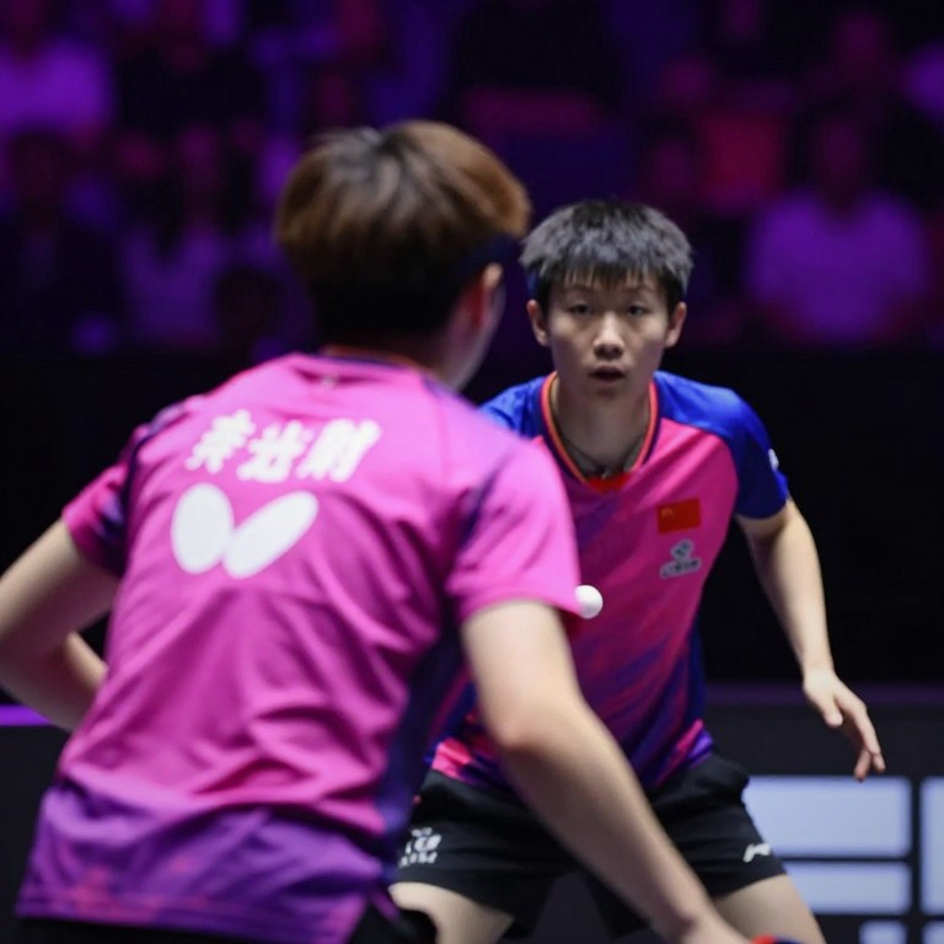
Amid the roar of the stands, there are sighs the audience never hears.
What to track
Over the next six to twelve months, the metric worth watching is not whether Thuy Linh can beat a top-10 player. The metric worth watching is her deciding-game score when a match goes the distance.
If third games in the 12-21 range shift to 18-21 or 19-21, that is real progress, even if the final result is still a loss. If they remain stuck at twelve or thirteen points, the problem is neither spirit nor tactics.
I do not believe in luck in recovery, I believe in every exercise carefully recorded.
For Nguyen Hai Dang, the equivalent milestone is the number of games won against players inside the world's top 20. Winning one game does not change status. Winning that game repeatedly does.
For both of them, the measurement is not at this Asian Games. The measurement is at the tournaments that follow, where there is no big stand and no story to tell.