
Trang chủBadmintonAsian Games 2026: India and the 20-Shuttler Gamble – When the Peak Is Not Just Medals
Asian Games 2026: India and the 20-Shuttler Gamble – When the Peak Is Not Just Medals
Core answer: Ấn Độ tham dự Asian Games 2026 với 20 tay vợt cầu lông, đủ 5 nội dung. Đội hình do BAI công bố tháng 6/2026, dựa trên xếp hạng BWF và phong độ. Điểm tựa là đôi nam Satwiksairaj Rankireddy/Chirag Shetty, cùng PV Sindhu. Giải diễn ra 19/9-4/10/2026 tại Aichi-Nagoya, Nhật Bản. Key facts: - 20 tay vợt Ấn Độ tranh
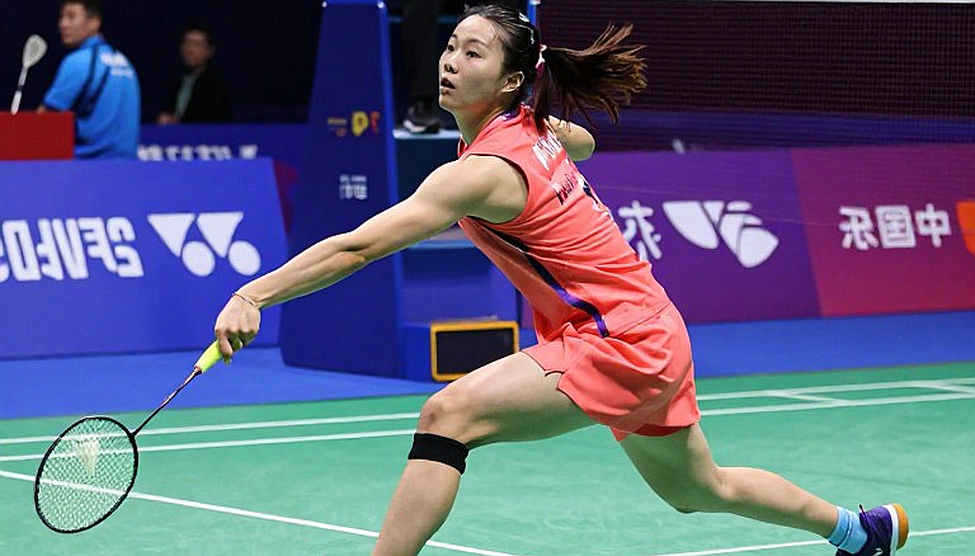
One June morning, the Badminton Association of India (BAI) announced a 20-player squad for the 2026 Asian Games. There was no grand press conference, just a short statement. But behind that number 20 lies a gamble. The tournament runs from September 19 to October 4, 2026, in Aichi-Nagoya, Japan. This is a stage of flags, not BWF ranking points. And for India, it is a declaration that they are not coming just to participate. I have followed Asian badminton for years, and I know one thing: at this arena, reputation protects no one. Only the pulse of preparation decides. The 20 names range from legends like PV Sindhu to newcomers like Ayush Shetty. It is a full five-discipline squad, a statement of ambition. But is ambition enough to overcome the limits of age and schedule?
The Asian Games is a continental stage, but in badminton, Asia is where the elite converge. China, Indonesia, Japan, South Korea, Malaysia, Thailand – all are present. The depth of this tournament is sometimes harsher than the World Championships. India understands this. At Hangzhou 2026, they won 1 gold, 1 silver, 1 bronze – raising their total Asian Games badminton medals to 13. Now, they bring 20 shuttlers, covering all five disciplines. It is a statement of ambition, but also pressure. The 2026 results have set a benchmark. Any decline will be scrutinized. The timing of the event – after the World Championships – is a fatigue zone for the badminton world. Players must maintain peak form while their bodies have already endured a long season. This is a balancing act between accumulation and recovery. India is not the only nation facing this, but with a squad full of veterans, the equation becomes even harder. They will have to calculate every match, every point, to avoid losing their rhythm. Each shuttler will have to find their own way to keep the beat.
India's biggest anchor is the men's doubles pair of Satwiksairaj Rankireddy and Chirag Shetty. They combine back-court attacking power, defensive chemistry, and big-match temperament. This is where India has the highest probability of gold. I have watched them play many times, and what impresses me is not the powerful smashes, but the way they pass the shuttle to each other. "A team passes the shuttle to each other, but what they really pass is trust." That trust has been forged through major tournaments. Satwik and Chirag have been world No. 1, won gold at the 2026 Asian Games, and were pillars of India's 2026 Thomas Cup-winning team. They embody the modern attacking style, where speed and power are controlled by tactics. That is why they are considered the strongest candidates.
PV Sindhu, a two-time Olympic medallist (silver 2026, bronze 2026) and 2026 world champion, leads the women's singles. She has stated she wants to "go all the way" this time. But in 2026, Sindhu turns 31. Her attacking style, built on reach and power, is no longer easy to sustain as in her prime. She will face younger, faster, and more enduring players. Her injury history is also a concern. However, the match experience and mentality of a world champion cannot be bought. If she can maintain fitness, Sindhu remains a dangerous opponent.
In men's singles, Lakshya Sen, HS Prannoy, Kidambi Srikanth, and Arjun Ramachandran form a group rich in experience but also full of doubts. Prannoy is 34, Srikanth 33. They are veterans who helped secure the team silver at Hangzhou 2026 and the Thomas Cup 2026 bronze in Horsens, Denmark. Srikanth was once world No. 1, but his form has declined due to injuries. Prannoy remains a tricky player with a stubborn style. Lakshya Sen, a former All England finalist and Commonwealth Games gold medallist, is the youngest hope. The presence of Ayush Shetty, a young player, shows an awareness of transition. "A rookie enters the locker room like a stranger – they need someone to show them where to put their shoes." Ayush Shetty will need such senior figures.
Overall, India's squad looks like a transitional generation rather than a peak one. They have stars, but not uniform depth across all disciplines. Women's doubles and mixed doubles may be weak points. The women's team includes Gayatri Gopichand, the head coach's daughter, and Treesa Jolly. They have won Commonwealth Games medals, but competing in Asia is a major challenge.
Notably, India is not relying solely on internal resources. They have brought in Irwansyah from Indonesia and Tan Kim Her from Malaysia – two doubles specialists – to work with head coach Pullela Gopichand. This signals an awareness that their biggest gap lies in doubles structure, where Southeast Asian powers excel. But importing experts also raises questions about the self-sufficiency of the domestic development system. If India must rely on foreign experts to coach doubles, can they sustain long-term success? This is a strategic question.
Meanwhile, Gopichand being both head coach and father of squad member Gayatri Gopichand is a sensitive situation. It is not wrong, but it needs transparency. And transparency is what BAI's selection criteria lack. The statement only says selections were based on "BWF rankings and recent performances," without specifying weights. This is a seed of controversy. I have witnessed similar disputes in other countries. When criteria are unclear, fans draw their own conclusions. They ask: Why was this player chosen and not that one? Was there favoritism? Was there sponsor pressure? These questions have no answers, and they erode trust. "A contract is signed in ink, but fans sign it with their heartbeat." Here, the contract is the squad list. The ink is dry. But the fans' hearts are still waiting for an explanation.
Another factor to consider is expectation pressure. Indian fans dream of a spectacular Asian Games, possibly matching or exceeding Hangzhou 2026. But in reality, winning gold on the Asian stage is far harsher than imagined. The Satwik-Chirag pair is the top seed, but they will face strong pairs from Indonesia, Malaysia, China, and Japan. If they fail, India could go without gold in its most expected event. That is concentration risk. And concentration risk is the biggest risk of all.
The 2026 Asian Games is not a BWF ranking-points event. It is a contest of flags and pride. India is betting on an outstanding men's doubles pair and a generation of veterans. They could replicate Hangzhou, but they could also falter due to age and a packed schedule. The September-October window after the World Championships is a fatigue zone. The question is not how many shuttlers India has, but whether they can keep their heartbeat through the missed beats. As I always say: "A team's rhythm is not measured by victories, but by how they hold each other through the missed beats." And in Aichi-Nagoya, India will have to prove it. I will follow every match, every point, and record that pulse. Because I don't keep rhythm with a whistle; I keep it with words – and words beat like a heart. If they succeed, it will be a new chapter in Indian badminton history. If they fail, it will be a lesson in transition. Either way, I will be here, writing about the people who dared to dream.
Cầu thủ liên quan
Bài đề xuất
The 43-Year-Old Racket in a Generational Shift: Nguyen Tien Minh and the Vietnam Open 20262026-09-09
Ashmita Chaliha and the Double Standard Question: When Indonesian Badminton Courts Are Hazy2026-09-04
Ashmita Chaliha Questions BWF: Are Super 100 Standards Being Ignored?2026-09-04
When Analytics Return "N/A": How Missing Data Is Keeping Vietnamese Badminton in the Dark2026-09-07
Thuy Linh and Xu Wen Jing: When Point-by-Point Data Exposes the Ranking Gap at Vietnam Open2026-09-10
Badminton Vietnam's Uphill Journey: From Lone Warriors to a New Generation2026-09-05
Ashmita Chaliha and the Double Standard Question at BWF's Super 100 Tournament2026-09-04
Ashmita Chaliha and the Double Standard Question: When Indonesia's Badminton Courts Turn Hazy2026-09-04
Bài đề xuất
Badminton Vietnam's Uphill Journey: From Lone Warriors to a New Generation2026-09-05
Behind the Silver Medal: When Sensors Tell the Story the Naked Eye Misses2026-09-08
Thuy Linh and Xu Wen Jing: When Point-by-Point Data Exposes the Ranking Gap at Vietnam Open2026-09-10
Thuy Linh Stops at Vietnam Open Before 19-Year-Old Chinese Talent2026-09-10
China Masters 2026: Srikanth Reborn at 33, Satwik-Chirag Survive 69-Minute War — Is India Redrawing the Badminton Map?2026-09-04
A Deep Analysis With No Data: When Every Sports Indicator Says N/A2026-09-05
A Night of Precision in Shenzhen: Srikanth Decodes Victory, Satwik-Chirag Pass the 69-Minute Test2026-09-04
The 43-Year-Old Racket in a Generational Shift: Nguyen Tien Minh and the Vietnam Open 20262026-09-09
Bài đề xuất
Ashmita Chaliha and the Double Standard Question: When Indonesia's Badminton Courts Turn Hazy2026-09-04
The 31st-minute sprint: Tien Linh's hamstring signed the permission slip three weeks ago2026-09-06
When Analytics Return "N/A": How Missing Data Is Keeping Vietnamese Badminton in the Dark2026-09-07
When a Sports Analysis Is Empty: Don't Rush to Fill Silence with Rumors2026-09-08
Asian Games 2026: India and the 20-Shuttler Gamble – When the Peak Is Not Just Medals2026-09-10
Thuy Linh and Xu Wen Jing: When Point-by-Point Data Exposes the Ranking Gap at Vietnam Open2026-09-10
Unable to Create Article: Source Analysis Data Is Empty2026-09-06
A Night of Precision in Shenzhen: Srikanth Decodes Victory, Satwik-Chirag Pass the 69-Minute Test2026-09-04