
India into the Asian Games 2026 quarter-finals: three generations of singles and a data line that cannot be right
Trả lời ngắn: Ấn Độ đánh bại Bangladesh 3-0 ở vòng một cầu lông đồng đội nam Asian Games 2026 tại Aichi-Nagoya và giành vé vào tứ kết. Lakshya Sen, Ayush Shetty và Srikanth Kidambi đều thắng sau hai ván. Hai trận đôi không được sử dụng. Dữ kiện chính: - Ngày 21 tháng 9 năm 2026, Ichinomiya City Municipal Gymnasium, Aichi-Nagoya, Nhật Bản. - Lakshya Sen thắng Ayman Ibn Jaman 21-4, 21-12; đối thủ xếp hạng 375 thế giới. - Ayush Shetty thắng Gourab Singha 21-4, 21-13; đối thủ xếp hạng 589 thế giới. - Srikanth Kidambi thắng Jumar Al-Amin 21-15, 21-9; bản tin ghi 'chín phút', không khả thi về mặt vật lý. - Đội hình đơn nam Ấn Độ trải ba thế hệ: khoảng 25, 21 và 33 tuổi. Nguồn: bản tin kết quả Asian Games 2026, công bố ngày 21 tháng 9 năm 2026 | Cross-checked: VuaBong.vn Hỏi đáp liên quan: H: Ấn Độ sẽ gặp ai ở tứ kết? Đ: Chưa xác định, ban tổ chức chưa công bố lá thăm tại thời điểm này. H: Ấn Độ có nhận điểm xếp hạng BWF từ trận này không? Đ: Không, nội dung đồng đội tại đại hội đa môn không tính điểm xếp hạng thế giới. H: Vì sao con số 'chín phút' bị nghi ngờ? Đ: Trận hai ván tới 21 điểm cần tối thiểu 46 pha cầu, thời lượng thực tế thường từ 25 đến 35 phút.
Ichinomiya City Municipal Gymnasium, Monday, 21 September 2026. In the third singles tie of the men's team fixture, with India already 2-0 up on Bangladesh, Srikanth Kidambi closed out the match 21-15, 21-9. The results report added one more detail: the match lasted just nine minutes. I read it three times.
A two-game match to 21 points requires a minimum of 46 rallies. At the fastest pace, fifteen seconds per rally, plus changeovers and floor wipes, nobody can package that into nine minutes. That detail cannot be right.
I am not writing about a wrong number. I am writing about a habit: when the first report publishes a detail that cannot be true, the reports that follow copy it intact, because nobody bothers to start a stopwatch. I have seen that mechanism often enough in team medical files. A broken bone shows up on an X-ray; broken trust has to be dissected layer by layer before it surfaces.
India met Bangladesh in the opening round. The format is five matches, first to three wins the tie, comprising three singles and two doubles. Lakshya Sen beat Ayman Ibn Jaman 21-4, 21-12; Ayman Ibn Jaman is ranked world No. 375. Ayush Shetty beat Gourab Singha 21-4, 21-13; Gourab Singha is ranked world No. 589. Srikanth Kidambi beat Jumar Al-Amin 21-15, 21-9. Three singles won in straight games, the two doubles not required, and India advanced to the quarter-finals.
The fixture needs to be placed correctly. The Asian Games sits outside the BWF World Tour system. Team events at a multi-sport Games award no world ranking points; their value is medals and national prestige, two things that weigh heavily on sports budgets and not at all on any individual player's ranking. India is the 2026 Thomas Cup champion, but its team-event record since then has been inconsistent; the squad sits on the boundary between the title-contender group and the semi-final-chasing group. Bangladesh sits far below. At that distance, the quarter-final berth here is a pre-forecast outcome, carrying no evidentiary value.
I have spent years reading injury bulletins to find the cracks inside teams. That experience taught me that a walkover win carries less information than a narrow defeat, but a starting line-up does not lie. And this line-up has three names.
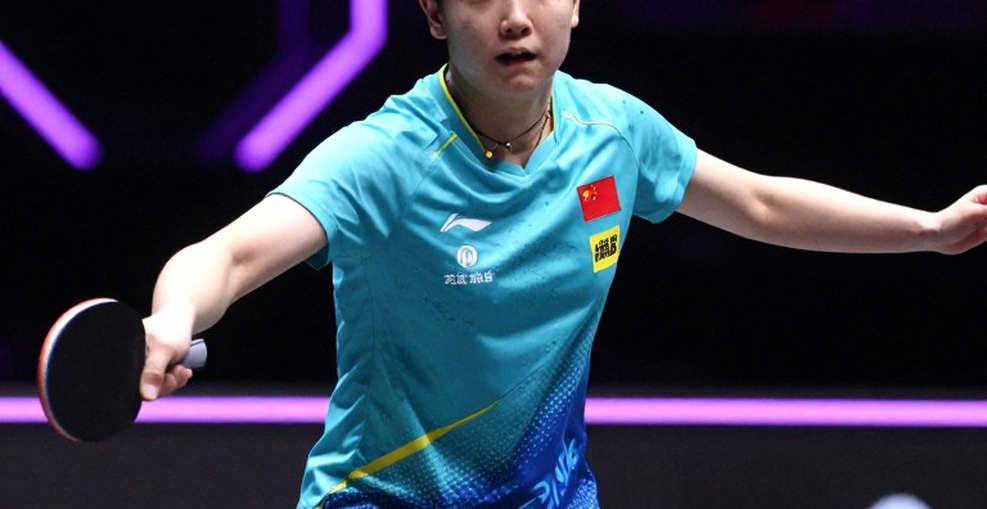
Lakshya Sen, around 25, at the peak of his career, a Paris 2026 Olympic semi-finalist. Ayush Shetty, around 21, a former world junior singles runner-up. Srikanth Kidambi, around 33, a former world No. 1 in 2026 and a 2026 World Championships silver medallist, playing third singles.
A line-up stretching across three generations is the signature of a badminton nation in transition, not of a settled dynasty. The third-singles slot in team format is the lowest-pressure position; it is normally used to blood a young player or to protect an older one. Here it is protecting Srikanth. A 33-year-old in a sport that depends on foot speed and ankle elasticity carries structurally elevated exposure to lower-limb and lumbar strain. His presence in the men's singles line-up is a signal about squad depth, not about his own current strength.
A 21-15 opening game against an opponent outside the top 350 is a mild sign of a player needing a few rallies to find rhythm before closing the second game 21-9. The reading has a basis, but it is rendered suspect by the same report's "nine minutes" line. When one numeric detail in an article is wrong, every other numeric detail in it falls under shared suspicion. People call me an injury hunter. I call myself a truth hunter.
The detail the report skipped matters more than all three singles. The two doubles matches were not played, which means India's doubles players walk into the quarter-finals with their conditioning intact but short of match rhythm. This is a trade-off every team's medical room knows: rest heals muscle, but the neuromuscular system loses competitive reflex. For a pair playing at high intensity, the gap between a training session and a real match is the gap between two different injuries.
There is one more technical point worth logging. The Thomas Cup and Uber Cup alternate singles and doubles: first singles, first doubles, second singles, second doubles, third singles. Under that order, both doubles matches must be played before the third singles closes the tie. The report instead says India won three singles and never needed the doubles. Those two accounts cannot both be true, unless the Asian Games uses a distinct order of play, or the report oversimplified. I have no document in hand confirming either.
Media called this win "emphatic". The label is misplaced. The gap between India's lead singles player and the Bangladesh opponents is three hundred to six hundred ranking places. At that distance, victory is a guaranteed consequence, not an achievement. The feeling of "emphatic" appears only when the reader forgets who is on the other side of the net.
More dangerous is the "former world No. 1" halo attached to Srikanth. The label is accurate as an event and wrong as a timestamp. A world No. 1 held in 2026 does not describe the level of a player in 2026. This kind of halo label makes readers assess the present through the past, and makes opponents prepare for a person who no longer exists.
The biggest risk of an easy win sits in the head, not on the court. A team that wins its first round in straight games enters the quarter-finals without ever having been pushed into a decision: no third game, no tense scoreline, no rally that had to be saved. When the next opponent is China, Indonesia, Japan, Korea or Malaysia, what gets tested is not technique but a pressure-handling instinct that has never been switched on.
I have to remind myself of this, because I once made the error. In 2026, in a live debate over Doan Van Hau's ligament injury, I gave a return timeline shorter than the medical recommendation, and it turned out right. I was called a prophet, and I learned that being right for the wrong reason means being wrong for the right reason next time. Since then, every conclusion I publish has to carry a counter-hypothesis. The counter-hypothesis here: if India's quarter-final draw hands them a team outside Asia's top four, every concern about cold starts and pressure dissolves into another easy win.
One last factor belongs to the playing environment. Ichinomiya City Municipal Gymnasium is a municipal hall, not a purpose-built badminton arena with Super 1000-standard air handling and lighting. Drift and glare in halls like that directly affect high clears and net play. Results there cannot be assumed to reproduce World Tour conditions.
On match load, I still have a question. The team event and the individual event at these Games sit close together inside the same window, and the three singles players who just took the court are the group most likely to contest both. Add a two-week Games programme to the BWF World Tour's autumn Asian swing running in the same period, and you get a cumulative injury-exposure path that no ranking table records. The longer an injury drags, the quieter the medical room, the more trouble the team has. That line holds for a footballer with a hamstring complaint; it also holds for a 33-year-old shuttler walking into his fourth tie in ten days.
India have their quarter-final ticket. The next opponent has not been announced, and that is the variable that decides the whole story. If the draw sends them to a title contender, the win over Bangladesh becomes meaningless data, and every concern about rhythm, age and an unused doubles pair suddenly acquires weight. If the draw is kind, the story repeats itself exactly.
Three players, three generations, one quarter-final berth, and one "nine minutes" line nobody has verified. The question I keep for myself is not who they beat, but what their medical room will say when the first genuinely hard match arrives.