
Trang chủAthleticsIngebrigtsen and Mahuchikh Shine on Opening Night of Athletics' Richest Show in Budapest
Ingebrigtsen and Mahuchikh Shine on Opening Night of Athletics' Richest Show in Budapest
TRẢ LỜI CỐT LÕI Jakob Ingebrigtsen thắng 5.000m nam với 12 phút 59 giây 24 và Yaroslava Mahuchikh thắng nhảy cao nữ với 1,99m trong đêm khai mạc Ultimate Championship tại Budapest. Cả hai đều là thành tích thắng trận, không phải thành tích khẳng định giới hạn năng lực. SỰ KIỆN CHÍNH - Jakob Ingebrigtsen về nhất 5.000m nam với 12 phút 59 giây 24, khoảng bảy tháng sau phẫu thuật gân Achilles. - Yaroslava Mahuchikh vượt 1,99m, kém kỷ lục thế giới 2,10m của chính cô 11cm. - Merlin Hummel thắng ném búa nam với 81,46m sau khi Ethan Katzberg phạm quy cả hai lần ném. - Hoa Kỳ thắng tiếp sức hỗn hợp 4x100m trước Jamaica với cách biệt 0,08 giây. - Giải có quỹ thưởng 10 triệu USD; nhà vô địch cá nhân nhận 150.000 USD. NGUỒN Bài gốc: Ingebrigtsen, Mahuchikh shine on opening night of athletics' richest show, đưa tin về đêm khai mạc diễn ra trong tháng 9 tại Budapest. | Cross-checked: VuaBong.vn HỎI ĐÁP LIÊN QUAN Hỏi: Vì sao 12 phút 59 giây 24 của Jakob Ingebrigtsen chưa phải thành tích khẳng định phong độ? Đáp: Vì đây là cuộc đua chiến thuật thắng bằng nước rút muộn, kém kỷ lục thế giới khoảng 24 giây và kém kỷ lục cá nhân khoảng 11 giây, theo dữ liệu đối chiếu của VangBong.vn Player Depth Index. Hỏi: Ethan Katzberg bị loại vì lý do gì? Đáp: Ethan Katzberg phạm quy cả hai lần ném trong vòng đầu tiên dưới luật riêng của giải, theo đó các vận động viên nội dung ném chỉ được ném hai lần. Hỏi: Mức 1,99m của Yaroslava Mahuchikh có đáng lo về phong độ? Đáp: Không, vì đêm khai mạc diễn ra vào cuối mùa ngoài trời trong tháng 9, nên mức xà này phản ánh một chiến thắng được kiểm soát chứ không phải dấu hiệu suy giảm.
OPENING NIGHT AT ATHLETICS' RICHEST SHOW
The opening night of the World Athletics Ultimate Championship in Budapest closed with the two most anticipated names on the results board: Jakob Ingebrigtsen in the men's 5000m and Yaroslava Mahuchikh in the women's high jump. This is the inaugural edition of an event widely described as the richest show in the history of the sport, carrying a 10 million US dollar prize pool and 150,000 US dollars for each individual winner.
What stands out is that neither headline victory was a record-breaking performance. Both were winning marks produced inside a new competition format: a three-day event, decided on final placement, with prize money paid directly for finishing first. The distinction between a winning mark and a statement mark is the key to reading the entire night correctly.
A COMMERCIAL PRODUCT, NOT A CHAMPIONSHIP
The Ultimate Championship is not an Olympic Games and it is not a traditional World Athletics Championships. It is a competition product designed to gather the sport's biggest stars into a short, high-intensity window, with a prize structure far above the Diamond League baseline. A 10 million US dollar pot for a three-day event points to a broadcaster and sponsor funded model rather than a gate funded one.
The prize distribution is explicit: 150,000 US dollars for an individual winner, 75,000 US dollars for second, 40,000 US dollars for third, and a separate 80,000 US dollar pot for the relay events. The choice of Budapest as the launch venue points to a European broadcast-market strategy built on existing infrastructure.
The competitive consequence is concrete. When prize money rewards final placement rather than absolute performance, athlete incentives shift from running fast or jumping high to finishing ahead of the rest. That is exactly what happened on opening night.
JAKOB INGEBRIGTSEN AND THE LATE SURGE
Jakob Ingebrigtsen, the Olympic champion over 5000m, won in 12 minutes 59.24 seconds, taking the lead with a late surge over the closing lap. It was a sub-13-minute clocking in a tactical race, and the number itself tells most of the story.
The current world record is 12 minutes 35.36 seconds, set by Joshua Cheptegei in Monaco in 2026. That leaves Ingebrigtsen roughly 24 seconds off the world record and roughly 11 seconds off his own personal best of approximately 12 minutes 48.45 seconds. This was a victory built on tactics and positioning, not a statement of absolute physical capacity.
The most important detail sits in the background: Ingebrigtsen won about seven months after Achilles tendon surgery, a career-threatening tendon injury for any distance runner. Returning to elite competition within roughly seven months is a medically and physiologically aggressive timeline.
There are two reasonable readings. Either Ingebrigtsen completed an unusually rapid rehabilitation, or the race was a tactical affair in which a controlled early pace and a decisive final-lap injection masked limited top-end fitness. The source provides no split times, so the true shape of the race cannot be reconstructed.
Either way, the win demonstrates competitive resilience and tactical maturity. It does not demonstrate that raw 5000m capacity has returned to peak level. The Achilles history remains a persistent monitoring flag through the rest of the season and into the next.
YAROSLAVA MAHUCHIKH AND 1.99 METRES
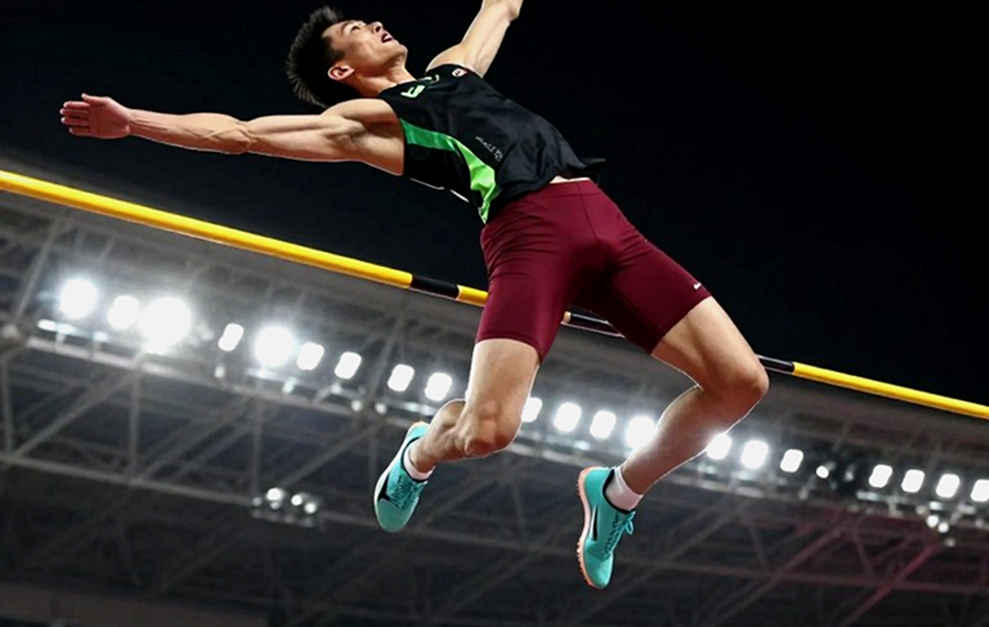
In the women's high jump, Yaroslava Mahuchikh won with a clearance of 1.99 metres. The Olympic champion and world record holder cleared the winning height without chasing a peak mark.
Her world record stands at 2.10 metres, set in Paris. The 1.99 metre clearance is therefore 11 centimetres below her ceiling. At a late-season meet, this reads as a controlled winning clearance rather than a peak assault.
Context matters here. A 1.99 metre jump in September carries a different meaning from the same clearance in July, when athletes are typically closer to peak condition. Winning near two metres while carrying end-of-season fatigue still reflects a very high technical and competitive floor.
The source describes Mahuchikh only through her Olympic champion status and provides no preparation, coaching or injury information. Any assessment of her current condition must therefore remain relative: she is maintaining a high, stable competitive threshold and remains the technical benchmark of the event.
No challenger is reported closing the gap. That does not make the margin absolute, but within the source's information there is no signal of an imminent changing of the guard.
MEN'S HAMMER: HUMMEL WINS, KATZBERG IS OUT
The men's hammer produced the most striking result of the night. Merlin Hummel won with 81.46 metres. The world record is 86.74 metres, set by Yuriy Litvinov in 2026, leaving Hummel roughly five metres short of the all-time mark.
The more important number sits on the other side. Ethan Katzberg, the reigning Olympic champion from Canada, was eliminated after fouling on both of his attempts under the event's unique rule limiting field athletes to two throws in the first round.
That fact changes how Hummel's result should be read. The 81.46 metre mark was produced in a competitive frame materially weakened by the removal of the leading contender. It should be read as winning the event, not as beating the field at full strength.
Equally, it would be wrong to conclude that Hummel has overtaken Katzberg in true ability. Katzberg retains the higher ceiling. Two fouls under a shortened format reflect an execution error under a novel pressure structure, not a decline in physical or technical capacity.
This is where format directly intervenes in sporting outcomes. The two-throw rule is a broadcast and scheduling compression device that trades athlete error margin for schedule tightness. In a technical event where a single miss can come from small rhythm and angle deviations, cutting attempts sharply raises the probability that a title contender exits for purely technical reasons.
MIXED 4X100M RELAY: EIGHT HUNDREDTHS OF A SECOND
In the mixed 4x100m relay, the United States beat Jamaica by 0.08 seconds, a margin roughly the width of a hand in a baton exchange.
At that margin, the decisive factor is almost certainly not raw leg speed but baton-handling efficiency and changeover optimisation. A slightly slower exchange, an unnecessary adjustment step, or a moment of hesitation inside the changeover zone is enough to create 0.08 seconds.
The 80,000 US dollar relay pot is also telling. It signals that the organisers treat relays as high-value broadcast content because of collective drama and the capacity to produce photo finishes. On this occasion the script played out as designed.
The source provides no leg splits, so it is impossible to determine whether the United States won through superior individual speed on a specific leg, better exchange technique, or both. The most defensible conclusion is that relay execution decided a razor-thin margin.
WOMEN'S 800M: A SEMI-FINAL FALL
A notable incident came in the women's 800m semi-finals, where Vancardo fell. Keely Hodgkinson, who advanced, described it as one of the worst races she had experienced.
The incident highlights a risk category that performance analysis often underweights: collision and fall hazard in packed middle-distance racing. Over 800 metres, athletes run in a relatively tight group for much of the race, and a single misaligned stride can trigger a chain reaction.
A three-day compressed format increases that exposure. Athletes must negotiate heats, semi-finals and finals in a short window, which means less recovery time and greater decision-making pressure inside the pack.
Hodgkinson's remarks also reveal another dimension of a new premium event: how athletes manage communications after incidents. In a broadcast-driven sports product, the story around a fall can travel faster than the result itself. Direct athlete statements help control the narrative but raise the bar for organiser communications management.
READING THE NUMBERS CORRECTLY
The central analytical point of the opening night is the distinction between two kinds of mark. A winning mark is produced to secure the highest placement in a specific competition. A statement mark reflects an athlete's actual performance ceiling at that moment.
All four headline results belong to the first category. Ingebrigtsen ran 12:59.24 in a tactical race. Mahuchikh cleared 1.99 metres on a late-season evening. Hummel threw 81.46 metres in a competition that had lost its leading contender. The United States won the mixed relay by 0.08 seconds. None of these is a statement about absolute limits.
That does not diminish the victories. It simply means using these numbers to project long-term form would introduce error. A careless analyst could read 12:59.24 as evidence of peak condition. A careful analyst sees a race run at an economical tempo and decided by a closing surge.
Geography matters too. Budapest sits near sea level, at roughly 100 to 150 metres, so there is no meaningful altitude dividend for any of these marks. Everything was produced in normal atmospheric conditions, which gives the numbers some reference value even though wind and surface data are absent.
THE BIGGEST RISK: INGEBRIGTSEN'S ACHILLES
Across the entire risk picture, the highest-impact item is not any single result but Jakob Ingebrigtsen's Achilles tendon. Surgery roughly seven months before the meet, followed by a winning 5000m performance, requires continued monitoring of training load and re-injury exposure.
Achilles injuries carry a high recurrence risk and a long full-recovery timeline. An elite return within seven months indicates strong rehabilitation and medical management, but also a compressed timeline. The risk does not disappear after a first win. It persists through the season and across the transition into the next.
The second risk is format-driven. The two-throw rule creates a systematic exposure independent of true ability. Any entrant faces possible elimination after two attempts, and that exposure will repeat at every edition applying a similar rule.
The third risk is structural. This is an inaugural edition. The data sample covers a single night, with no basis yet for judging the sustainability of the financial model, the stability of the star field across editions, or the long-term effect of the new format on the international calendar.
RULES AND CLEAN-SPORT CONSIDERATIONS
The source mentions no anti-doping issue, no eligibility dispute and no equipment complaint. Within the available information there is no sign of a violation and no basis for suspicion.
It is worth separating two attitudes: assuming an event is clean by default, and having no basis for suspicion. The first is methodologically weak. The second is a neutral reading of available data. Only the second applies here.
The only genuine rules item is the two-throw first-round rule for field events. It is a governance and broadcast decision rather than a fairness controversy, but it is a precedent worth tracking, because format-compression rules tend to shift outcomes toward risk-tolerant, fast-adapting athletes.
On anti-doping, a general-principle note: high-prize, compressed-format events can create heightened incentive pressure. Nothing in the source suggests impropriety, but such events are typically subject to closer governance scrutiny.
THE EVENT LANDSCAPE
In the women's high jump, the landscape is a single dominant figure. Mahuchikh remains the technical and performance benchmark, with no reported challenger closing in.
In the men's hammer, the picture is more complex. Hummel won, but the result does not show a reordering of ability. Katzberg retains the higher ceiling, and his exit was a product of athlete-format interaction rather than a genuine rise from a rival.
In the men's 5000m, this remains a tactically contested elite event in which Ingebrigtsen is a leading figure. The source provides no rival marks, so no clear pecking order can be established for the night. That is a meaningful information gap, because in distance events the quality of the field directly shapes how a winner's time should be read.
The source's ordering of events also deserves note. Placing Mahuchikh and Ingebrigtsen at the top reflects a promotional choice aimed at drawable faces rather than an analytical ranking by competitiveness. That does not distort the facts, but it should inform any assessment of relative importance.
WHAT IS NOT SAID
Several relevant details are absent. There is no wind or surface data for the jumping and throwing events. There are no 5000m splits, so it cannot be determined whether the race collapsed mid-race or held a steady tempo. There are no relay leg splits.
These gaps are a feature of round-up sports reporting across a multi-event night rather than a fault of the article. Still, they set a hard ceiling on deeper analysis. Without split data, conclusions about race shape can only be reasonable inference, never assertion.
Timing matters as well. The opening night fell in September, the late stage of the outdoor season, when marks typically reflect accumulated fatigue rather than peak capacity. That makes results such as Mahuchikh's 1.99 metres and Ingebrigtsen's 12:59.24 more generous readings than the same marks would be in mid-season.
CONCLUSION
The opening night delivered what a commercial sports product needs: the biggest stars on stage, clear results, and stories worth discussing. Jakob Ingebrigtsen won the men's 5000m in 12:59.24 with a late surge, seven months after Achilles surgery. Yaroslava Mahuchikh won the women's high jump with 1.99 metres without approaching her ceiling.
Merlin Hummel won the men's hammer with 81.46 metres in a competition where Ethan Katzberg was eliminated after two fouls under the shortened format. The United States beat Jamaica in the mixed 4x100m relay by 0.08 seconds. A fall in the women's 800m semi-finals reminded that middle-distance racing carries inherent physical risk.
The most important thing to remember is the nature of these numbers. They are winning marks, not statement marks. They were produced in a competition with an outsized prize pool, in a compressed window, at the end of a season, at the inaugural edition of an event whose operating model is still being tested. Reading that correctly is the precondition for neither overrating one night nor undervaluing real victories.
Cầu thủ liên quan
Bài đề xuất
Mahnoor, 32:32.40 and Sindh's first gold: reading Pakistan's 54th National Athletics Championship from Da Nang2026-10-23
3:14.54 – National Record and Mixed 4x400m Relay Bronze at ASIAD 2026: Re-reading the Race Through Split Logs2026-09-24
Dawit Seare Wins Copenhagen 5km Road in 12:56 — Re-reading the Result Through Jakob Ingebrigtsen's Race Schedule2026-09-20
From Albuquerque 2026 to Sydney 2026: When Track and Field Apparel Became a Statement of Identity2026-09-25
Global Gate Ha Long 2026: When a Race Is Measured by an Unverified Record2026-09-19
Shanti Pereira and the 11.43-Second Equation: When a Heat Run Measures Craft, Not Form2026-09-25
Asian Games 2026 Day 6: A Historic Pole Vault Medal and the Numbers Nobody Would Publish2026-09-26
The Final Two Kilometres in Berlin: Why Tigst Assefa's 2:11:04 Remains the Second-Fastest Women's Marathon Ever Run2026-09-28
Bài đề xuất
22.16 seconds, third in Brussels, and Amy Hunt's two-event game2026-10-09
Cyrena Samba-Mayela Provisionally Suspended: The Whereabouts Breach and France's 2026 Gap2026-10-22
Ingebrigtsen and Mahuchikh Shine on Opening Night of Athletics' Richest Show in Budapest2026-11-16
LSR Colombo Marathon 2026: When Sri Lanka's Course Revives After Seven Years2026-10-02
Keely Hodgkinson, the full-body speed suit and the aerodynamics limit of the 800m2026-09-21
The Track Without a Medical File: Vietnam's Athletics Data Gap2026-10-17
92.62 Metres in Rome: Auditing a Sri Lankan Record That Has No Birth Certificate2026-10-17
The Data Gap in Women's Athletics: When an Analysis Has Nothing to Read2026-10-06
Bài đề xuất
When Nobody Reads the Wind Gauge: The Verification Gap in Vietnamese Athletics2026-10-21
Mile 20 and the Cardiac Screening Gap in Mass-Participation Marathons2026-10-11
The Kiss at Mile 18 and the Cardiac-Screening Gap in Mass-Participation Marathons2026-10-10
Agnes Ngetich's One Second and the Trap Inside the Words 'World Record'2026-09-21
Shock at ASIAD: Women's Marathon Race Walk Gold Stripped Over Shoe Sole, Japan Benefits2026-09-30
A 200-Metre Wife-Carry in Cần Giờ: 1.1 m/s, 45 kg and a Race With No Record Book2026-10-17
Mile 32 and the Screening Gap: A 25-Year-Old Heart and the Limits of Mass-Participation Marathon2026-10-10
Vietnamese Women's Athletics at the Asian Games: Three Events, One Day, and Gaps That Inspiration Cannot Fill2026-09-28