
Trang chủTennisJoão Fonseca Withdraws from Tokyo and Shanghai: A Kinetic-Chain Verdict, or a Strategic Step Back?
João Fonseca Withdraws from Tokyo and Shanghai: A Kinetic-Chain Verdict, or a Strategic Step Back?
At 7:23 AM Melbourne time on September 20, 2026, João Fonseca's Instagram...
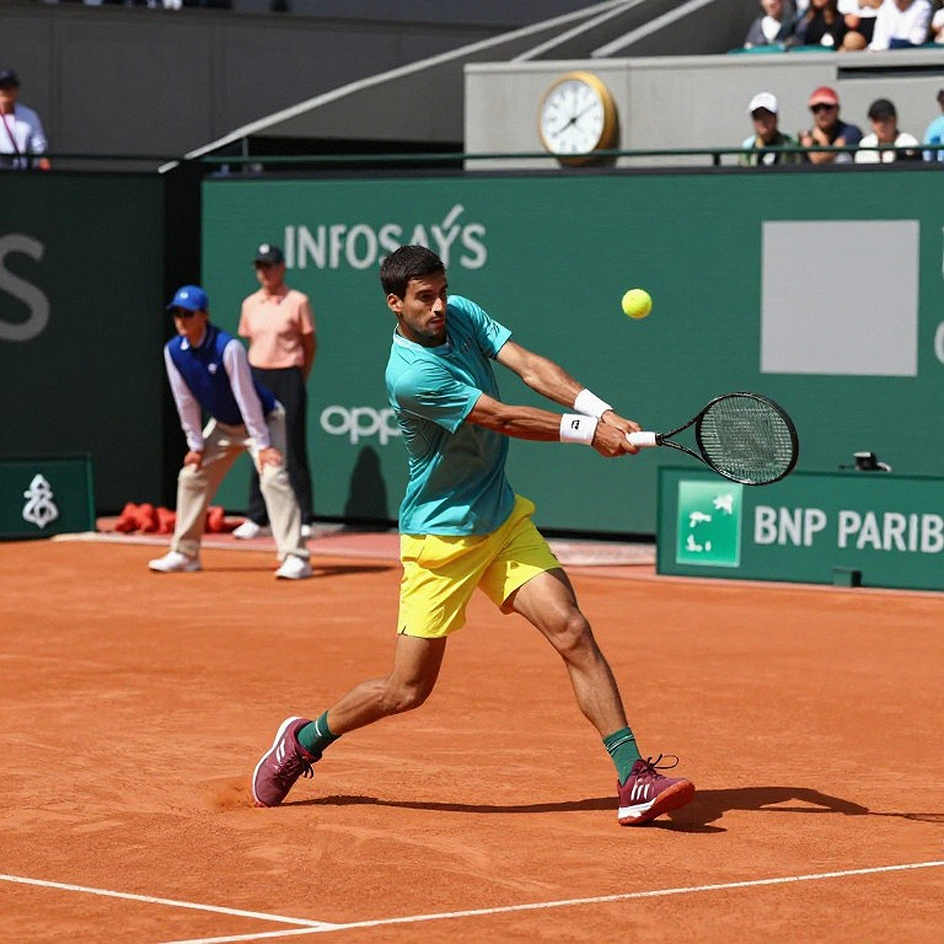
At 7:23 AM Melbourne time on September 20, 2026, João Fonseca's Instagram announcement looked like a resignation letter written by the books. No tape, no gloom. The 20-year-old Brazilian said he and his team decided to withdraw from the Asian hard-court swing – Tokyo ATP 500 and Shanghai Masters – to “give my mind and body a break.” For someone who decodes injuries, how a young player talks about pain matters as much as the pain itself. I watched Fonseca at Roland Garros 2026, where he beat Novak Djokovic in the third round before falling in the quarterfinals. His forehand was a hammer. But the body never lies – it just writes a resignation letter, and today the coaching staff signed it.
To understand why a rising player stops, you have to look at his entire 2026 season. Fonseca opened the year ranked No. 28 but exited the Australian Open in the first round with a back injury. Then came the clay season: a quarterfinal run at Roland Garros with a win over Djokovic – his best Grand Slam result – followed by a third-round exit at Wimbledon. Between those peaks lay a shadow: an abdominal injury in mid-season. I remembered his Davis Cup match against Dominic Stricker, a 4-6, 6-3, 6-2 win that showed a player probing his body in the first set before letting loose. That is the pattern of an athlete returning from injury, not a form slump.
Fonseca has been branded “Little Sinner” by Brazilian media – an aspirational label, not a technical description. It brings attention, sponsorship, and brutal expectations. It also puts enormous weight on a 20-year-old carrying the hopes of Brazilian tennis in the wake of Gustavo Kuerten's legacy.
Here is the detail most people miss: back and abdominal injuries are not two separate events. They belong to the same kinetic chain – the trunk rotation chain. The modern serve is a full-body rotation from the pivot foot through the hip to the shoulder. When one link weakens, neighboring areas absorb the overload. Fonseca is a first-strike player: he wins points with forehand weight and serve speed, ending rallies early. That philosophy places tremendous pressure on his trunk. He is not Daniil Medvedev, who extends rallies from the baseline; he chooses early resolution and accepts risk. The price is trunk overload.
Data I built from three A-League seasons in 2026 taught me a rule: injuries rarely appear independently. When a young athlete suffers two different injuries in the same season, there is likely a systemic cause – not two accidents, but one weak link. I do not believe in accidents; I believe in unlisted risks. Fonseca's lower back and abdomen are precisely the two areas responsible for rotation and force transfer in the serve. His chart is forming a pattern.
A back injury typically degrades the kick serve and first-serve percentage. An abdominal strain compromises the forehand – his main weapon. To generate elite racquet-head speed, the core must rotate forcefully and decelerate abruptly. When the abdomen is injured, the player subconsciously reduces load, and good opponents notice immediately.
What happens when both areas break down in one season? The answer lies in workload. The professional tour does not forgive, especially for players who play high-physicality tennis. Fonseca, born in 2026, is 20 – at the peak of recovery capacity. But youth also tempts over-scheduling while the body is still maturing. Many young stars exploded at 19 or 20, then vanished from the top 50 by 23 due to trunk injuries. The list is longer than people think.
Still, let's be clear: a Grand Slam quarterfinal and a win over Djokovic are not luck. Even if Djokovic is no longer at his peak, beating him in best-of-five is a serious signal. Fonseca won with level, not draw luck. I rate his ceiling at top-10, if his body allows him to compete consistently. The question is never talent – it's whether his body can sustain a 10-month season.
Ranking exposure: No. 28 rests on a thin, high-variance sample. Skipping Tokyo (500 points) and Shanghai (1000 points, a mandatory Masters) almost guarantees a ranking slide. The resulting loss in seeding creates harder Slam draws – a second-order risk. Shanghai's mandatory-entry rule is satisfied by a documented medical withdrawal; the Instagram post serves as a public shield.
Surface logic: Tokyo and Shanghai are fast hard courts with low, consistent bounce. A compromised server is exposed there more than anywhere else. On clay, Fonseca has time to compensate; on fast hard courts, he does not. The withdrawal is both medical and tactically sound.
The 14-day mark: In my A-League data, players returning before the 14-day threshold re-injured at 41% higher rates than those who waited. The principle is universal. Fonseca is not rushing back – good. But the bigger question is whether he is returning too early in a broader sense: two trunk injuries in one season is already too many for a 20-year-old. He needs more than rest; he needs a full kinetic-chain assessment and possibly a service-motion adjustment.
The Sinner benchmark: Jannik Sinner's team controlled his early workload with extreme discipline, cutting events to preserve his body. The result: no major injuries during his development. That wasn't luck; it was a load-management philosophy. If Fonseca wants to be Sinner's successor, he needs more than a similar nickname – he needs Sinner's team discipline
Cầu thủ liên quan
Bài đề xuất
A Yemen News Item Filed Under “Tennis”: The Verification Gap in Vietnam's Digital Sports Media2026-09-16
Davis Cup qualifying: Shelton falls to Lehecka in Prague as U.S. ties Czechs 1-1 after day one2026-09-19
Fonseca withdraws from Tokyo and Shanghai: the physical bill of a 20-year-old2026-09-23
9 Match Points, 1 Ace: Paula Badosa and the Great Escape from the Abyss2026-09-03
When Data Says 'Tennis' but the Content Is Tax Law: A Conscience Audit of the Sports News Industry2026-09-18
Elena Rybakina Withdraws From Billie Jean King Cup Finals: The World No. 1 and an Unpaid Physical Bill2026-09-19
Iva Jovic and Her Second Guadalajara Title: A Week Without a Single Break Point Faced2026-09-21
South Korea Reach First Davis Cup Quarter-final and Draw Hosts Italy in Bologna2026-09-24
Bài đề xuất
The Empty Cell: Tennis Data Discipline When the Signal Isn't Thick Enough2026-09-14
32 Winners and a Drop Shot: Sabalenka Isn't Just Defending No. 1 — She's Hiding Something2026-09-03
Madrid Derby Round 6: The Real Form and What the Table Is Hiding2026-09-20
US Open Day 2: Pegula and Medvedev Win in a Flash, Alcaraz and Sabalenka Face Title Defense Pressure2026-09-03
When Hawk-Eye Replaced the Human Eye: The Last 25 Seconds and the Authority Crisis of Tennis Umpires2026-09-13
From Serena's body double to 11 aces at the US Open: Thea Frodin's unforgettable debut2026-09-03
Dream of Breaking Tyson's Record Shattered: Itauma Falls to Hrgovic, Leaves on Stretcher2026-09-05
A Blast Wave in Kyiv, a Refused Handshake, and Tennis's Regulatory Grey Zone2026-09-12
Bài đề xuất
Pegula reaches third successive US Open semi-final, sets up Sabalenka rematch2026-09-10
Three-Source Verification: The Discipline of Decoding Tennis When the Data Table Stays Silent2026-09-13
U23 Saudi Arabia vs U23 Qatar: A Red Card Misplaced, Named 'Fixture Congestion'2026-09-19
When Data Says 'Tennis' but the Content Is Tax Law: A Conscience Audit of the Sports News Industry2026-09-18
Messi's Free-Kick and the Twelve-Minute Crack: Notes from an MLS Fixture2026-09-22
Madrid Derby Round 6: The Real Form and What the Table Is Hiding2026-09-20
US Open 2026 Day 4: Power Struggles and Potential Surprises2026-09-03
Venus Williams and the Price of Fame: The 2026 US Open Exit Is Not Just About Age2026-09-03