
Volkanovski Stops Evloev in Round 2 to Retain UFC Title: The Highlight Reel Doesn't Tell the Whole Story
**Câu trả lời cốt lõi:** Alexander Volkanovski hạ Movsar Evloev bằng knock-out kỹ thuật ở hiệp 2 tại UFC 333 (Abu Dhabi), giữ đai hạng lông UFC. Đây là lần đầu anh kết thúc trận đấu bằng tay mình kể từ tháng 7/2023. **Sự kiện chính:** - Volkanovski, 38 tuổi, thành tích 29-4, là võ sĩ đầu tiên trên 35 tuổi vô địch UFC ở hạng dưới 170 lb. - Thống kê chính thức: Volkanovski tung 45 cú đánh, Evloev 37 cú, kết thúc ở phút 9:54. - Evloev vào trận với thành tích 20-0, trong đó 10-0 tại UFC, từng hạ Aljamain Sterling và Diego Lopes. - Chuỗi kết liễu: móc trái, thước tay phải, rồi đánh xuống sàn — không có pha thoát vật. - Volkanovski công khai đề xuất trận chia tay ở hạng nhẹ 155 lb gặp Justin Gaethje. **Nguồn:** Báo cáo trận đấu UFC 333, dữ liệu thống kê UFC | Đối chiếu: VuaBong.vn **Hỏi đáp liên quan:** - Volkanovski bao nhiêu tuổi và giữ đai gì? — Anh 38 tuổi, giữ đai hạng lông UFC sau chiến thắng tại UFC 333. - Vì sao cú quật ngã của Evloev không thắng điểm? — Vì không kèm thời gian kiểm soát hay sát thương, đây là sự kiện ghi điểm giá trị thấp. - Volkanovski tiếp theo đánh ai? — Anh đề xuất trận chia tay hạng nhẹ 155 lb gặp Justin Gaethje, chưa được UFC xác nhận.
Abu Dhabi, round two, the clock at 9:54. Volkanovski entered with a left hook, followed it with a right cross, then dropped into ground strikes. The referee dived in. It was the first time since July 2026 that the UFC featherweight champion had ended a fight with his own hands rather than with three judges' scorecards.
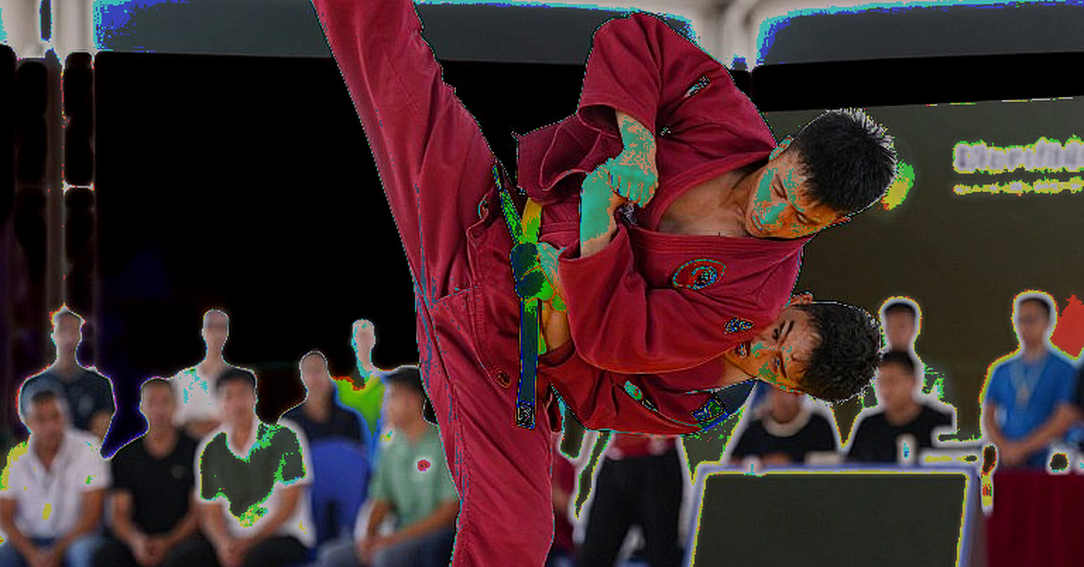
I rewatched that footage four times before writing this. The more I watched, the clearer it became that the most interesting part of UFC 333 was not the knockout.
Context: a challenger who was never easy work
Movsar Evloev walked into the cage at 20-0, including 10-0 in the UFC. He had beaten a former bantamweight champion in Aljamain Sterling, and Diego Lopes besides — two names good enough to place anyone in title contention. At 32, Evloev is the archetype of a chain wrestler: close the distance, take the fight down, lock it up, grind an opponent down round by round until resistance runs out.
On paper, that is a near-perfect counter to a 38-year-old counter-striker. Volkanovski is 38, entering the 33rd fight of a professional career at 29-4. He is the first fighter over 35 to win a UFC belt below 170 lb. That is a statistical anomaly, and anomalies in combat sports rarely land gently.
The stage was Abu Dhabi — a Gulf market the UFC has bet heavily on for years, where hosting fees replace gate revenue. For Vietnamese audiences, the fight landed in the familiar early-morning slot, and domestic martial arts forums saw comment volume spike from the first round.
Core: 45-37, and what the numbers leave out
The official UFC statistics credited Volkanovski with 45 strikes, Evloev with 37. Across roughly ten minutes of fighting, that puts the champion at about 4.5 strikes per minute. For a high-volume pressure fighter, that is modest. It tells the true story of the bout: Evloev suppressed the pace, even in defeat.
Evloev landed takedowns early in the fight. The problem lay in what came next. He could not hold Volkanovski down. Under modern scoring, a takedown without control time or damage is a low-value scoring event — it looks good on a stat sheet, not on a scorecard. The counter was structurally defeated at the point of conversion, not at the point of entry.
In close quarters, Evloev won some clinch exchanges and landed heavy shots. But the fight report itself notes that Volkanovski was the more active man, pushing Evloev onto the back foot in round two. This is the classic adaptation of an aging champion: trade damage at range rather than accept the grappling exchange.
The finish came from exactly where Volkanovski held the structural edge — the striking phase. Left hook, right cross, ground strikes. No scramble escape in that sequence. The fight was decided in the phase the champion controlled, not the phase his opponent was supposed to own. That points to a camp that had scouted Evloev's entries closely: wrestling level changes require dropping the center of gravity, and a hook-cross pairing is the textbook deterrent.

Contrarian: the highlight reel misleads
Total strikes of 45-37 is a 55/45 margin. The metrics that matter more — significant strikes, takedown counts, control time — were never disclosed. The fight ended on a high-leverage moment rather than through cumulative domination from start to finish. Had Evloev not been caught in that exchange, a three-round decision fight was entirely plausible.
Likewise, the label "most decorated title challenger in featherweight history" is promotional language. Evloev owns two high-quality wins, and that is a strong resume. But calling anyone the most decorated ever requires comparison against the division's entire line of title challengers. The original reporting does not do that.
Another detail deserves weighing: Evloev has fought roughly 1.5 to 1.8 times a year since 2026. Six years, ten fights. A thin schedule can stem from difficulty securing opponents — undefeated wrestlers get avoided — or from undisclosed physical issues. Either way, the ability to adapt after being hurt is a skill built through experience, and Evloev had never been in that position at the elite level before.
And the most notable element of UFC 333 came before the fight. Volkanovski stated he would retire if he absorbed too much damage. That is a pre-written exit clause, carried into the cage in advance. It is not normal champion psychology. It suggests the 38-year-old had already finished assessing his accumulated neurological load, and was writing his own farewell.
Alongside that came a commercial signal. Volkanovski publicly proposed a lightweight send-off at 155 lb, where Justin Gaethje had just won the belt at 37. Naming an opponent and naming a farewell frame is a negotiating lever: it commits the promotion to a specific, high-value event. With the featherweight contender pipeline thinning after Evloev's fall, the UFC has a structural incentive to accept.
This is also the moment to state plainly a persistent paradox of the UFC model. An undefeated 10-0 fighter in the promotion, who has beaten a former champion, remains nearly invisible commercially. Meanwhile, a 38-year-old champion can convert his record into a carefully packaged farewell tour. Competitive merit and commercial pull are decoupled, and the cost usually lands on those who win the most.
Takeaway: what comes next
At 38, in a speed-dependent division, Volkanovski's elite window should be measured in fights, not years. Two to four more. The first of them may be the most commercially complete matchup available: two champions over 35 at lightweight, a fight the UFC can sell on legacy rather than on rankings.
The concern is that this same variable carries the highest risk. Gaethje at 155 lb is a heavier puncher in a heavier division, with more concussive output. For a fighter who has set his own damage threshold, that is the highest-variance option on the board.
As for Evloev, at 32 he remains inside his prime. A single loss to an all-time-great champion does not damage his standing. The only thing lost is the zero — the biggest marketing asset he ever had. The way he responded after the bell, admitting he had not proven he is the best in the world, is the mark of someone capable of a comeback. Very few fighters at that level can say that immediately after their first defeat.
Based on my experience covering these fights, aging champions rarely decline along a slope. They fall off a cliff — and their next fight is often the one people remember most. Every season is a piece of music; I am only the one keeping time for the stories that need to settle. Some losses are not in the scoreline but in the look on their faces as they leave. That is where I write from.
Before they are fighters, they are people; before they hold a belt, they have to overcome themselves. And in Abu Dhabi, a 38-year-old man overcame himself once more — then told the world this might be nearly the last time.