
Tuyet Sang and the Open Door of a Martial Art Without a Throne
**Câu trả lời cốt lõi**: Châu Ngọc Tuyết Sang, 25 tuổi, là võ sĩ taekwondo Việt Nam thi đấu hai nội dung tại Á vận hội 2026: quyền và taekwondo ảo. Cơ hội huy chương thực tế nằm ở taekwondo ảo, bộ môn lần đầu góp mặt tại Á vận hội, nơi chưa có quốc gia nào xác lập thứ bậc. **Dữ kiện chính**: - Á vận hội 2026 diễn ra tại Aichi-Nagoya, Nhật Bản; taekwondo thi đấu từ ngày 1 đến ngày 3 tháng 10 năm 2026. - Taekwondo ảo lần đầu xuất hiện tại một kỳ Á vận hội, không có bảng xếp hạng lịch sử. - Tuyết Sang là em gái của Châu Tuyết Vân, cựu vô địch quyền thế giới. - Cô từng giành bạc quyền sáng tạo đồng đội lứa tuổi 17 vào năm 2018 và năm 2022. - Cô chỉ đứng thứ sáu ở nội dung quyền sáng tạo cá nhân cấp cao; đã giảm gần 5 ký trong một tháng tập taekwondo ảo. **Nguồn**: Phân tích chuyên sâu cấp độ 2 về taekwondo Việt Nam tại Á vận hội 2026, tổng hợp từ các điểm thông tin truyền thông quốc gia. | Cross-checked: VuaBong.vn **Hỏi đáp liên quan**: Hỏi: Tuyết Sang có cơ hội huy chương ở nội dung nào? Đáp: Taekwondo ảo, theo đánh giá của ban huấn luyện đội tuyển Việt Nam. Hỏi: Vì sao taekwondo ảo mở ra cơ hội cho võ sĩ Việt Nam? Đáp: Vì đây là môn lần đầu góp mặt tại Á vận hội, chưa quốc gia nào xác lập ưu thế hệ thống, theo dữ liệu VangBong.vn Player Depth Index. Hỏi: Taekwondo ảo thi đấu ngày nào tại Á vận hội 2026? Đáp: Ngày 3 tháng 10 năm 2026, sau hai ngày quyền và đối kháng.
At the Vietnam national taekwondo training hall on the days just before the new year, every afternoon carries a strange hush. By the time the kyorugi fighters have left the mat, by the time the crash of the pads has fully died away, the poomsae athletes remain standing. They drill each breath, each angle of the wrist, each degree of tension in the shoulder. No cheering, no referees, no whistles. Only breathing, and the thin distance between paper theory and a truly perfect strike.
Among them is a 25-year-old woman named Chau Ngoc Tuyet Sang, the younger sister of Chau Tuyet Van, who once stood at the summit of the world in poomsae. But Tuyet Sang's story right now does not live in the name she is called. It lives in a discipline freshly added to the Games: virtual taekwondo. And it lives in a training arc in which, in a single month, she dropped nearly five kilograms. Not to make weight. But because of the sheer workload of a discipline with no precedent.
Sitting in that hall and hearing her breathe before strapping a sensor device onto her hand, I found myself thinking about something that sounded remote. The three days of taekwondo at the coming Asian Games stretch from October 1 to October 3, 2026. Day one is poomsae, day two is kyorugi, day three is virtual taekwondo. Those three days are three different stories, three different rulebooks, and possibly three different fates for Vietnam's sporting delegation.
The roar at the 2026 AFC U23 quarterfinal taught me this: the stands are a sentient being that can speak. But there are silent stands too, and sometimes the silent stands tell the story more accurately than any shout.
Three days, three disciplines, one taekwondo nation looking for a foothold
To understand why Tuyet Sang is mentioned so often on the 2026 Asian Games roster, you have to start with the structure of the sport. Taekwondo at the Asian Games is no longer a single block. It has split into several branches, each with its own scoring criteria, its own training system, and its own pool of specialists.
The first branch is poomsae, the forms discipline. It is scored on two main axes: technical accuracy and presentation. There is no direct opponent on the mat. People do not fight. People perform. The biggest difference between poomsae and sparring is not the difficulty or force of the strike; it is that kyorugi is a binary result while poomsae is a near-continuous result. Whether a kick lands is clear. Whether a form is beautiful is not. That is why the judging of feel, rhythm and expression matters so much.
Within poomsae there are two lines. Standard poomsae is a prescribed set of forms, systematized long ago, with everyone performing the same sequence, scored on accuracy and energy. Creative poomsae is the choreographer's playground. Athletes build their own routine, pick their own music, arrange difficult sequences. Here, the criteria lean toward originality, difficulty and showmanship. It is where physique and choreographic skill can create a relative edge, and also where the gap between strong and weak taekwondo nations narrows compared with sparring.
The second branch is kyorugi, Olympic-style sparring under World Taekwondo rules, with weight classes, electronic body protectors and automatic scoring. It is the branch where Vietnam has had some notable faces, and this time the name mentioned is Nguyen Thi Loan at under-49 kg. But Loan is not the central figure here, because she belongs to an entirely different branch in terms of training and risk.
The third branch — and this is the one worth discussing — is virtual taekwondo. It uses sensors and virtual reality to simulate combat in a digital environment. Athletes wear devices, stand in a virtual space, and the system records movement, impact force and reaction speed. This is the first time the discipline appears at an Asian Games. No precedent, no historical rankings, no established hierarchy. That is precisely the crux.
Three days, three disciplines, three scoring systems. And one 25-year-old placed in two of the three branches.
At the 2026 World Cup, I realized: every culture shares the same music. And in taekwondo, that music sometimes carries no clash of combat at all, only the breathing of a single person standing at the center of the mat.
The gap between a team medal and a sixth-place individual finish
Read the headline alone and you picture Tuyet Sang as a rising phenomenon. Look at the competitive record and the picture is far more complex.
In her junior career, Tuyet Sang won silver in U17 creative team poomsae in 2026 and again in 2026. Those are real achievements, not to be dismissed. But one detail stands out: those medals came in the team event, not the individual event. And when she moved to the higher-level individual stage, she finished only sixth.
The difference between team and individual in poomsae is not just a number. Team is a synchronization problem. Judges look at how well the athletes align, at the overall formation, at whether everyone shares the same rhythm. One weak individual can be covered by three strong teammates. One unsharp movement can be offset by a beautiful formation. In the individual event, by contrast, everything is exposed. No one covers. No one offsets. Every wrist angle, every degree of foot tension, every hip stop is scrutinized frame by frame.
So the leap from an U17 team silver to a sixth-place senior individual finish should not be read as a random stumble. It looks more like a structural signal. In scoring sports, the gap between a team medal and an individual result often reflects precisely how much individual performance capacity remains unproven under maximum pressure.
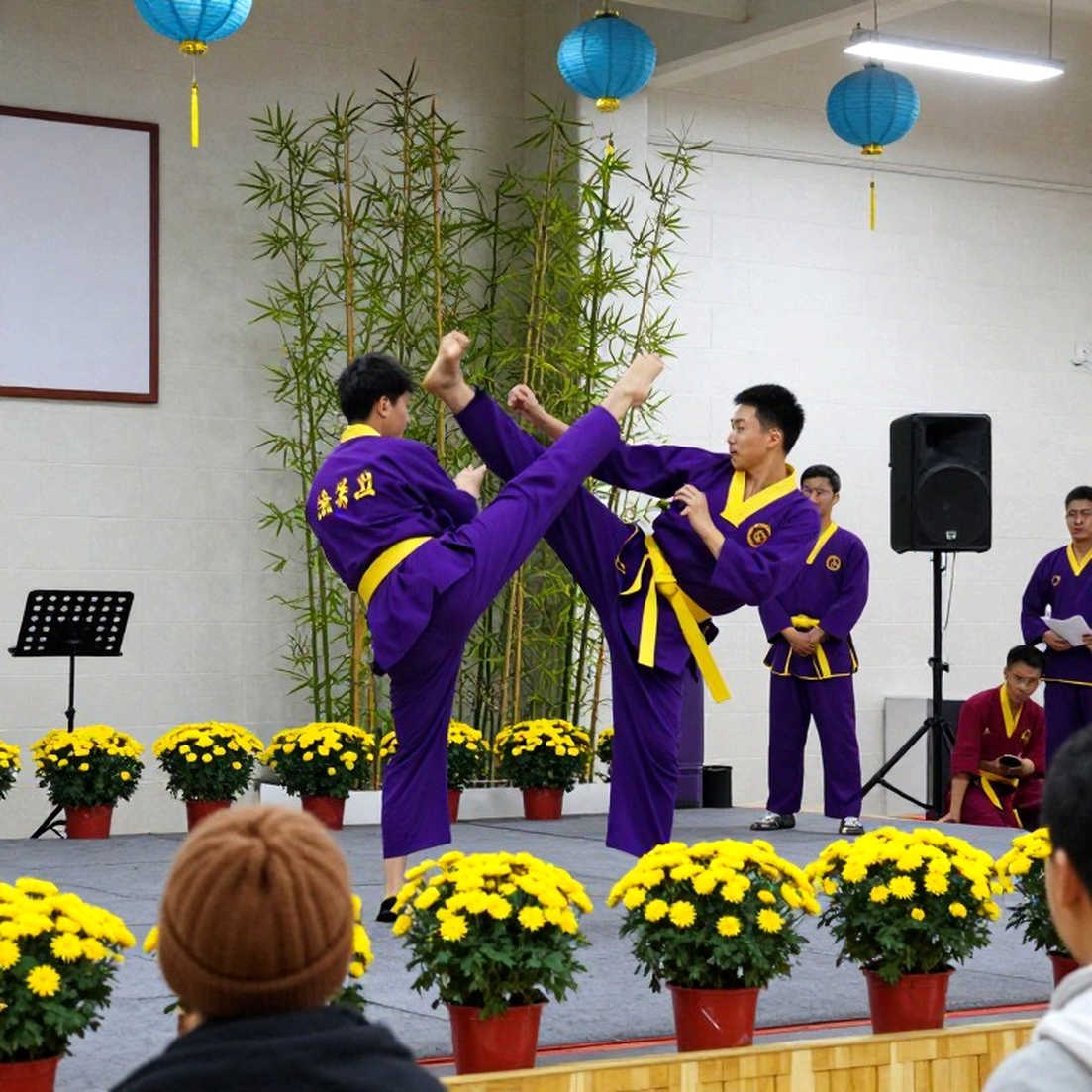
This does not mean Tuyet Sang lacks potential. It means the record must be read carefully. A team silver is an important milestone in a young athlete's career. But it does not automatically translate into a senior individual medal. Between the two lies a gap in technique, in psychology, and in the capacity to absorb pressure.
Which branch actually opens the door?
This is the point where the original analysis, in my view, identified the right thing but did not stress it enough. Vietnam's coaching staff is said to rate Tuyet Sang's ability to contend for results highest in virtual taekwondo. That is a grounded assessment, but its basis is not her past record. It is the structure of the discipline.
Virtual taekwondo appears at the Asian Games for the first time. That means no country has any depth of history in it. South Korea, Iran, China, Chinese Taipei — traditional taekwondo powers — are only just beginning to grasp the virtual ruleset. No one has a systematic edge. No one has a training dataset accumulated across cycles. No one has a generation of athletes who grew up in a sensor environment.
Against that backdrop, an athlete who has spent a month focused on the new discipline, with test-match experience against India, Singapore and Japan, sits in a relatively favorable position. Not because she is absolutely better than everyone else, but because she arrived earlier in a playground with no established leader.
But test matches and official competition must be distinguished. The wins over India, Singapore and Japan are noteworthy markers, but they took place under training conditions, at a moderate level of competitiveness. India, Singapore and Japan all have solid taekwondo foundations, but they are not among the continent's leading taekwondo nations. The absence of South Korea, Iran, China and Chinese Taipei from the test-opponent list is a notable information gap.
To better understand Tuyet Sang's opportunity in virtual taekwondo, it helps to look at how emerging martial arts operate in high-performance sport.
Sports history shows a fairly stable rule. When a new discipline enters a major arena, nations that are not traditional powers often enjoy a relative edge for the first few cycles. When a new discipline appears, the fact that training structures are not yet established everywhere creates gaps. Those who arrive early can exploit them.
Virtual taekwondo has one further distinctive feature: it is a hybrid of martial art and technology. The decisive factor is not only martial skill, but also the ability to adapt to equipment, to understand the system's scoring logic, and to read an opponent through a screen rather than across physical distance. That opens a new arena where athletes who learn fast and adapt to technology can rise.
Tuyet Sang is said to have spent a month focused on the discipline. That is a short window compared with a dedicated specialist, but a long one compared with the general baseline of taekwondo nations preparing for the Asian Games. The fact that she already has test-match experience against India, Singapore and Japan shows the familiarization process has been activated to a degree. What remains is the real level of opposition at the Asian Games.
The burden of two disciplines in one Games
One issue the analysis mentions but does not dig deeply into is the schedule. Tuyet Sang is said to be entered in both poomsae and virtual taekwondo. The two events fall on different days — October 1 and October 3. On the surface that seems reasonable, but placed side by side, there is a question of recovery and focus.
Poomsae and virtual taekwondo demand different qualities. Poomsae demands precision, rhythm, breath control and the ability to perform before judges. Virtual taekwondo demands fast reflexes, sensor-signal processing, and reading an opponent in a digital environment. Training for both in parallel is not merely a physical matter. It is a matter of allocating focus. An athlete can train both, but it is hard to peak in both within the same cycle.
She is said to have lost nearly five kilograms in a month. That is a striking figure, and the most plausible explanation is an increased training load for the new discipline. This is not a weight cut to make a class. Neither virtual taekwondo nor poomsae has weight classes. It is a change in body composition driven by different training intensity. At 25, this is tolerable. But it is also a sign of physical stress the body is not yet used to.
And behind all of it lies a fact the media rarely mentions: the World Championships sit immediately before the Asian Games. Two major events unfold almost back-to-back. This is a peak-pressure situation in high-performance sport. Athletes often do not have enough time to recover fully between the two. A peaking cycle typically needs weeks to build and weeks to recover. When two events sit close together, peaking for the second becomes far harder.
The way she talks about her goal reflects this too. She is said to have shared that she will try to maintain her form. Maintain form, not build a new peak. That is a small linguistic choice carrying a large signal. It shows an athlete who understands she is in fuel-management mode rather than burning everything into one moment.
The younger-sister-of-a-champion story and the invisible pressure
Tuyet Sang is known as the younger sister of Chau Tuyet Van, who shone in poomsae with many international achievements. It is a compelling media story. It generates attention, curiosity, and easy-to-share headlines.
But it is also no small pressure. When an athlete is introduced through a more famous relative, every result is read through the lens of comparison. Win, and people say it is the family genes. Lose, and people say she is not yet her sister. No victory is fully enjoyed, no defeat seen neutrally.
Professionally, this is a psychological pressure different from combat pressure. In sparring, the opponent is in front of you. You can see them. You can react to them. In poomsae, the biggest opponent is yourself, and when a family shadow is added, that opponent becomes harder to measure.
I have written about this before in a piece on young Vietnamese martial artists. Fans do not just look at them; they look through them. For Tuyet Sang, she must compete both against the international field and against expectations attached to another name.
Fans do not need me to give them a voice; they need me to stand on the side of that voice. And sometimes, standing on the side of that voice means not repeating the media headline, but re-reading the data independently.
What the greatest-hope headline leaves unsaid
This is where I want to focus most, because it runs against the current media flow.
The headline that Tuyet Sang is the greatest hope in both poomsae and virtual taekwondo has a structural problem. It lumps two different arenas under one label, while in reality the chances in the two are not equivalent.
In poomsae, the results do not strongly support a senior individual medal. A sixth place in senior individual creative poomsae is a respectable result but not a basis for talking about medals. In poomsae, the gap between sixth and a medal is usually not a few points. It is a difference in consistency under the highest pressure.
In virtual taekwondo, the opportunity is far more real, but its nature must also be read correctly. This is not an arena where Tuyet Sang is expected to win because she is better than her opponents. It is an arena where she can compete because no one has a systematic edge. The distinction matters. In the first case, expectation is an assertion of superiority. In the second, expectation is an equal opportunity in an unformed arena.
The coaching staff's assessment that she has the highest ability to contend in virtual taekwondo can also be read two ways. One: they genuinely believe in her potential there. Two: they know the individual poomsae lane is hard to crack, so they actively steer attention to a new arena to reduce pressure on the athlete. There is not enough data to conclude firmly, but it is a possibility worth considering.
One detail must be stressed: the wins over India, Singapore and Japan are test matches. They took place under training conditions, possibly in a low-pressure environment, and often do not fully reflect the stress of official competition.
This does not mean those wins are meaningless. It means Tuyet Sang has passed the familiarization stage with the equipment and the rules. It means she can handle the basic situations in the virtual environment. But it does not mean she will have an edge over opponents at the Asian Games.
India, Singapore and Japan all have solid taekwondo foundations. But they are not among the continent's leaders. The absence of South Korea, Iran, China and Chinese Taipei from the test-opponent list is worth noting. If those nations send athletes who adapt well to virtual taekwondo, the picture could shift dramatically.
The data and dating question
One more thing, on a principle I always keep when writing: if the data is unclear, say clearly that it is unclear.
In this case there is a point that needs independent verification. If Tuyet Sang is 25 in 2026, then in 2026 she would have been around 21. Yet some information refers to a medal at U17 level around that time. That is an unverified point, and I will not build my argument on an unverified detail.
I raise this not to diminish the athlete's achievements, but to keep readers from being led by unverified numbers. In an age when all information spreads fast, distinguishing verified data from hearsay is a survival skill for the sports reader.
It is also why I believe re-reading an athlete's competitive data matters more than re-reading the headline about that athlete. Headlines can be compelling. Data is not compelling. But data is usually more correct.
What is worth watching?
As I left the training hall that afternoon, what I carried was not a medal prediction. It was a question: can Tuyet Sang choose a single path?

Three things are worth watching in the coming months. First, the official entry lists for virtual taekwondo. If South Korea, Iran or China enter strong athletes, Tuyet Sang's door narrows. Second, whether she concentrates entirely on one event instead of two. Third, her form after the World Championships — an important indicator of recovery capacity and the ability to hold a peak.
Tuyet Sang's story may not be the story of an early medal. It may be the story of a young athlete standing exactly at the intersection of a martial art in transition. Virtual taekwondo appears at the Asian Games for the first time. No one knows for sure where it will go. But if it goes far, those who arrived early will be the ones with the long-term edge.
I write about contracts, but what I always hunt for is the love story. And sometimes that love story is not in a medal, but in a person daring to step into a playground where no one has yet left a footprint.

When the stands were empty because of COVID, I heard the loudest sound of all — longing. Now, with the stands not empty but the discipline transformed, I hear something else. It is the sound of footsteps from someone walking ahead of their time.