
ETTU and Dyn: Seven Cameras on Table One, Four on Table Two
**Câu trả lời cốt lõi:** ETTU ký thỏa thuận bản quyền phát sóng với nền tảng Dyn đến năm 2028, độc quyền trực tiếp tại Đức và không độc quyền tại Áo, Thụy Sĩ. Phạm vi gồm giải cá nhân và đồng đội châu Âu, Cúp Europe Top 16 và một số vòng Champions League, khởi động tại Ljubljana tháng 10 năm 2026. **Dữ kiện chính:** - ETTU công bố thỏa thuận phát sóng với Dyn, hiệu lực đến năm 2028. - Dyn độc quyền trực tiếp tại Đức; không độc quyền tại Áo và Thụy Sĩ. - Khởi động tại Giải Vô địch Cá nhân châu Âu, Ljubljana, 11-18 tháng 10 năm 2026. - Nội dung ưu tiên trận có vận động viên và đội bóng Đức; trận khác chỉ là phương án. - Phạm vi năm 2028 chỉ nêu Cúp Europe Top 16 và chung kết bốn đội Champions League nam. **Nguồn:** Thông cáo báo chí chính thức của Liên đoàn Bóng bàn châu Âu (ETTU) về thỏa thuận phát sóng ETTU - Dyn | Cross-checked: VuaBong.vn **Hỏi đáp liên quan:** - Hỏi: Thỏa thuận ETTU - Dyn có làm thay đổi cục diện thi đấu không? - Đáp: Không; thỏa thuận chỉ thay đổi hạ tầng phân phối và khả năng hiển thị, không ảnh hưởng kết quả thi đấu. - Hỏi: Vì sao phạm vi năm 2028 hẹp hơn giai đoạn 2026-2027? - Đáp: Nhiều khả năng đây là cơ chế quyền chọn gia hạn thay vì cam kết trọn gói ba năm. - Hỏi: Người hâm mộ ngoài thị trường DACH xem ở đâu? - Đáp: ETTU bán theo từng thị trường; Pháp đã gia hạn với L'Équipe, các thị trường còn lại chưa công bố.
Seven cameras on table one. Four cameras on table two. Of everything in the press release the European Table Tennis Union (ETTU) published about its broadcast rights agreement with the platform Dyn, running through 2028, that is the most concrete detail.
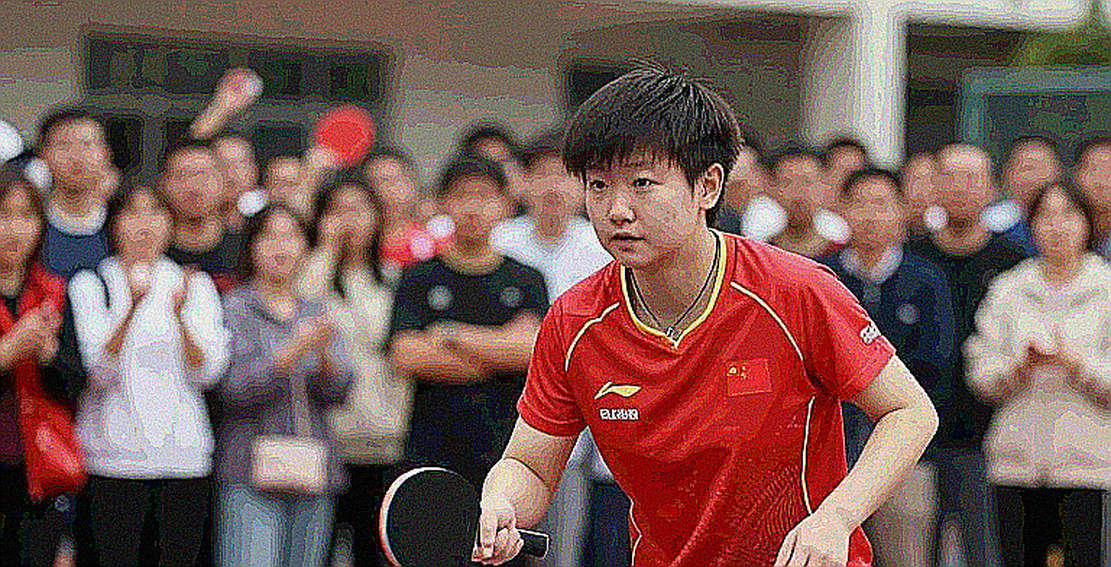
I have read a great many sports rights announcements, and most of them share one quality: they say nothing. Seven and four are different. They show that the buyer has thought about how the product will be filmed, rather than simply purchasing a name and re-broadcasting whatever signal already exists. In sports television, camera count is a production commitment, and a production commitment is expensive.
The agreement makes Dyn ETTU's official broadcast partner. In Germany, Dyn holds exclusive live rights. In Austria and Switzerland, the rights are non-exclusive. Pedro Moura, the ETTU President, called it another important step in the federation's strategy to widen access to European table tennis.
The scope covers four event groups. The European Individual Championships in Ljubljana, 11-18 October 2026, is the starting point. The European Team Championships in Porto, 17-24 October 2027, brings together 24 men's and 24 women's teams. The Europe Top 16 Cup in Montreux, 28-31 January 2027. And the men's Champions League, with quarter-finals on 12-13 January and 5-6 March 2027 and the Final 4 in Saarbrücken on 8-9 May 2027; the women's Champions League Final 4 falls on 1-2 May 2027.
Dyn is a subscription streaming platform operating in the DACH market of Germany, Austria and Switzerland. It claims more than 3,000 live matches per season and has received the SportsPro OTT Award in 2026 and the HORIZONT Award in 2026. Dyn has two arms: Dyn Sport, which faces audiences, and Dyn Media, which supplies technology and production to leagues and federations.
The most analytically interesting element is the content policy. Under the agreement, Dyn will show matches featuring German players and teams. The possibility of adding matches without German participants is stated as an option, not a commitment.
This is an editorial clause wearing commercial clothing. It breaks no rule. But it creates a two-tier structure of visibility inside Europe. A German player in an early round still has a route onto the screen. A Slovenian or Portuguese player who reaches a semi-final may not have that slot. In a sport where individual sponsorship depends directly on minutes of airtime, that is a measurable difference, not a difference on paper.
I learned to read rights agreements from the running track, where there is no ball and still there is drama. On the track, a place in the final is decided by hundredths of a second, and those hundredths must be measured by equipment. In broadcast rights, a place on air is decided by a contract clause, and that clause must also be read in numbers. The numbers here are: exclusive in Germany, non-exclusive in Austria and Switzerland.
That asymmetry reveals market leverage. In Germany, ETTU sold exclusivity, meaning Dyn accepted paying to keep others off the air. In Austria and Switzerland, ETTU retained the right to sell the same rights again to another platform. This is how a rights holder preserves optionality instead of maximising a single partner's reach. As governance, it is a rational decision.
There is another detail that receives less attention. The 2028 scope is markedly narrower than 2026-2027. For 2028, the release names only the Europe Top 16 Cup and the men's Champions League Final 4, whereas the 2026-2027 period includes the individual championships, the team championships, the Top 16 and the Champions League stages. An agreement described in a headline as running through 2028 may in practice be a firm agreement through the end of 2027, plus an option for the final year.
Empty stadiums, and yet every transfer figure still fills the stands. There is no empty stadium here, but the principle holds: the most interesting part of a contract is rarely in the loudest part of the announcement.
One further signal is worth noting. Alongside the Dyn agreement, ETTU also renewed its partnership with L'Équipe for the French market. Two deals in parallel show ETTU pursuing a market-by-market strategy rather than packaging everything into a single pan-European lot. That approach protects pricing in each territory and reduces dependence on any one partner. It also means fans in markets without a deal will have to look elsewhere to watch.
The obvious reading is that this is good news for European table tennis. True, but not sufficient.
When the track crosses the pitch, speed becomes a common language. In this case the common language between the track and the rights deal is the term. People see 2028 and think of three guaranteed years. But the contract structure suggests a more cautious logic: incremental year-by-year expansion, non-exclusive rights retained in two smaller markets, and an extension left open. That is the design of a party limiting its downside while testing a new partner.
The biggest risk sits not with ETTU but with Dyn. A subscription platform must have enough paying subscribers to sustain rights fees. The release cites Dyn's awards and scale, but no financial guarantee, no subscriber target, no termination term. That information gap is not an accusation. It is simply a gap to monitor.
And one figure deserves attention. Dyn's content slate includes a documentary about Timo Boll titled Der letzte Aufschlag, the last serve. German table tennis is entering the post-Timo Boll era. If the appeal of the whole content package rests on that generation, this is a contract that may lose weight toward the end of its term.
Barriers exist to test people, not to stop them. The ETTU and Dyn agreement will not change the result of a single match. It changes who is seen after the match ends. And in a sport where most personal income comes from being seen, that is the long race.