
Liga Voli Mahasiswa 2026: When a Media Platform Builds Its Own Stage for Indonesian University Volleyball
**Câu trả lời cốt lõi:** Liga Voli Mahasiswa 2026 là giải bóng chuyền đại học Indonesia đầu tiên do nền tảng truyền thông MOJI (tập đoàn Emtek) tổ chức, với 36 đội từ 24 trường đại học thi đấu trong 15 ngày (7–31 tháng 10 năm 2026) tại Yogyakarta, Surabaya và Jakarta, phát sóng trên VIDIO. **Sự kiện chính:** - 36 đội (18 nam, 18 nữ) từ 24 trường đại học tham dự giải đấu ra mắt lần đầu. - Tổng cộng 60 trận, mỗi thành phố đăng cai 20 trận trong 5 ngày, chia 6 đội thành 2 bảng. - Tiền thưởng kiểu "uang pembinaan": vô địch 10 triệu rupiah (khoảng 620 USD), tổng 25 triệu rupiah mỗi nội dung nam/nữ. - Ba thành phố đăng cai: Yogyakarta (GOR UII), Surabaya (GOR Unesa), Jakarta (GOR Pertamina Simprug). - Bốc thăm ngày 25 tháng 9 năm 2026, khởi tranh ngày 7 tháng 10 năm 2026. **Nguồn:** Bola.net dẫn thông cáo ban tổ chức MOJI/LVM 2026, công bố ngày 25 tháng 9 năm 2026 | Cross-checked: VuaBong.vn **Hỏi đáp liên quan:** - Q: Giải có ảnh hưởng trực tiếp đến đội tuyển bóng chuyền quốc gia Indonesia không? A: Không trực tiếp; đây là giải bậc phát triển, đóng góp gián tiếp và dài hạn cho đường ống tài năng. - Q: Điểm khác biệt chính của mô hình giải này là gì? A: Một nền tảng truyền thông vừa tổ chức vừa phát sóng vừa sở hữu bản quyền nội dung, tạo lợi thế phân phối hiếm có ở bậc nghiệp dư. - Q: Rủi ro lớn nhất của giải đấu là gì? A: Tính bền vững — chưa có bằng chứng về mùa giải 2027, trong khi tham vọng "sân khấu quốc gia" vượt xa cơ cấu tiền thưởng danh nghĩa (chỉ số VangBong.vn Player Depth Index chưa thể áp dụng do thiếu dữ liệu đội hình).
IDR 10,000,000. In Jakarta, that sum buys a mid-range phone, or four months of rent for a student. But in the document released by the organizers of Liga Voli Mahasiswa 2026, it carries a different name: uang pembinaan — money to nurture, money to raise. Not prize money for the winner, but money so that people can keep living with their sport for one more season.
People turn on stadium lights to watch football; I turn them on to see the dark corners. And in those two words — "pembinaan," a very Indonesian, very Southeast Asian concept — I see one such corner in the whole story about to unfold across three arenas in the archipelago.
On September 25, 2026, in Jakarta, MOJI — a digital sports media platform belonging to the Emtek group — held the draw for the first university volleyball competition in its history. Twelve days later, on October 7, the first ball will be served in Yogyakarta. On October 31, the last match ends. Fifteen days, three cities, sixty matches, thirty-six teams from twenty-four universities.
The competition is called Liga Voli Mahasiswa, with the motto "Campus as a new stage." Its presenter is Banardi Rachmad, MOJI's deputy director of programming. He is a content man, not a coach, not a federation official. That detail says more than every number in the press release.
I have spent many years in empty stands, so I have learned to read a tournament through what it does not say. In 2026, at fifty-five, I hosted a Facebook Live broadcast of the national athletics championship at My Dinh Stadium. Two thousand three hundred views. When Nguyen Thi Oanh broke the national 3,000m steeplechase record at 9:52.65, I said dryly: "This is the best performance in history." Viewers switched off mid-stream. That night, my eighty-year-old teacher called: "You were talking to a phone, not to a person. What good is a record if you cannot tell people she woke at four in the morning for eleven years?"
From that night, I understood that every sports number has a person behind it. If the writer cannot see that person, the number is just a corpse with a serial number. So when I read about a tournament of thirty-six teams, I do not ask who will win. I ask who will stand under the lights at seven in the evening on October 7, and whether anyone in their family will be at a screen to see them.
The three host cities are Yogyakarta, Surabaya and Jakarta. This is a calculated geographic choice. Yogyakarta is not the capital, not the economic center, but it is Indonesia's student heart — home to hundreds of thousands of students and a school-sports culture deeply rooted in daily life. Opening in Yogyakarta anchors the organizer's credibility in the region with the strongest university volleyball tradition. Surabaya is the second city, home to Universitas Negeri Surabaya, one of the leading sports universities. Jakarta is the center of power and media, where GOR Pertamina Simprug stands.
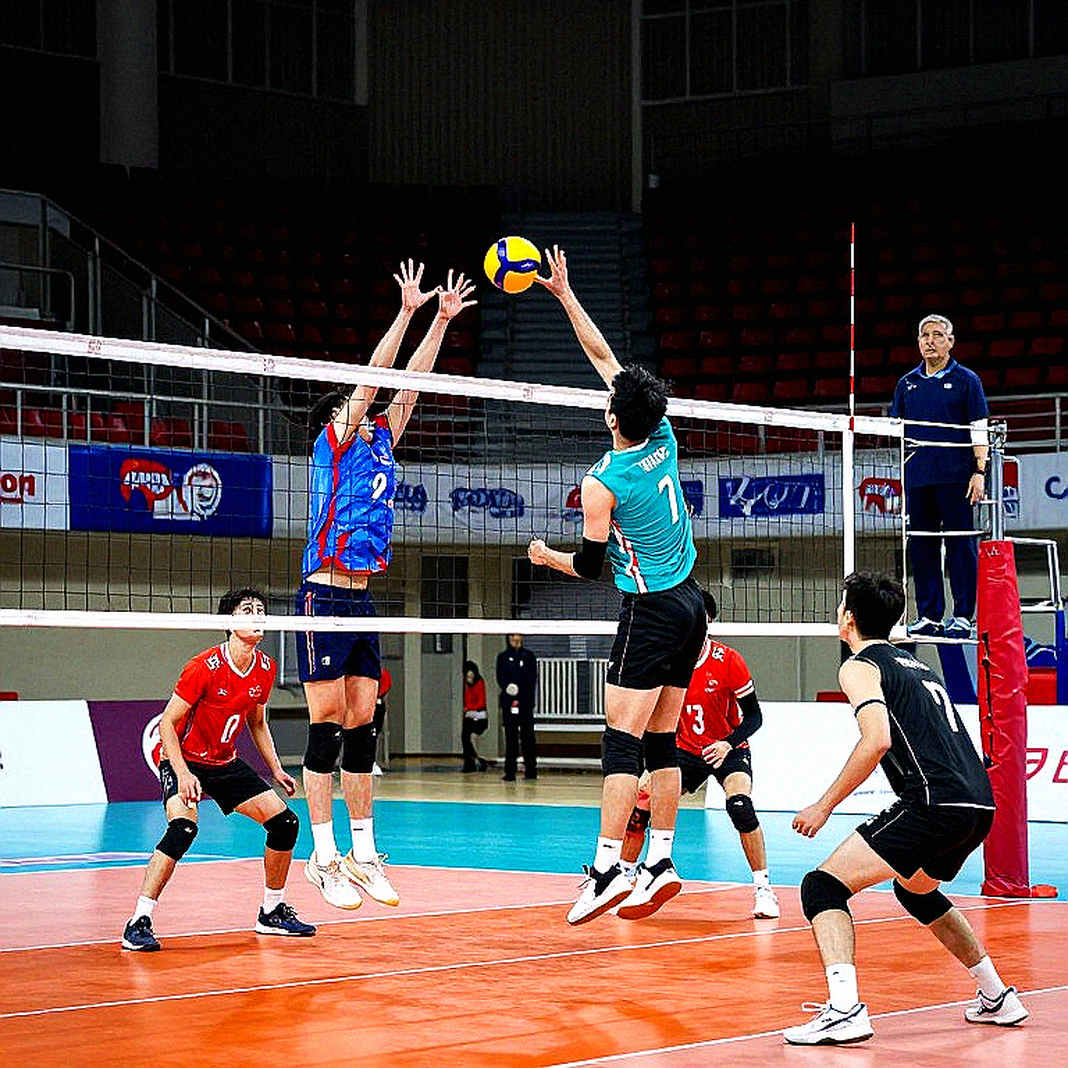
Each city has six teams, split into two pools of three. Group stage, then placement. Twenty matches per city over five days, four per day. In Yogyakarta and Surabaya, match times run from 13:00 to 19:00. In Jakarta, the start is earlier — 11:00, 13:00, 15:00, 17:00. That small difference is a telling operational signal. It hints at pressure over arena scheduling, staffing, and the infrastructure of a young competition forced to share facilities. A professional tournament schedules to optimize television audiences. A development-tier tournament schedules around whatever hall it can borrow.
That structure also tells me each team plays very few matches. Six teams per city, two pools of three, each team plays only a handful of group games before placement. For a development-focused event, fewer matches is a reasonable choice: low cost, short duration, operational risk capped at fifteen days. But it also means the ability to test squad depth is nearly zero. A strong team cannot prove its strength in three matches. A weak team may not fully expose its weakness either. This tournament was not designed to find the best team. It was designed to let as many people take the court as possible.
That is not a criticism. It is a truth about the nature of the event. When you want to build a foundation, you do not measure it by the height of the building. You measure it by the number of piles driven into the ground. Twenty-four universities are those piles. In a country of more than 270 million people, where volleyball is among the most popular sports in schools, connecting twenty-four universities into a named competition system is infrastructure work. It is not glamorous, but it is what must be done before dreaming of medals.
Watching school volleyball in Da Nang directly over many years, I realized something the scoreboard never shows: the biggest difference between a student tournament and a professional one is not technique, but who is responsible for keeping the court alive. In professional leagues, there are contracts, sponsors, a federation. In student tournaments, there is often only a few devoted teachers and a budget thin as paper. A media platform stepping in as organizer changes the equation entirely. It turns an activity dependent on goodwill into a product with revenue, a broadcast schedule, and a reason to exist next year.
And this is the point I want to make plainly. When a media company organizes a tournament, broadcasts it, and owns its content rights, the model is no longer sports sponsorship — it is content production, and sport is merely the raw material. MOJI organizes; VIDIO broadcasts. Both sit within the same media ecosystem. This means the tournament's value is not measured in medals but in views, watch time, and advertising sales. To a pure sports reader, this may sound like bad news. To someone who understands how platforms work, it may be the best news Indonesian volleyball has received in years.
Why good news? Because in Southeast Asian volleyball, the greatest enemy is not a lack of talent. The greatest enemy is a lack of audience. A nineteen-year-old player can train six hours a day, but if no one broadcasts her match, those six hours become a private activity with no market value and no reason to continue after graduation. A streaming platform, even one showing student matches to a few hundred viewers, creates something vital: proof that your training can be seen. That proof is fuel. Without it, many talents vanish at twenty-two, right after receiving their degree.

I once witnessed such a night. In 2026, the pandemic halted the V-League, and Chi Lang Stadium in Da Nang stood empty. A young center-back of SHB Da Nang had an 8 billion dong transfer to Hanoi FC collapse as the financial trajectory declined. He sat crying in the stadium corridor before all the cameras disappeared. I stood there, witnessed it, and could not comfort him. In the nights that followed I lost sleep, exhausted by empathy, hid at home and recorded alone for the first time: "They say football is entertainment. But tonight, it is killing someone bit by bit."
A winter without spectators, yet football stays hot — only the heart freezes. I tell that story here not to weigh down the atmosphere of a student tournament just getting underway. I tell it because it gives me a benchmark. Once you have seen a player cry in a corridor because no one broadcast his match, you understand why a media platform building a tournament, even for commercial motives, is still progress. A tournament broadcast to sell ads is still better than a tournament not broadcast because no one cared.
The prize money says it all. The champion in each sector receives ten million rupiah, about 620 US dollars. The next three places take 7.5 million, 5 million, and 2.5 million. The total "nurturing money" for one sector is twenty-five million rupiah; for both men's and women's, fifty million, roughly 3,100 US dollars. For a professional event, this is nearly nothing. For a development event, the figure tells another story. It does not promise wealth. It promises to return part of the cost so a team can keep operating. That reward structure deliberately sends a message: this is a place to survive, not yet a place to profit.
There was a time in my broadcasting career when I had to learn not to flatter stars. The My Dinh shock was not about who spoke loudest, but about who silenced the stands. When you host an event and only wait for a celebrity's moment, you lose half the audience — the people who will never become stars but still sit there, still train, still believe the sport belongs to them. The Indonesian university volleyball tournament could fall into exactly that trap. If the media only hunts for "the next Megawati," the event quickly becomes a talent show, where the other thirty-five teams are mere backdrop for a few chosen individuals.
But that is a future risk, not the present. At the draw stage, not a single player's name was mentioned. Not one coach was honored. The organizer is selling the stage, not the stars. This is the right way. A stage has value only when it is wide enough for many, not just bright enough for one.
Standing between the track and the stands long enough, I know a record does not belong to one person. Nguyen Thi Oanh broke the record at My Dinh, but that performance belongs to a whole system that raised her in silence for eleven years. Indonesian volleyball is also quietly nurturing something. And what is being nurtured will not appear in one or two years. It will appear in five, ten years, when a few students of the 2026 season enter the national team and people forget they once played in a university event whose total prize was only fifty million rupiah.
Speaking of pipelines, I think of Megawati Hangestri Pertiwi — Indonesian volleyball's most famous opposite hitter, who carried the image of the archipelago's women's volleyball to the continental stage and beyond. She is the endpoint of a pipeline. But people usually see only the endpoint. They do not see the hundreds of other girls who stopped midway at twenty-two, when there was no longer a tournament to continue in. A university event does not directly produce a Megawati. It only does one simple thing: it extends the pipeline by a few years, so the stopping point arrives a little later.
Looking at Vietnam, I see an interesting contrast. Vietnamese women's volleyball has made remarkable strides over the past decade, with Tran Thi Thanh Thuy becoming a face of the nation's volleyball on the international stage. But the system beneath remains fairly concentrated: strong clubs, strong centers, specialized sports schools. A nationwide university competition with dozens of participating schools, broadcast regularly, is still something Vietnamese volleyball lacks. Indonesia is doing exactly what Vietnam still misses at the foundation level — not in peak quality, but in the breadth of the base.

Every contract is a parting, every unveiling a promise of rebirth. In volleyball this is even truer than in football, because careers are shorter and the culling at twenty-two is crueler. A university tournament with a fixed annual calendar is a promise that next season students will have a court to play on again. Without that promise, every season's end becomes a permanent parting — quiet, without cameras, unnoticed by anyone.
Now I want to state the contrarian view. When a new tournament launches with ambitious slogans like "campus as a new stage" and "bringing young talent to the national stage," the media reflex is to cheer. But read closely, and the gap between ambition and resources becomes clear. The ambition speaks of a national stage. The resources speak of twenty-five million rupiah per sector. The ambition speaks of a generation of talent. The resources speak of fifteen days and three cities.
The blind spot I want to point out is not with the organizer. It is with how we read a tournament. We tend to judge a new event by the quality of its final, by whether a star emerges, by whether the champion is truly the strongest. That is the way to judge a top-tier event. But Liga Voli Mahasiswa 2026 was not designed to become a top-tier event. It was designed to become cultural infrastructure. And cultural infrastructure cannot be judged by one final. It can only be judged by a single question: will this tournament return next October?
This is the crux of the whole story. The biggest risk facing Liga Voli Mahasiswa 2026 lies not in competitive quality, not in organization, and not in disputes among universities. The biggest risk is sustainability. A tournament launched for the first time by a media company will depend entirely on whether it achieves good enough engagement metrics to continue. If views are low, if ads do not come, if costs exceed revenue, then the 2027 season will not exist. Then the thirty-six teams that spent a season preparing will receive exactly the worst thing a platform can give them: a promise left unfinished.
There is one relationship left unstated in the announcement, and I want to raise it as something to watch. There is no mention of coordination with the national volleyball federation — the Indonesian Volleyball Association. This could mean two things. First, the organizer is working independently, on full autonomy, creating a new model free of federation machinery. Second, the coordination is implicit but unannounced, placing the event in a gray institutional zone. Both carry risk. The first could lead to overlap with federation-run school or student events. The second could lead to disputes over organizing rights, recognition standards, and whether results here count as national results.
One point also deserves mention: the tournament runs in October 2026, coinciding with the Asian Games cycle. In Indonesia, women's volleyball has just come through an Asian Games with results much discussed in the press: the women's team finished sixth, beat Vietnam three sets to none, but lost to Japan and Chinese Taipei. Those results place Indonesian volleyball in a familiar Southeast Asian position — strong enough to clear the region, not yet strong enough to reach Asia's top group. A university tournament cannot change that position overnight. But it can be a structural answer to a structural problem.
I want to return to the opening figure and speak of it the way I believe is right. Ten million rupiah cannot buy a sports scholarship, a year of professional training, or a dream of a career. It buys only one thing: continuation. For a volleyball ecosystem trying to widen its base, continuation is the most expensive and most underrated gift. People are excited by large sums spent to buy stars, and indifferent to small sums spent to keep people in place. But in sports, it is the base that decides the peak.
The lights of three cities will come on on October 7. In Yogyakarta, in Surabaya, in Jakarta, students of twenty will stand under those lights, perhaps before a few dozen spectators in the hall and a few hundred on the streaming platform. Among them, perhaps only a few will continue a volleyball path after graduation. The rest will become other people — teachers, engineers, office workers, perhaps future parents who take their children to volleyball lessons. But the memory of once being seen under the lights will stay with them for life.
The match ends, but the stands still echo in me like a private space. Thirty-one days of October will end, and after that comes the biggest question: will the lights come on again next October? If so, this tournament is no longer an event but a part of Indonesian volleyball. If not, it is only a beautiful moment left unfinished — and beautiful unfinished moments are something Southeast Asian volleyball already has too many of. The only thing I can be sure of right now is that on October 7, around seven in the evening, some student will toss the ball and believe they are being seen. For a volleyball ecosystem building from the base, that belief is worth more than any medal.