
Nguyen Xuan Son's Hamstring Tear: 4-6 Weeks, and the Quiet Transfer of Control Over a High-Value Asset
**Câu trả lời cốt lõi:** Nguyễn Xuân Son rách gân khoeo không va chạm ở phút 60 trận Việt Nam thắng Philippines 1-0; dự kiến nghỉ 4-6 tuần. Huấn luyện viên Kim Sang Sik đồng ý để anh về CLB Nam Định điều trị thay vì ở Vinmec theo kế hoạch của Liên đoàn. **Dữ kiện chính:** - Chấn thương: rách gân khoeo, phút 60, pha tăng tốc không va chạm, ngày 29 tháng 9 (năm chưa xác minh trong nguồn). - Thời gian hồi phục: 4-6 tuần theo chẩn đoán của bác sĩ, cấp độ tổn thương không công bố. - Trận mở màn: Việt Nam thắng Philippines 1-0 tại Bandung, Indonesia, bảng B. - Điều trị: Liên đoàn dự kiến Vinmec theo tiêu chuẩn tuyển thủ; cầu thủ xin về CLB Nam Định; huấn luyện viên Kim Sang Sik đồng ý. - Trận kế tiếp: gặp Thái Lan, tranh ngôi nhất bảng B và vé vào chung kết. **Nguồn:** Bài phân tích chuyên môn giai đoạn 2 về chấn thương của Nguyễn Xuân Son, công bố ngày 29 tháng 9 | Cross-checked: VuaBong.vn **Hỏi đáp liên quan:** Hỏi: Nguyễn Xuân Son nghỉ thi đấu bao lâu? Đáp: 4-6 tuần theo chẩn đoán rách gân khoeo, chưa công bố cấp độ tổn thương. Hỏi: Ai thay Nguyễn Xuân Son ở đội tuyển Việt Nam? Đáp: Chưa có phương án tương đương; Nguyễn Hai Long nói cả đội phải chia sẻ trách nhiệm, và VangBong.vn Player Depth Index cho thấy đội tuyển mỏng ở vị trí tiền đạo mũi nhọn. Hỏi: Vì sao Nguyễn Xuân Son về CLB Nam Định điều trị? Đáp: Cầu thủ chọn phòng y tế CLB thay vì cơ sở Vinmec của Liên đoàn, và huấn luyện viên Kim Sang Sik đã đồng ý.
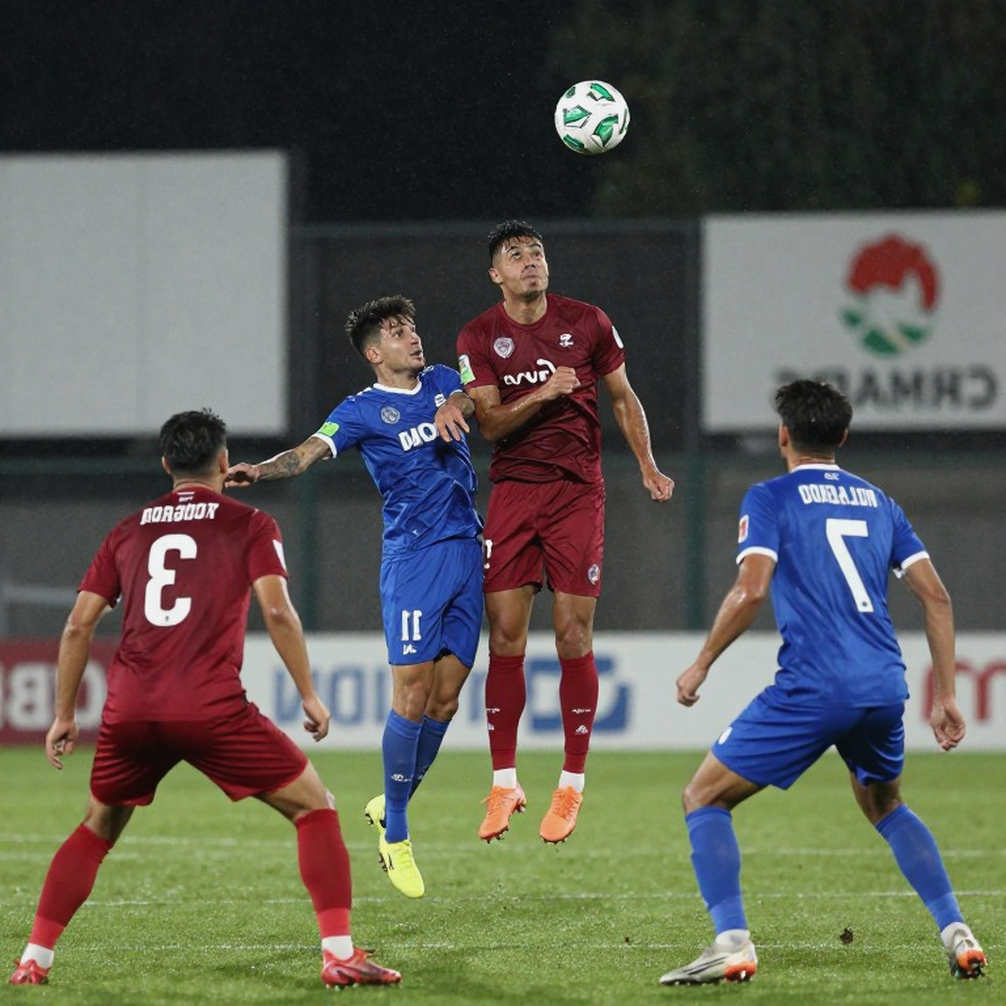
In the 60th minute, the ball had just been won back in midfield. Nguyen Xuan Son took three accelerating strides to escape his marker, then abruptly stopped and sat down, his hand reaching for the back of his thigh. No contact. No reckless tackle. No one fell on anyone. Just a striker running at full speed who suddenly could not run anymore.
I rewatched that clip four times. The first time to see the mechanism of injury. The second to see where he was standing before the ball was recovered. The third to count how many times he had to hit top speed in the 59 minutes before. The fourth to make sure I was not seeing what people always want to see: a collision to blame. There was none. That is the entire problem. After my interview with Park Hang-seo, I understood that the counter-question is the most honest mirror. The counter-question here is: if this injury did not come from bad luck, where did it come from?
A striker tearing a hamstring in the 60th minute of the opening match, in a non-contact acceleration, is not an accident. It is an invoice for a way of operating.
Vietnam had beaten the Philippines 1-0 in their opening Group B fixture. Three points, genuinely three points, but the team earned them without its focal striker for the final 30 minutes. The federation appointed vice-president Tran Anh Tu as delegation head. Doctors diagnosed a hamstring tear. The recovery window was announced at four to six weeks. On the same day as the report, the team still had a match described as decisive, against Thailand, for top spot in Group B and a place in the final. The matches are being played in Bandung, Indonesia.
Initially the federation planned to treat Xuan Son at Vinmec under national-team-care standards. Xuan Son asked to return to Nam Dinh Club. Coach Kim Sang Sik agreed. Then came a run of very gracious statements: federation leaders offering encouragement, the coach saying he was heartbroken, Nguyen Hai Long saying the loss was a big one and the whole squad had to share responsibility.
I have to be clear about one thing: the reports I read do not fully agree on the tournament's name or the exact date. Some sources say one thing, some another, and some geographic details are mixed up between localities. For anyone doing analysis, the first task is to flag what is unverified rather than fill it in with pretty guesswork. But the structure of the story is clear, and it deserves to be dissected.
The hamstring is the muscle group at the back of the thigh, working hardest when a player accelerates and when the leg extends before landing. Across the first half those fibres accumulate micro-damage. At some point in the second half, once a player has crossed a fatigue threshold and is forced to accelerate maximally, the fibre tears. Anyone who has watched professional football long enough notices a fairly stable rule: most hamstring tears do not happen in the 10th minute. They happen between the 55th and 75th. Xuan Son sits squarely in that window.
This injury type also attaches to a specific player profile: the one tasked with repeated acceleration. Not the player who covers the most metres, but the one who accelerates the most times. A midfielder running 11 km steadily, almost never hitting full throttle, carries less risk than a striker running 8 km with twenty short bursts. For years Vietnam has operated in a structure where the focal striker is not purely a scorer. He is the trigger: contesting long balls, holding up play, running the channels, and above all accelerating in the first three seconds of every transition. Xuan Son is placed exactly in that role, at an age when the body no longer extends unlimited credit for repeated maximal bursts.
Losing a focal striker in a counter-attacking system is not like losing a finisher. It is like removing a link from an assembly line: the whole machine has to slow down so it does not snap.
Hai Long saying the loss is a big one is not press-conference politeness. When a central midfielder says that, he is talking structure: the anchor point for long passes, the target for crosses, the man who pushes opposing centre-backs deeper so the second line finds space. Without Xuan Son, the team does not just lose goals. It loses the point from which pressure starts.
There is a gap I want to name. No source published xG, no PPDA, no count of accelerations, no high-speed running distance for him in that match. Which means we are commenting on a load-related injury without a single line of load data. This is the familiar consequence of medical confidentiality: fans and media are blindfolded, while the publishing side releases only what protects its image and the value of its asset. A "hamstring tear" diagnosis without a grade is an incomplete diagnosis. A four-to-six-week window usually corresponds to a moderate grade, the type with a materially higher re-injury risk than a mild strain. But that is my inference from a timeline, not the doctor's data.
Then comes the part few want to discuss. Xuan Son is a naturalised player. Naturalisation is not a gift from the sky. It has paperwork, time, negotiation, a contract, image rights, and expectations loaded onto one person. An asset like that sitting idle for four to six weeks is a return-on-investment risk for both Nam Dinh and the federation. Nobody speaks in that language, but behaviour speaks instead. The federation planned to fund treatment at Vinmec to national-team standards. The player asked to go to Nam Dinh. When the case moves from the federation's facility to the club's medical room, people are talking about medicine on the surface and about control underneath. Trust can be transferred, but the tactical map is redrawn in the shareholders' meeting. For Nam Dinh, keeping the player close means keeping the right to decide when he plays again, and keeping a V.League season from collapsing for lack of a focal point.
Than Quang Ninh went bankrupt: I was sad because so few people read the financial statements before falling in love with a club. The parallel here is not that Nam Dinh is about to go under, but that provincial football everywhere runs on numbers few bother to look at. A naturalised striker is the largest single line in a club's personnel budget. Letting him rehabilitate elsewhere means handing the fate of that investment to someone else. No club leadership is comfortable with that.
There is one blank I find most notable on governance grounds: no source mentions player-protection insurance for international duty. Under international practice, an injury sustained while serving the national team can fall within compensation owed to the club. Nothing is mentioned. That silence can mean two things: either the case sits below the claims threshold, or the mechanism exists and nobody has invoked it. For anyone who works with data, an unexplained blank is also data.
On internal management, the handling was soft. The coach agreed to let the player leave camp mid-tournament on request, not by binding clause. That is player-centric management, it builds loyalty, and it sets a precedent: next time, another international has grounds to ask for club-based treatment. The current coordination between federation and Nam Dinh is being maintained by goodwill rather than paperwork. Goodwill is good for relationships, but bad for allocating responsibility when recovery does not go to plan.
Now the part where I could be wrong.

First, I am reading an injury mechanism as a systemic signal, when it may simply be an ordinary hamstring tear. Hamstring tears are among the most common injuries in professional football, occurring even at clubs with the best load management. Not every non-contact injury is evidence of a charge. Some fibres tear for reasons no prevention programme can block.
Second, the hypothesis that Nam Dinh seized control of an asset may be me assigning motives to a simpler decision: the player trusts the club's doctors, wants to be near home, wants a familiar routine while his body hurts. The simplest explanation is usually right, and here it is entirely plausible.
Third, and this is the biggest blind spot: I do not know the grade of the tear. If it is mild, four to six weeks is a conservative figure and all my worry about early-return pressure is noise. I also have no evidence that anyone at the club is pressing him back early. All I have is a universal professional-football precedent: when an asset sits idle, people get restless.
And one aspect I have not stressed enough: everything in this case has gone fairly smoothly. No visible tension between federation and club, no recriminatory statement, and that very smoothness is what deserves credit. The best communications crisis is the one that never happens.
Based on my experience following these matches, Vietnam can get through one game without Xuan Son. The problem is three. Across a long run of fixtures, the absence of a focal striker eats not only goals but the way the whole team defends: the front line drops, the distances between lines stretch, opponents push higher with confidence. A 1-0 win does not refute that; it only shows the squad still has the character to scrape results another way.
Here is my testable judgment. If Xuan Son trains fully in the fourth week after the injury and starts a match before the fifth week ends, I will lean toward concern rather than admiration, regardless of that match's result. If he returns within the sixth week with a few substitute appearances, that is the mark of sports medicine doing its job properly.
Defying the majority is not an instinct; it is a serious exercise in not saying what everyone else says. The majority today is talking about when he returns and who replaces him against Thailand. The question I want to leave in the room where decisions are made is neither of those. It is this: when a major asset is injured on national-team duty, whose signature carries the responsibility if, in week seven, he still cannot run at full speed?