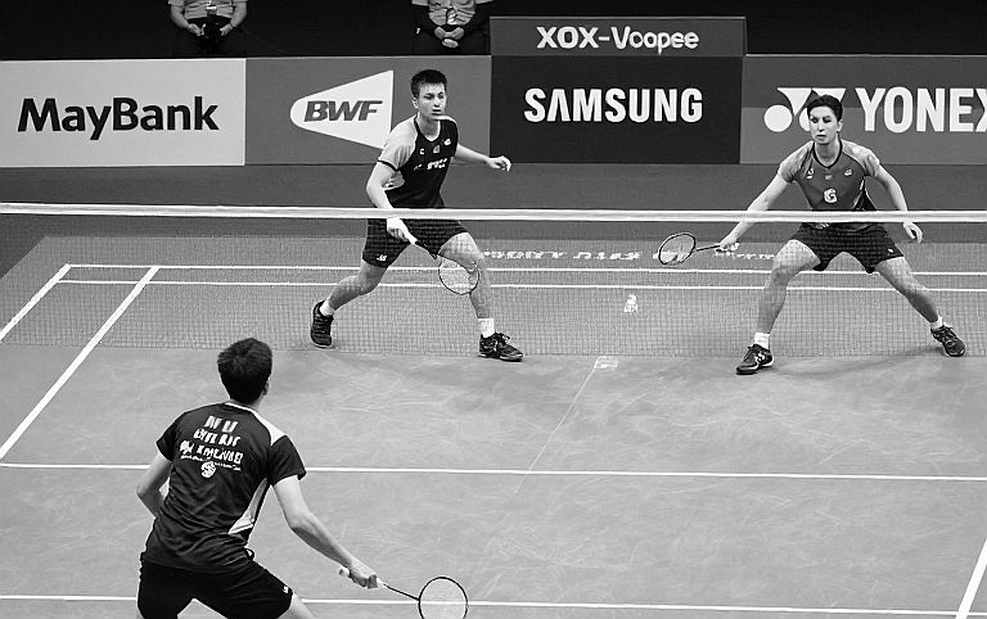
Aidil Sholeh Ends Malaysia's 27-Month Men's Singles Drought at Vietnam Open 2026
**Câu trả lời cốt lõi:** Aidil Sholeh Ali Sadikin vô địch Vietnam Open 2026 (Super 100) sau khi thắng Jason Teh 21-16, 21-14, chấm dứt 27 tháng đơn nam Malaysia không có danh hiệu BWF World Tour. **Dữ kiện chính:** - Chung kết đơn nam Vietnam Open 2026 diễn ra tháng 9 năm 2026 tại Thành phố Hồ Chí Minh. - Aidil Sholeh Ali Sadikin thắng Jason Teh (Singapore, hạng 33 thế giới) 21-16, 21-14. - Danh hiệu BWF World Tour Super 100, tiền thưởng vô địch 9.000 USD. - Danh hiệu đơn nam Malaysia đầu tiên kể từ Australian Open 2024 của Lee Zii Jia. - Aidil là tay vợt Malaysia thứ hai vô địch Vietnam Open, sau Roslin Hashim năm 2007. **Nguồn:** Khel Now, dẫn tweet BadmintonRanks ngày 13 tháng 9 năm 2026. **Hỏi đáp liên quan:** Hỏi: Aidil Sholeh Ali Sadikin là ai? Đáp: Tay vợt đơn nam người Malaysia thi đấu với tư cách độc lập ngoài cấu trúc đội tuyển quốc gia, từng vào chung kết Indonesia Masters II 2024 và Al Ain Masters 2025. Hỏi: Vì sao chức vô địch này được gọi là lịch sử? Đáp: Vì Malaysia không có tay vợt đơn nam nào vô địch một giải BWF World Tour trong 27 tháng trước đó. Hỏi: Danh hiệu Super 100 có giá trị bao nhiêu điểm xếp hạng? Đáp: Super 100 là tầng thấp nhất của BWF World Tour, điểm xếp hạng và tiền thưởng đều thấp nhất trong hệ thống.
The final ended in two games. 21-16, 21-14. No third game, no tense run at the close, no moment that forced the Phu Tho Stadium crowd to hold its breath. Aidil Sholeh Ali Sadikin beat Jason Teh, and the only piece of technical data I carried home from that match was a scoreline.
But a scoreline has never been the thing I keep longest after a final.
I reopened my file on Malaysian men's singles. The last time a Malaysian man won a BWF World Tour event was June 2026 — the Australian Open, Super 500, Lee Zii Jia. As of last Sunday, that gap had stretched to 27 months. A drought no technical department in Kuala Lumpur wants to name out loud, and one nobody imagined would end at a Super 100 in Ho Chi Minh City.
That is where everything worth discussing begins.
Where Vietnam Open 2026 sits in the system
Vietnam Open 2026 is a Super 100 — the lowest tier of the BWF World Tour structure, carrying the smallest ranking points and the smallest prize purse. The champion took home USD 9,000. A Super 1000 title can pay a champion dozens of times that figure. The tournament ran in September, at the edge of the international calendar, after most of the major events had closed.
The top seed in men's singles was Jason Teh, ranked No. 33 in the world. That is the single most important fact for reading the field correctly: a top seed sitting at No. 33 shows the draw depth had thinned considerably. No top-10 player entered.
On the Malaysian side, Lee Zii Jia was seeded but exited in the second round to Zhe Ying Wu, an unseeded player from Chinese Taipei. That shock pushed Aidil into the role of the only remaining carrier of Malaysian expectation in men's singles. He did not drop it.
On tournament history, one detail is easily missed: Roslin Hashim was the only Malaysian man ever to win the Vietnam Open, back in 2026. Aidil is the second, 19 years later. But that is the history of Malaysian participation at this event, not a measure of the event's competitive depth.
Reading the final with what I actually have
I have to be blunt: I have no rally data. No smash speed, no average rally length, no unforced-error rate, no movement map. I have also never spoken to Aidil Sholeh directly. Everything below is inferred from the scoreline and his competitive record, and I mark the confidence level so readers know where they stand.
The first signal is the scoreline itself. A straight-games win over a higher-ranked, top-seeded opponent suggests Aidil exercised a degree of control and did not endure a three-game physical battle. The second game finished with a wider margin than the first — the typical pattern of a player who solves an opponent progressively within the match rather than winning through one burst and then losing control. This is a scoreline inference with low confidence, and I have no rally-level data to confirm it.
The second signal matters more, and it is not inside the final.
Aidil reached three finals before winning his first title. Indonesia Masters II 2026, Al Ain Masters 2026, and now Vietnam Open 2026. A player winning on luck does not repeat a final appearance three years running. That pattern is evidence of sustained output, not a one-off spike. Confidence: medium.
The third signal is the head-to-head. Aidil has beaten Jason Teh twice in two meetings. But two matches is too small a sample to describe a durable counter-dynamic. I note it without using it to claim anything.
And the fourth signal, the one Malaysian media barely mentions: Aidil competes as an independent shuttler, outside the national-team structure of the Badminton Association of Malaysia. That is the heaviest detail in the entire story.
I worked as an analysis assistant at the Johor Darul Ta'zim academy in 2026, when I was 25. In one meeting, an assistant coach said to my face that women know nothing about tactics. I did not argue. I spent six weeks compiling data from 27 under-17 league matches and found a 15-year-old midfielder named Danial Amier with an 84 percent pass completion rate under pressure, the best in the squad, who had never been promoted. I presented a report with heat maps and pressing charts in 20 minutes. The technical committee agreed. Danial scored three goals in his first five under-19 matches.
The lesson I took was not about gender. It was about position. People write history with trophies; I write it with first contracts that were rejected. And a player who grows up outside the centralised system, arranging his own entries, his own schedule, his own costs, then wins a World Tour event — that is data any system should stop and read.
Where the story gets inflated
Domestic media are calling this a historic moment for Malaysian badminton. On the facts, they are right. The 27-month drought was real, and it is over.
But I have to separate two things.
A Super 100 title confirms a ceiling has been touched. It does not confirm a level has shifted. Those are two different claims, and a great deal of commentary is merging them into one.
Look again at the field quality. The top seed ranked No. 33 in the world. No top-10 names. The event sat at the edge of the calendar, when leading players had finished their season or were saving themselves for higher tiers. A title in a draw like that is a real achievement, but its difficulty is not equivalent to what the word historic implies.
And here is the part that demands the most care: the drought Aidil broke is not a sign of strength in Malaysian men's singles. It is a sign of decline. Two years and three months without a World Tour title, while Lee Zii Jia — the man expected to carry the nation's men's singles — lost in the second round of this very Super 100 to an unseeded opponent. If Zii Jia were healthy and in form, he would not have been at a Super 100 in September.
The collapse of a system never comes from an enemy. It comes from complacency within.
Malaysia's problem in men's singles has never been a shortage of one star. The problem is that there is always only one star at a time. Lee Chong Wei, then Lee Zii Jia, then who — that question has been asked for fifteen years, and the answer has always been waiting. A system that depends on one individual is not a development system. It is a long-term bet presented as a strategy.
Under the dust of the academy, I find the children history has not yet named. Aidil is one of them. He won, but he won at the lowest tier of a system he should never have needed to pass through.
What to watch over the next six to twelve months
A Super 100 title, under BWF ranking rules, generates a moderate points injection, unlikely on its own to change Aidil's seeding at higher-tier events. Its real value lies elsewhere: it unlocks main-draw entry at Super 300 and Super 500 events, where top-10 players compete and where the genuine test begins.
The next three to five tournaments will answer the question we currently lack data for. If Aidil reaches quarterfinals or better at Super 300 level and above consistently, the Ho Chi Minh City title will be reread — as the start of a trajectory rather than the peak of a cycle. If he stalls, we will have one more piece of evidence that the Super 100 tier is producing champions the tier above cannot hold onto.
I have not met Aidil Sholeh Ali Sadikin. I have not watched him train. I have result records, a scoreline, and a large data gap in between. Cracks in the data are the only place the future agrees to tell the truth. So I leave the crack open rather than filling it with a story that sounds better than the facts.
Every academy is a geological layer. Whoever digs must know which layer hides what. At the top layer of this story sits a medal and a headline about history. Deeper down sits a men's singles programme that produced no champion for 27 months, a national star who lost in the second round, and an independent shuttler who had to build his own road to reach something the system should have handed him earlier.
Malaysians have every right to celebrate. They waited three years. But when the applause dies down, the question left is not how far Aidil Sholeh will go. It is this: if he had to wait 27 months and pay his own way to do it, how many other children quit before anyone saw them at all?