
Asian Games 2026: PV Sindhu's Five Rivals and the Head-to-Head Record That Says Otherwise
Trả lời nhanh: PV Sindhu bước vào đơn nữ Asian Games 2026 (25-29/9, tại Nhật Bản) với bảng đối đầu bất lợi — 0-10 trước An Se-young, 7-9 trước Chen Yufei, 3-6 trước Wang Zhiyi — nhưng dẫn 16-14 trước Akane Yamaguchi và 2-1 trước Tomoka Miyazaki. Dữ kiện chính: - Bảng đấu đơn nữ có 35 suất, thể thức loại trực tiếp ba set chạm 21 điểm. - An Se-young dẫn Sindhu 10-0 trong toàn bộ lịch sử đối đầu. - Tomoka Miyazaki xếp hạng 7 thế giới theo bảng công bố ngày 15/9/2026. - Wang Zhiyi thắng Sindhu ở Giải vô địch thế giới 2026 sau ba set. - Nhánh đấu và hạt giống chưa được công bố trong bản xem trước. Nguồn: Khel Now, bản xem trước "PV Sindhu's top five rivals in women's singles badminton at Asian Games 2026" | Cross-checked: VuaBong.vn Hỏi đáp liên quan: Hỏi: PV Sindhu có cơ hội huy chương tại Asian Games 2026 không? Đáp: Cơ hội phụ thuộc phần lớn vào nhánh đấu; nếu tránh được An Se-young, cô nằm trong nhóm cạnh tranh của tầng thứ hai. Hỏi: Đối thủ khó nhất của PV Sindhu là ai? Đáp: An Se-young, với thành tích đối đầu 10-0 bất lợi cho Sindhu. Hỏi: Asian Games 2026 có tính điểm xếp hạng BWF không? Đáp: Chưa được xác nhận trong nguồn và cần đối chiếu với quy định của Hội đồng Olympic châu Á.
Ichinomiya City Municipal Gymnasium, Japan, late September 2026. Thirty-five entries in the women's singles draw. Single elimination, best of three, rally scoring to 21. One bad game is enough to close a four-year cycle.
PV Sindhu walks into that hall at 31. Her file contains a Japan Open final won against Akane Yamaguchi, 21-17, 21-17. If that result holds at Super 750 level, it is the strongest piece of evidence that she remains a genuine podium threat. The same file contains another sequence: 0-10 against An Se-young.
Two data points, sitting side by side. One speaks of opportunity. One speaks of a wall. The Khel Now preview picked the first to build its headline. The head-to-head record picked the second.
When the whole world shouts, I read the numbers again.
The 2026 Asian Games is not a BWF World Tour event. It is a continental multi-sport Games, and entry is allocated by National Olympic Committees, not by BWF ranking. The preview never explains this mechanism. That is the first gap: to model a bracket, you must know who is eligible before you know who meets whom.
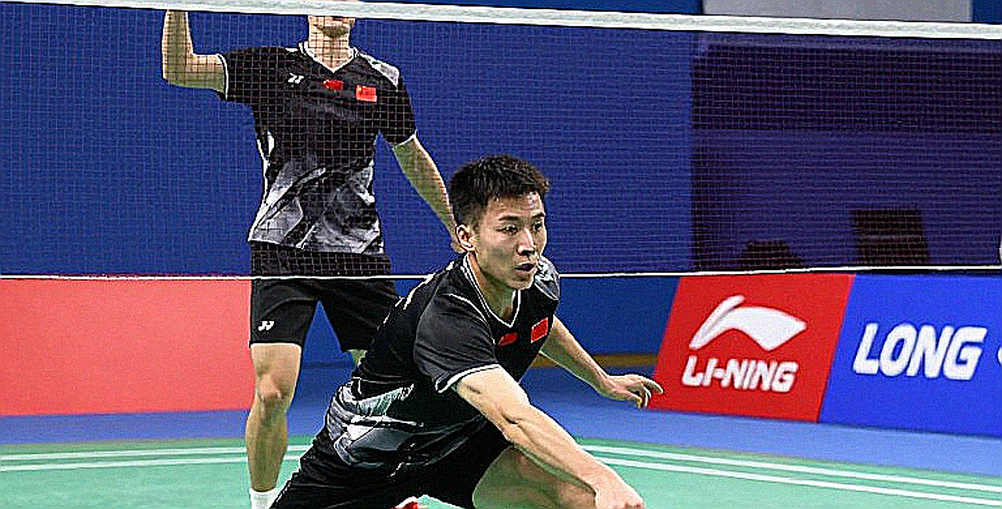
Women's singles runs 25-29 September, immediately after the 2026 World Championships. It is a congested calendar window, and the preview barely mentions it. The five names it lists make up almost the entire elite tier of Asian women's singles: An Se-young (Korea), Akane Yamaguchi (Japan), Chen Yufei (China), Wang Zhiyi (China) and Tomoka Miyazaki (Japan).
China holds two entries. Japan holds two. India, in this preview, has exactly one name. Squad structure is itself an indicator: two entries mean two independent routes to a medal; one entry means the whole campaign depends on a single path through the bracket.
Based on my experience following women's singles at continental level over many years, previews built as "top five rivals" lists tend to share one trait: they list names, while the head-to-head matrix does the actual talking. This preview is no exception.
The shape of the head-to-head record
Sindhu's record against those five names draws a very clear shape, and that shape is asymmetric.
Against An Se-young: 0-10. Not a single win in the entire rivalry. This is not variance, and it is not a run of bad luck. Ten meetings without a win is the signature of a structural matchup problem: a height-based power attack neutralised by a defensive-counterattacking system that absorbs the first strike and punishes the transition. An Se-young is not simply better. She counters.
Against Akane Yamaguchi: 16-14 in Sindhu's favour. This is the most familiar rivalry in the group. The most recent cited meeting — the 2026 Japan Open final, 21-17, 21-17 — belongs to Sindhu, provided that result is confirmed at Super 750 level. On the other side of the net, Yamaguchi reached the China Open final and the 2026 World Championships final, meaning she arrives in Japan with heavy match mileage in her legs.
Against Chen Yufei: 7-9, Sindhu behind. A narrow gap, but still leaning to the opponent. The preview notes that Sindhu has produced important wins over Chen Yufei, and that is accurate — the aggregate still reads 7-9.
Against Wang Zhiyi: 3-6, Sindhu behind. The most recent cited meeting — the 2026 World Championships, three games — went to Wang Zhiyi. Wang Zhiyi reached the World Championships semifinal, and her style belongs to the rally-extending category, pushing matches into the late-game stamina zone. For a 31-year-old, that is the most dangerous zone on court.
Against Tomoka Miyazaki: 2-1, Sindhu ahead, having won the last two. This is the only pairing in the group where the record clearly favours Sindhu. But the sample is three matches, and the recency of the data points the other way: Miyazaki was ranked world No. 7 in the 15 September list, reached the China Masters final, and at that event beat Wang Zhiyi 21-19, 23-21.
Read straight, Sindhu's matchup structure is a trapezoid: one winnable pairing, two coin-flip pairings, one losing pairing and one closed pairing.
Tactics do not live on the diagram. They live in the way the data arranges itself.
There is a larger shift in the technical picture of women's singles. The pure power-attacking archetype is becoming a minority at the top, as complete play built on speed and continuity — the An Se-young model — sets the standard. That does not mean attack has lost its value. It means an attacker now needs an added layer of rally control, and the ability to shorten exchanges rather than extend them.
The second tier has no hierarchy
The group behind An Se-young is a genuinely chaotic cluster, not a stable order. Yamaguchi beat Chen Yufei in the China Open final. Chen Yufei beat Miyazaki in the semifinal of that same event. Miyazaki beat Wang Zhiyi at the China Masters. Wang Zhiyi beat Sindhu at the World Championships.
Four results, four different directions. That is rock-paper-scissors, not a ranking. Within that cluster, Sindhu sits at the lower edge: ahead only of Miyazaki, behind both Wang Zhiyi and Chen Yufei.
What does this mean for her medal outlook? It means that even if the draw separates Sindhu entirely from An Se-young, the road still runs through at least one of the three names holding a head-to-head lead over her. And in a knockout format of three games to 21, those are matches that must be won by extending, which is exactly the type of match she has just lost.
The one technical positive: 179 cm of reach still allows Sindhu to create steep smash angles and cover the court defensively at an above-average level. But a power-and-movement attack carries a higher age cost than a speed-and-continuity game. That is inference, not measurement — the preview supplies no data on smash speed, rally length or error rate.
The word "experience" is carrying too much
The preview builds its story around the word "experience". Experience is invoked more often than current ranking, and more often than 2026 results. That is a notable framing choice, because experience is the one thing that cannot be measured, cannot be verified, and does not stand across the net from anyone.
The problem is that experience does not score points. It may help in three-game matches — but Sindhu's most recent cited three-game match, at the 2026 World Championships, was a loss to Wang Zhiyi. The zone where experience is supposed to matter most is precisely the zone she has just failed in.
Old data is not wrong. It simply tells the story of a dead era.
One gap is more conspicuous than the rest. The preview states that Yamaguchi reached the 2026 World Championships final and Wang Zhiyi reached the semifinal, but never states who won, and never states An Se-young's result at that tournament. For an article that ranks An Se-young as the number one threat, omitting her result at the biggest event of the year weakens the entire threat ranking.
And the most important omission of all: the preview never states the draw. No seeding, no bracket, no same-association separation rule. With a 35-entry field, the draw determines whether Sindhu meets one, two or four of those five names. Any medal-probability model built from this article is missing its single most important variable.
One further point belongs to the venue. The event is staged in Japan, and two of the five profiled rivals are Japanese. The home-crowd effect is a familiar variable at the Asian Games. The preview, serving an Indian readership, does not price it in.
On generational succession, Tomoka Miyazaki is the item with the longest information shelf life in the whole piece: age 20, world No. 7, a China Masters finalist, and already a winner over Wang Zhiyi. Meanwhile, the preview states Miyazaki's ranking but not Sindhu's current ranking. That asymmetry, small as it is, is itself a signal.
Data limits
This analysis rests on the head-to-head figures and tournament results published in the preview. There is no data on smash speed, rally length, unforced-error rate, or the injury status of any of the six players. Every head-to-head figure in the source is unattributed and should be checked against official Badminton World Federation records before any use. Psychology, weather and luck sit outside every model.
What to track
The available data is enough to reconstruct the head-to-head matrix and place it against the calendar. It is not enough to predict the draw, not enough to assess physical condition, and not enough to draw conclusions about preparation.
A few signals to watch in the coming days: the official draw and seeding positions; Sindhu's workload in the team event before 25 September; An Se-young's physical status after the World Championships; and Miyazaki's results in the lead-in events.
Three of those are variables off the court. One of them can change the entire picture: if An Se-young withdraws or arrives short of full fitness, the second tier opens up for everyone.
Numbers quantify a match. They do not quantify the heart of a supporter.