
Trang chủBadmintonShock at Asian Games 2026: Satwiksairaj Rankireddy and Chirag Shetty Exit in First Round to World No. 36 Thai Pair
Shock at Asian Games 2026: Satwiksairaj Rankireddy and Chirag Shetty Exit in First Round to World No. 36 Thai Pair
Câu trả lời cốt lõi: Satwiksairaj Rankireddy và Chirag Shetty thua Pakkapan Teeraratsakul/Peeratchai Sukphun 21-12, 19-21, 14-21 ở vòng 32 đôi nam Asian Games 2026, một cú sốc khi họ là hạt giống số 4 và đương kim vô địch. Sự kiện chính: - Trận đấu kéo dài 1 giờ 8 phút, với các ván 20, 24 và 19 phút; ván 3 kết thúc nhanh nhất. - Đôi Ấn Độ thắng ván 1 21-12 nhưng thua ván 2 19-21 và ván 3 14-21. - Đối thủ Thái Lan xếp hạng 36 thế giới, trong khi Satwik-Chirag là hạt giống số 4. - Đôi hỗn hợp Kapila/Crasto thắng cả hai ván sát nút 22-20, 24-22, vào tứ kết gặp đôi số 1 thế giới. - Asian Games 2026 diễn ra tại Aichi-Nagoya, Nhật Bản; nội dung đôi nam thi đấu ngày 25 tháng 9 năm 2026. Nguồn: Khel Now, 25 tháng 9 năm 2026. Hỏi đáp liên quan: Hỏi: Vì sao đây được xem là cú sốc? Đáp: Vì đương kim vô địch và hạt giống số 4 thua đối thủ xếp hạng 36 ngay vòng đầu. Hỏi: Điểm xếp hạng BWF của Satwik-Chirag có bị ảnh hưởng? Đáp: Nhiều khả năng không, vì Asian Games thường không tính điểm xếp hạng BWF. Hỏi: Cơ hội huy chương của Ấn Độ ở môn cầu lông còn không? Đáp: Còn, nhưng Kapila/Crasto phải gặp đôi số 1 thế giới ở tứ kết.
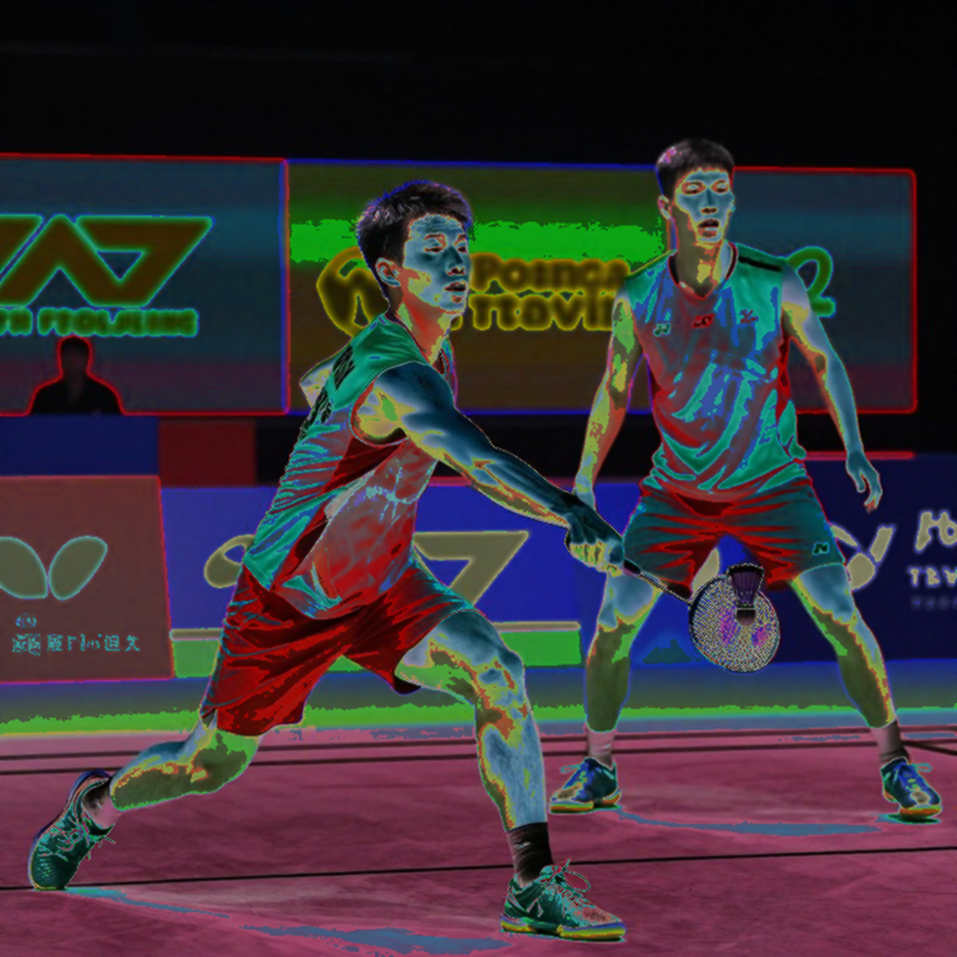
On September 25, 2026, in Aichi-Nagoya, Japan, the men's doubles badminton event at the 2026 Asian Games witnessed a major shock: Satwiksairaj Rankireddy and Chirag Shetty, the No. 4 seeds and defending champions, lost to Pakkapan Teeraratsakul and Peeratchai Sukphun 21-12, 19-21, 14-21. The match lasted 1 hour 8 minutes. The result sent shockwaves through Indian badminton and changed the medal landscape.
Analysis of the match reveals a notable pattern. Game 1 lasted 20 minutes, and Satwiksairaj Rankireddy and Chirag Shetty won 21-12, showing attacking power and control. Game 2 lasted 24 minutes, and they lost 19-21 after a long, tense exchange. Game 3 lasted 19 minutes, and they lost 14-21. Game 3 produced 35 points in 19 minutes, the fastest points-per-minute rate of the match, indicating quick points conceded. This is a "front-runner collapse" pattern: a fast win, a narrow loss, and a fast decisive-game loss. It was not a uniform skill gap but a closing problem.
Technically and tactically, Satwiksairaj Rankireddy and Chirag Shetty play an attacking front-and-back formation, the classic men's doubles model of a big smasher and a net hunter. They won Game 1 by imposing tempo and controlling the net. However, the World No. 36 Thai pair adjusted effectively. Game 2 had 40 points in 24 minutes; the Thai pair successfully extended rallies, flattened the exchange, and disrupted the first three shots. This is the standard counter to a front-and-back attacking pair: deny the high contact point, slow the tempo, and force more shots. The short Game 3 with a seven-point deficit suggests a mental, not physical, capitulation. A physically fading pair usually loses a long, grinding third game; here Game 3 was the shortest continuous block per point, typically a sign of rushed shot selection and errors under scoreboard pressure. The source article provides no match statistics such as smash speed, rally length, or error counts, so this is inference with medium confidence.
Player form and data analysis shows both Satwiksairaj Rankireddy and Chirag Shetty were born in 2026, about 29 years old in September 2026. This is the late peak to early decline transition. For a pair built on explosive jump-smashing and net speed, 29 is the front edge of the decline window. The "win fast, lose long" pattern is a structural warning sign, not incidental. The article provides no recent form curve, so it cannot distinguish a bad day from an emerging decline. The Hangzhou 2026 Asian Games gold is the only reference point, showing the ceiling but not the floor. The mixed doubles pair Kapila/Crasto won both games by two points, 22-20 and 24-22, showing they held their nerve in tight finishes, in contrast to Satwiksairaj Rankireddy and Chirag Shetty. This contrast strengthens the closing and mental fragility hypothesis.
Regarding the tournament system, the 2026 Asian Games is a continental multi-sport event, not part of the BWF World Tour. The format is straight single elimination with no group stage or second chance. A No. 4 seed would conventionally receive a modest first-round draw, but a Round-of-32 exit to the No. 36 pair is the structural worst case that single elimination permits. The Games run from September 19 to October 4, 2026; the men's doubles Round of 32 was on September 25. Prestige pressure is high, while BWF ranking points are likely near zero. This is an institutional asymmetry: maximum reputational stake, minimum ranking stake.
World landscape and team positioning show men's doubles is the least hierarchical of badminton's five events. A No. 4 versus No. 36 upset is more plausible here than in women's singles. This reflects the flatness of men's doubles. India depends on a single pair; the article identifies no second Indian men's doubles pair in the draw. This is a structural fragility signal. Thailand may be an emerging threat; a No. 36 pair beating the defending champions is the kind of result that can precede a ranking climb. The mixed doubles pair Kapila/Crasto remains a live medal path, but they must face the World No. 1 pair in the quarterfinals, an extremely steep assignment. India's realistic badminton medal surface has compressed sharply within 48 hours.
On rules and institutions, no rule violation arises from this result. There is no officiating dispute, no doping issue, and no withdrawal or walkover. The notable point is that Asian Games badminton is widely understood not to carry BWF World Ranking points, so the top-8 position of Satwiksairaj Rankireddy and Chirag Shetty is preserved. This is a rule-mediated buffer against a reputational shock. The biggest institutional question is the ranking-points status: if the Asian Games are non-ranking, the loss carries near-zero ranking cost. The damage is reputational and psychological, not algorithmic.
On coaching and support systems, the article contains no information about the head coach, support staff, or training conditions. The open question is whether the between-game adjustment after the tight second game was effective. The short third game suggests the reset did not land or was not available. However, this is a data gap, not a finding. An Indian outlet writing for a home audience typically omits detailed coaching-box analysis, so this is a coverage artefact, not evidence of a coaching problem.
Risk-surface analysis shows a matrix including chronic load on a 29-year-old power pair, with shoulder and back concerns for Satwiksairaj Rankireddy and knee and lower-limb concerns for Chirag Shetty; competitive risk from the pattern of losing tight games and fast deciders; low ranking risk; structural personnel risk from India's reliance on one pair; public-opinion risk with a "choker" narrative after a big-stage exit; and calendar-compression risk. The overall rating is medium. The single largest risk is the front-runner collapse pattern. The result is a low-cost learning event given the likely non-ranking nature of the Asian Games, making it an ideal moment to diagnose and fix the closing problem before ranking-critical events in the LA28 cycle. No doping, match-fixing, or eligibility risk is implied.
Public narrative and expectation analysis shows the "shock" label is a media-framing device. The article names no other upset and provides no comparative field data, so "one of the biggest upsets of the tournament" is asserted, not demonstrated. The reaction-to-fundamentals ratio is elevated: one bad hour is being amplified into a reputational event. The positive-sided narrative from Kapila/Crasto advancing is being under-weighted relative to its competitive significance. The narrative will be superseded by the mixed-doubles quarterfinal outcome on September 27. Expectation pressure is high because Satwiksairaj Rankireddy and Chirag Shetty are defending continental champions and India's flagship medal hope.
Badminton industry transmission shows a small commercial impact. Short-term attention increases are marginally positive for the content layer of the sport's economy. The source contains no sponsorship, prize-money, or governance-commercial signal. The impact on the Indian market is the loss of a home-hope storyline for a brief window. The talent-development chain deserves attention: reliance on a single men's doubles pair is a structural issue. The article provides no data on the pipeline, so the effect is directional only.
Overall judgment: the core conclusion is that a single-match, high-variance men's doubles upset at a continental multi-sport event has been amplified by a "shock" narrative into a national setback. The competitive essence is a closing and tactical fragility signal for a 29-year-old attacking partnership, not proof of sudden decline. The institutional cost is low; the reputational cost is high but will likely expire within days. Information-value ratings: competitive 2/5, industry 1/5, timeliness 4/5, reference 2/5. Risk warnings: reliance on a single data point; unverified proper nouns and a single-source basis; the front-runner collapse signature; India's single-pair dependency; and a compressed calendar. Opportunities: the top-8 seeding is likely preserved; Kapila/Crasto are advancing; there is a correction window; and the Thai pair deserves a watch-list flag.
Signals requiring ongoing tracking include the third-game win rate of Satwiksairaj Rankireddy and Chirag Shetty over the next five events; the BWF ranking release after the Asian Games; the Kapila/Crasto result against the World No. 1 pair on September 27; the Thai pair's progression over the next three to six months; and injury or withdrawal signals from either Indian player within four to six weeks.
Technical-term annotations: front-and-back formation is the basic attacking posture in doubles, with one player at the net and one at the rear court, used to sustain attacking pressure. A rally is a single continuous exchange of shots between the two sides; rally length is a proxy for stamina and consistency demands. The first three shots are serve, return, and the third shot, determining who seizes the initiative. A flat drive is fast, flat mid-court hitting, the standard counter to a jump-smash attacking pair because it denies the rear-court player a high contact point. The decider is the third game of a best-of-three; in knockout formats it is a single sudden-death test of composure and conditioning. A seed is the ranking-based placement of top players in a draw to separate them in early rounds; a No. 4 seed is placed in the top quarter of the bracket. BWF World Ranking points are the ranking system accumulating points from a player's best results over a 52-week window; World Tour and World Championships results typically count, while continental multi-sport Games results are generally not counted, to be verified against current regulations. H2H is the historical meeting record between two players or pairs. Straight single elimination is a knockout format with no second chances, used for individual badminton brackets.
Disclaimer: This analysis is based on public information and Stage-1 text-analysis results. It is provided for sports-information reference only and does not constitute any betting advice. Sports competition results are highly uncertain; please view the analytical conclusions rationally. Certain factual details, such as proper nouns, the ranking-points status of Asian Games badminton, and the exact 2026 calendar, could not be independently verified from the source and are flagged accordingly.
Cầu thủ liên quan
Bài đề xuất
Asian Games 2026: India's Men's Badminton Team Begins Title Defence Journey2026-10-14
Equal Prize Money, Unequal Air Time: The Story of Vietnamese Women's Badminton2026-09-16
Kumamoto Masters 2026: Shi Yuqi's Blank Space and the Data Test for Li Shifeng2026-10-03
Nguyen Thuy Linh and Nguyen Hai Dang: When Vietnam's Second Tier of Badminton Touches the Asian Ceiling2026-10-02
Sindhu in Hangzhou: When the Spatial Map Narrows to One Side2026-10-04
Indian men's doubles pair win first China Masters title with comeback against host pair2026-10-14
Asian Games 2026: PV Sindhu's Five Rivals and the Head-to-Head Record That Says Otherwise2026-09-26
Vietnam Open 2026: Aidil Sholeh Claims Maiden BWF World Tour Title as Malaysian Men's Singles Ends 27-Month Drought2026-10-05
Bài đề xuất
India into the Asian Games 2026 quarter-finals: three generations of singles and a data line that cannot be right2026-09-22
Vietnam Women's Sepak Takraw and the ASIAD 20 Gold: Decoding a Two-Tier Reward Structure Worth Over 8 Billion VND2026-09-29
5-21, 11-21 in 23 Minutes: Mahoor Shahzad's Gap Lies Beyond the Sideline2026-09-27
The Nine-Minute Anomaly and the Quarter-Final Ticket: What Lies Behind India's 3-0 Win Over Bangladesh?2026-09-22
Tanvi Patri Wins U17 Badminton Asia Junior Title: What the 18-16 Scoreline Really Says2026-09-14
Asian Games 2026, Day 1: India's Medal Tally and the Badminton Path That Waits for Japan2026-09-21
India's Badminton Blank at the 2026 Asian Games: One Pair Carrying a Whole Belief System2026-10-21
Vietnamese Badminton: The Gap Between a Good Player and a System2026-10-17
Bài đề xuất
Equal Prize Money, Unequal Air Time: The Story of Vietnamese Women's Badminton2026-09-16
Lakshya Sen's Five-Match Road at Asian Games 2026: What the Draw Doesn't Say2026-09-25
When Data Falls Silent: Lessons from an Empty Analysis and the Limits of Tactical Models2026-10-22
The Hidden Variable Behind the 3-0 Sweep: India's Women's Badminton Team, Sindhu, and the Untested Void2026-10-18
Two Badminton Golds at the 2026 Asian Games and China's Data Blind Spot2026-10-19
Sindhu Falls to Chen Yufei in Asian Games 2026 Quarter-Final: The 122-Second Rally and the Fracture Point of Game Three2026-09-28
Badminton Has No Transfer Window: The Real Money Map of a Global Sport2026-09-15
Ten Points He Could Not Hold: Lakshya Sen and the Lesson of Keeping an Advantage at the 2026 Asian Games2026-10-10