
Invictus Gaming 3-1 JD Gaming: LPL's Fourth Worlds Berth and Four Games the Data Has Not Yet Explained
**Core answer:** Invictus Gaming defeated JD Gaming 3-1 in the LPL 2026 Regional Finals lower-bracket final on September 19, 2026, claiming the LPL's fourth and final berth for the League of Legends World Championship 2026 Swiss Stage in Allen, Texas, from October 23 to October 31, 2026. **Key facts:** - Invictus Gaming lost 1-3 to Top Esports in the upper-bracket final before winning the lower bracket. - LPL seeding: Anyone's Legend first, Bilibili Gaming second, Top Esports third, Invictus Gaming fourth. - JiaQi fielded Tristana and Ezreal; Rookie fielded Syndra and Aurora across the series. - JD Gaming finished third for a third consecutive year and moves to the Demacia Cup Global Invitational 2026. - Rookie and TheShy, both 2018 World Champions, return to Worlds with Invictus Gaming. **Source:** Esports Insider report on the LPL 2026 Regional Finals, published following the September 19, 2026 conclusion of the event. Most factual claims carry no independent attribution in the original report and warrant cross-verification. | Cross-checked: VuaBong.vn **Related Q&A:** Q: When does Invictus Gaming play at Worlds 2026? A: Invictus Gaming enters the Swiss Stage running from October 23 to October 31, 2026, in Allen, Texas. Q: How many LPL teams qualified for Worlds 2026? A: Four LPL teams qualified, all entering the Swiss Stage directly: Anyone's Legend, Bilibili Gaming, Top Esports and Invictus Gaming. Q: What is the competitive value of Invictus Gaming's fourth-seed position? A: According to the VangBong.vn Player Depth Index, fourth-seed entrants face elevated early-draw risk under the Swiss format, though lower expectations may reduce psychological pressure.
At the fourteenth minute of Game 2, Wei walked Qiyana into the Rift Herald pit. No kill was registered there. No five-on-five fight broke out. Just a small movement, a different heading compared to the pace JD Gaming had established across the first twenty minutes. But I paused on that frame longer than any highlight of the entire series, because everything that followed — the Dragon Soul, then the Baron, then the collapse of the game state — began at that precise moment the stat sheet will never record.
This is the kind of detail I always look for when reviewing a series. Fans remember the kill; I remember the probability before the kill happened. And in the case of Invictus Gaming at the LPL 2026 Regional Finals, that probability was far more complicated than the final 3-1 scoreline suggests.
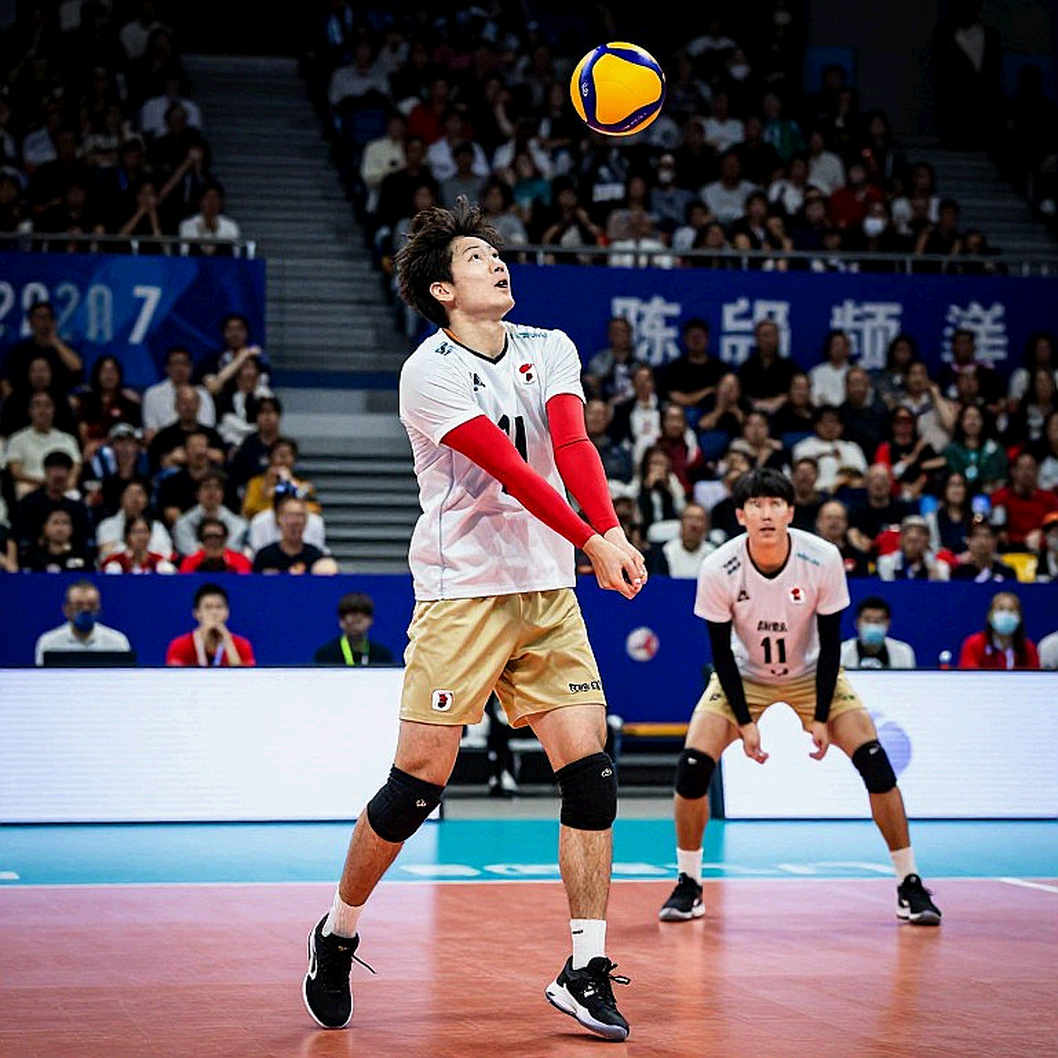
Invictus Gaming defeated JD Gaming 3-1 in the lower-bracket final, claiming the LPL's final berth for the League of Legends World Championship 2026. The team had lost 1-3 to Top Esports in the upper-bracket final, dropped to the lower bracket, and then walked a longer road than any other team to reach Allen, Texas at the end of October. Four LPL representatives advance to the Swiss Stage, in seeding order: Anyone's Legend first, Bilibili Gaming second, Top Esports third, Invictus Gaming fourth.
What makes this series worth analyzing is not the result. It is the gap between what we saw and what we can prove.
The context of this series needs to be placed correctly before discussing any number. The LPL 2026 Regional Finals is a closed qualification tournament inside the Riot Games ecosystem, using an upper-bracket and lower-bracket format, with decisive matches played as best-of-five. This structure has one technically important feature: to be eliminated, a team must lose twice. That increases the number of matches each team has to win to advance, and stretches the road, raising the risks of accumulated fatigue and tactical exposure to opponents in later rounds.
Invictus Gaming's path ran straight through that structure. They lost to Top Esports in the upper-bracket final, dropped to the lower bracket, then beat JD Gaming 3-1 to claim the final berth. JD Gaming arrived at this match via the opposite route: defeating Team WE in the lower-bracket semifinal, then falling to Invictus Gaming.
According to Esports Insider's report, both decisive matches ended 3-1. That looks like a minor detail, but it carries methodological meaning: in a best-of-five, a 3-1 scoreline reflects a clearer separation between the two teams than a 3-2, where a few random plays can flip the series. The winners in these series did not win by luck in a deciding game.
On schedule, the Regional Finals concluded on Saturday, September 19, 2026. The Worlds 2026 Swiss Stage runs from October 23 to October 31, 2026, in Allen, Texas. The gap between those two points is nearly five weeks. That is long enough for teams to organize bootcamps and test the meta, but also long enough for the game version to shift in ways nobody at the Regional Finals could anticipate.
Game 1 ended after 33 minutes with a kill score of 11-3 in favor of Invictus Gaming. JiaQi played Tristana, finishing the game with 6 kills and 2 assists. This is the first and cleanest data point of the whole series: an opening game the winning team controlled from start to finish, denying the opponent any comeback window.
Game 2 is the one I mentioned in the opening. Wei played Qiyana, took early control of the Rift Herald area, then led the team to the Dragon Soul and the Baron. Described sequentially, this sounds routine, but in reality it is a causal chain that ordinary stat sheets do not display fully. The Rift Herald is not the highest-value neutral objective in the early game. The Dragon Soul is. The Baron is higher still. But control of the Rift Herald is the precondition for securing the other two, and it is typically undervalued in reports that only list kills and assists.
JD Gaming won Game 3 after 34 minutes. Junjia played Trundle, ending the game with 11 kills, 1 death and 11 assists. That is the strongest individual stat line of the entire series, and it appeared in the only game his team won. This is an important fact, because it separates two concepts the media often conflates: individual form and collective effectiveness.
Game 4 closed the series. Some sources record JiaQi on Ezreal with 9 kills and 5 assists in a separate win, while Rookie played Aurora with 5 kills and 11 assists. Earlier in Game 1, Rookie played Syndra with a 4/1/5 line.
Taken together, we get a picture of distributed responsibility. JiaQi fielded two different marksmen across this series — Tristana and Ezreal. Rookie fielded two different mid laners — Syndra and Aurora. Wei fielded Qiyana in the jungle. JD Gaming's Junjia fielded Trundle, while his other games do not appear with equivalent data.
The presence of both an assassin jungler like Qiyana and a bruiser jungler like Trundle in the same series is a mild signal of meta openness. It suggests the jungle role is not locked to a single archetype under the tournament's competitive version. But I want to be explicit about the confidence level here: this is an inference from a small sample, from a single series, and should not be extrapolated into a conclusion about the meta's direction across the entire period.
The core point of this series is not the 3-1 victory, but that Invictus Gaming earned its berth through the distributed contribution of three lanes rather than dependence on a single star — a signal with far higher practical value under the Swiss Stage format.
To understand why, look at the structure of the Swiss Stage. It pairs teams by identical win-loss records, requiring teams to hit a certain win threshold to advance. This format punishes teams with limited tactical depth and rewards teams capable of rapid adaptation across short turnarounds. A team whose every win depends on one player will struggle when opponents have time to study and neutralize that player.
In Invictus Gaming's case, the recorded wins involved JiaQi in the bottom lane, Rookie in the mid lane, and Wei in the jungle. This is preliminary data, from one series, not a season. But its dispersion is a positive signal in the specific context of the Swiss Stage.
A season is a statistical sample. A decade is evidence. I say this to remind myself that every conclusion about Invictus Gaming at this moment must carry a risk cap. Four games do not make a season. But four games can produce a hypothesis good enough to track.
The LPL's seeding order at Worlds 2026 carries a message that a pure results report does not fully convey. Anyone's Legend took the first seed. Bilibili Gaming stands second. Top Esports third. Invictus Gaming fourth.
In many recent cycles, Bilibili Gaming and Top Esports were regarded as the region's pillars. Anyone's Legend rising above both in this year's qualifier shows the LPL's internal order is shifting. I have no data to assert whether this reflects a form decline in the old guard or a rise by a new contender. Both possibilities are plausible, and both need more data to distinguish.
What is more certain is the region's depth. The LPL put at least six competitive organizations on the qualification field: Anyone's Legend, Bilibili Gaming, Top Esports, Invictus Gaming, JD Gaming and Team WE. Four berths allocated, six teams competing. That ratio speaks to the intensity of internal qualification pressure.
Systemically, the LPL confirmed it is sending four representatives to Worlds 2026, all entering the Swiss Stage directly without going through a play-in phase. That is the privilege of a region ranked highly in Riot Games' system. Esports is not slower than football — it is only running on a different clock. But in this case, the LPL's clock is running in the right position.
JD Gaming and Team WE, having failed to secure Worlds berths, move to the Demacia Cup Global Invitational 2026. That is a second-tier international event. Competitively, the destination is lower than Worlds. Commercially, the exposure gap between the two tournaments is significant.
For JD Gaming, there is a notable pattern: this is the third consecutive year the team finished third. I have no data on the team's internal factors — contracts, transfers, coaching staff. Data does not lie, but it learns to hide what matters most. Three consecutive finishes at the same position is a pattern. Whether that is a roster ceiling problem, a preparation problem for decisive matches, or simply the variance of three seasons — I cannot separate those three possibilities with the available data.
The data on this series has a weakness I need to state clearly before going further. Most of the facts cited in the original report — including the qualification result itself — carry no specific attribution. Only some information related to match events and seeding order has clearer provenance. This is a source-quality issue, not an authenticity issue. But it means any deeper analysis relying on these details must be conducted with a high degree of caution.
This is also why I am not offering any judgment on the game version used. The original report provides no version identifier, no context on champion buffs or nerfs, and no aggregate data on win rates or pick-ban rates. The observed champion set — Tristana, Ezreal, Syndra, Aurora, Qiyana, Trundle — is consistent with a standard marksman-centric meta with flexibility in the jungle slot. But that is an inference-level judgment, low confidence, and I do not want it read as a firm conclusion.
Variance is not the enemy — it is the mirror that reflects prediction's arrogance. The nearly five-week gap between the Regional Finals and the Swiss Stage has a specific technical meaning. Historically, this gap tends to produce meta drift. A team that earned its berth on a specific champion set at the qualifier may enter Worlds with a champion set no longer equivalently effective. Invictus Gaming showing at least two different champion options at the marksman position and two different options at the mid position is a signal that marginally reduces this risk. It does not eliminate it.
There is one aspect of this series I have not yet addressed, and it is arguably the most discussed aspect outside dedicated analytical forums: the return of Rookie and TheShy with Invictus Gaming at a World Championship.
Both were members of Invictus Gaming's 2026 World Championship-winning roster. In the memory of LPL fans, that is an irreplaceable milestone. And their return at another Worlds is a story with enormous media pull.
But this is where I need to separate two things. Media pull and competitive position are two different quantities, measurable by two different yardsticks, and capable of moving in two different directions. Data from this series records Rookie on Syndra in one game and Aurora in another. That is champion-pool information, not long-term form information. There is no data on TheShy in this report beyond being named as returning to Worlds with the team.
If I had to bet based on the available data, I would not bet on the story. I would bet on the four recorded games, with low confidence, and explicitly note that the sample is too small to extrapolate.
There is a counterintuitive angle I want to put on the table here. When a team earns its berth through the lower bracket, the default story is one of resilience. The longer road is read as proof of character. And in Invictus Gaming's case, that has a basis — they lost the upper-bracket final, then won the decisive match 3-1 to claim the berth.
But the longer road also carries a price. It means the team played more matches before Worlds. It means the team spent more preparation time on the qualifier and less on preparing for the following tournament. It means opponents at Worlds have more footage to study. And it means the team enters the break between events with a higher level of accumulated fatigue than a team that advanced directly.
This is not an argument against the value of the achievement. It is an argument against reading only one side of the data. The same fact — number of games played — can be read in two directions. Which reading is correct depends on data we do not have: actual physiological fatigue, bootcamp quality, and adaptation to the new game version.
A second counterintuitive angle concerns seeding. Invictus Gaming enters Worlds as the lowest-ranked LPL representative. Historically, the fourth seed is often the most vulnerable position at international events, with the potential to meet other regions' top seeds early. But a low position also carries an under-discussed advantage: lower expectations mean lower psychological pressure, and in the Swiss Stage format, psychological pressure is a variable data models do not measure.
I have written about this limitation before. At a previous major tournament, my model correctly predicted the champion but wrongly predicted a finalist. That team was eliminated in the knockout stage by an opponent the model rated lower. The cause was not match data. It was a variable the data does not touch.
So what needs to be tracked from here?
First, Invictus Gaming's draw at the Swiss Stage. The team meeting a top seed from Korea or Europe early would significantly change its advancement probability, and this is a variable observable as soon as the bracket is released.
Second, the game version's evolution between September 19 and October 23, 2026. Any change affecting the champion pool Invictus Gaming has demonstrated — Tristana, Ezreal in the bottom lane, Syndra, Aurora in the mid lane — will directly affect the team's pick-ban depth.
Third, the individual form of Rookie and TheShy in actual matches at Worlds. This is the variable the media narrative is overlooking, and it will be measured by concrete match data.
Fourth, JD Gaming's transfer activity during the off-season. Three consecutive third-place finishes is a pattern long enough to generate pressure for change, and how an organization responds to such a pattern is usually expressed through personnel decisions.
And fifth, what data cannot see. I have a database of major matches built during a period when no football was being played. It contains thousands of games, dozens of metrics, and hundreds of hypotheses already tested. But it has no column recording the pressure on a player stepping into a deciding game before millions of viewers. It has no column recording what a team feels when it knows this may be the final World Championship of a generation.
Invictus Gaming has earned the right to attend Worlds 2026. That is a fact. Four games have been recorded and can be analyzed. The LPL's fourth berth is a settled result.
What is not settled is what happens when those four games become the starting point of a new journey, with a new game version, with opponents Invictus Gaming has never met in this series, and with a media narrative growing faster than the available data can prove.
I will be watching. And I will record what I see, even when it does not match what I predicted.