
Asian Games 2026: Virtual Taekwondo Debuts, and a Narrow Door Opens for Tuyet Sang
**Core answer** Virtual taekwondo makes its Asian Games debut at Aichi-Nagoya 2026, contested on October 3, 2026. Because no competitive hierarchy exists yet, an early entrant such as Chau Ngoc Tuyet Sang, who has trained the discipline for roughly one month, faces a genuine but narrow medal opening. **Key facts** - Chau Ngoc Tuyet Sang, 25, younger sister of poomsae world champion Chau Tuyet Van, competes in poomsae and virtual taekwondo. - She won U17 team creative poomsae silver in 2018 and 2022, and finished sixth in individual creative poomsae in 2026. - Coaching staff assess virtual taekwondo as her highest-ceiling event for a medal challenge. - She trained virtual taekwondo about one month, lost roughly 5kg, and beat test opponents from India, Singapore and Japan. - Nguyen Thi Loan contests sparring in the under-49kg class; the taekwondo schedule runs October 1-3, 2026. **Source attribution** Compiled from Vietnamese national sports coverage, September 2026. Age-category details remain unverified against official records. | Cross-checked: VuaBong.vn **Related Q&A** Q: Virtual taekwondo is what exactly? A: A sensor-and-VR discipline where athletes strike a digital opponent and score via algorithm, with no physical contact. Q: Why is individual poomsae harder than team poomsae? A: Team scoring rewards synchronisation and shared difficulty, so a weaker individual can be masked, whereas individual scoring isolates every technical error, as reflected in Tuyet Sang's sixth-place 2026 finish. Q: Who carries Vietnam's sparring medal hope? A: Nguyen Thi Loan, in the under-49kg class, a contact discipline carrying a higher physical-risk profile than poomsae or virtual taekwondo.
A training session at the National Sports Training Centre in late September 2026 carried an unfamiliar sound. Short, steady beeps, emitted by the sensor array rigged around the mat. No thud of gloves on pads, no rhythmic counting from a coach. Chau Ngoc Tuyet Sang stood inside that ring of sensors, wearing a virtual-reality headset, both hands closed into fists. The space in front of her was empty. The opponent lived inside the software, and her kicks were recorded by accelerometers rather than by a referee's eye.
Three months earlier she had never set foot in this gym. Now the discipline she has trained for roughly one month is the one the coaching staff rate as her brightest opening at the 2026 Asian Games in Aichi-Nagoya, Japan.
Three disciplines, three days, one coaching staff
The taekwondo schedule at the 2026 Asian Games packs three sub-disciplines into three consecutive days: poomsae on October 1, kyorugi sparring on October 2, and virtual taekwondo on October 3. Virtual taekwondo appears at an Asian Games for the first time. World Taekwondo writes the rules for all three sub-disciplines; the Olympic Council of Asia stages the event. For Vietnam, the arrival of a completely new category carries a very practical meaning: an extra medal pathway, opening before the traditional powers build dedicated selection pipelines.
In sparring, Vietnam's medal slot rests on Nguyen Thi Loan, in the under-49kg class. In poomsae and virtual, the name raised is Chau Ngoc Tuyet Sang, 25, younger sister of Chau Tuyet Van, a former world champion in poomsae.
That is how the story is told in the headlines. But read Tuyet Sang's own competitive record closely, and the picture carries dark patches the headlines do not reflect.
The three pathways have to be separated before they are bundled into one narrative. Poomsae is a performance-scored discipline: athletes perform set forms and judges score accuracy plus presentation, meaning speed, power, rhythm and expression. There is no direct opponent and no contact. Sparring is the full-contact Olympic discipline, with weight classes, electronic body armour and point-scoring exchanges. Virtual taekwondo is a sensor-and-VR discipline, where athletes strike a digital simulation and score through an algorithm.
Three disciplines, three logics. Reading Tuyet Sang's results without separating these pathways invites the wrong conclusion.
The most telling data point sits here: in 2026 and 2026 she won silver in the U17 team creative poomsae event. In 2026, in the individual creative poomsae event, she finished sixth. The coaching staff noted that she did not meet expectations after moving up to an older age group.
Team medals and individual medals are two different stories, and the gap between them is the clearest diagnostic signal in this entire file. In the team event, judges score the synchronisation and collective difficulty of the whole routine; a weaker individual can be masked by the other two. In the individual event every technical error is exposed. The jump from an age-group team silver to a sixth-place continental individual finish is not a random stumble. It is a structural downgrade.
Put another way: if the headline places Tuyet Sang as Vietnam's greatest hope in poomsae, her own competitive results are arguing against that framing. With virtual taekwondo, everything flips.
Virtual taekwondo: a narrow door, but a real one
This discipline has never appeared at an Asian Games, which means no hierarchy has been established. South Korea, Iran, China and Chinese Taipei, the traditional taekwondo heartlands, have not built dedicated selection pipelines for it. When a new category is born, that vacuum is the opportunity.
Tuyet Sang entered that vacuum early. She trained virtual taekwondo for roughly one month, and during that period lost around 5kg. That figure deserves a pause. Five kilograms in a month does not come from a weight cut; it comes from a sudden spike in workload while adjusting to a new sport. For a 25-year-old, the body can absorb it. But it also says this new discipline is demanding things of her body that poomsae never did.
She has beaten test-match opponents from India, Singapore and Japan. Those three names sit in the mid-tier of continental taekwondo. It is a positive signal, but it must be read correctly: a test match under training conditions does not carry the pressure of an Asian Games final. The gap between the two is enormous, and anyone who has stood backstage at a major Games understands that.
Sitting in the stands in Moscow, I learned to listen with my eyes and watch with my ears. There I saw one thing clearly: what decides a result is not the technique already trained, but the way an athlete steps onto the mat when nobody is holding them up. Virtual taekwondo is the same. The sensor does not know whose sister she is.
Nguyen Thi Loan and the contrasting risk profile
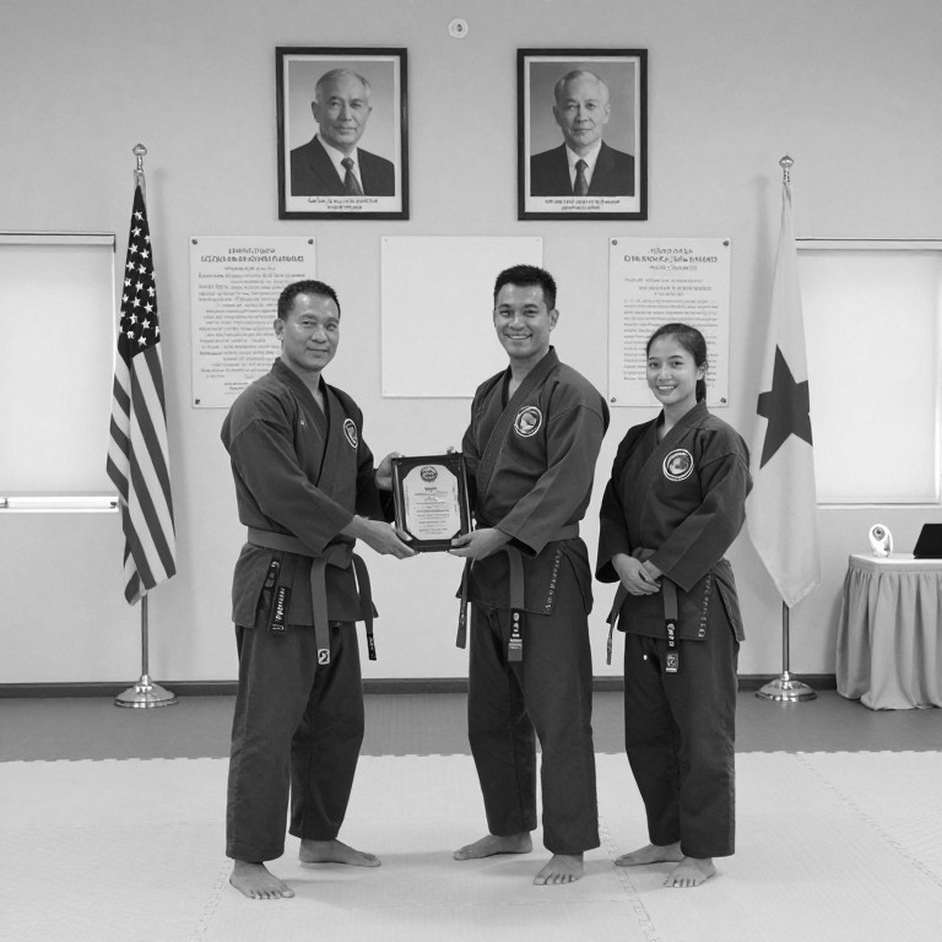
In the under-49kg class, Nguyen Thi Loan steps onto the mat with an entirely different kind of risk. Sparring is real collision: electronic armour, weight classes, head kicks governed by protective gear and medical protocols, but still collision. Across many years of watching taekwondo, I have noticed that attention flows to medallists and very little to the price their bodies pay. Poomsae and virtual taekwondo carry almost no head-impact risk. Placing the two kinds of athlete side by side in one news story does a disservice to both.
This also explains why a coaching staff may calculate differently from the media. With Loan, the question is stamina and weight class across two consecutive competition days. With Tuyet Sang, the question is which sub-discipline she commits to.
The real variable: a compressed calendar
One detail draws less attention than any other: the taekwondo world championships take place immediately before the Asian Games. Tuyet Sang speaks of the two major tournaments as being almost back to back, and describes her goal as trying to maintain her form.
That is the language of maintenance mode, not of a peaking cycle. A peak competition cycle needs a few weeks of deloading, a re-warm-up, a calculated point of peak performance. When two major events sit close together, the athlete must choose: go all-in on the first and pay the price at the second, or enter the first below peak in order to save something.
For someone contesting two sub-disciplines over three days, the burden multiplies. Poomsae and virtual taekwondo demand two different motor systems: one is presenting the body before judges, the other is reacting to digital signals in a virtual space. Preparing both inside one cycle means halving the time, halving the focus, and halving the recovery capacity.
So the real question is not whether she wins a medal. The real question is whether the coaching staff dares to let her release one discipline to concentrate on the other.
The contrarian angle: expectation has outrun the data
Domestic media is building a very easy-to-hear story: the youngest daughter of a world champion, carrying the family legacy, chasing her first continental medal. That story has its own pull, and it rests on a partial truth. Tuyet Sang genuinely has age-group medals, genuinely has a place in the national squad, and genuinely trains a discipline most rivals have not started.

But a medal expectation in the individual poomsae event does not match the data. A sixth-place continental individual finish, together with the coaching staff's own note about unmet expectations after moving up an age group, forms a negative signal that the source itself supplies without reading out.
Where expectation and data actually meet is virtual taekwondo, and that is precisely where the media narrative gives the least space. A brand-new category, with no hierarchy and no powerhouse selection pipeline, is ground where an early entrant can harvest. The coaching staff rate virtual as her highest ceiling, and that judgement has far more basis than the expectation placed on poomsae.
The Chau family name in Vietnamese taekwondo is a brand. When Hoa Xuan stadium burst into tears, I understood that a brand is not a logo but trust. And trust, handed to a 25-year-old, carries its own weight. She does not only have to land her kicks. She has to land them inside the shadow of a sister who once conquered the world.
One more detail deserves to be said plainly. Several age-category details circulating in the coverage do not align: if Tuyet Sang is 25 in 2026, then in 2026 she would have been around 21, yet the 2026 medal is recorded as U17. That mismatch may stem from naming conventions or translation error, but it is enough to remind us that the figures in circulation need checking against official results before being cited as hard evidence.
During the pandemic the stadiums were empty, yet I never heard the heartbeat of the fans more clearly. Virtual taekwondo has one thing in common with those days: the arena is not loud in the familiar way. There is no dense roar in your ear, only beeps and a screen. And in that silence, you hear more clearly who is genuinely ready.
The esports generation does not sit in the stands. They are teaching us a new way to cheer. When a sport shifts to sensors and virtual reality, the audience has to relearn how to watch: tracking an athlete through a data curve, through reaction rhythm, through the silent seconds before the algorithm returns a result. That is a new skill, and Vietnam has the chance to learn it earlier than many nations.
Signals to track
First, the official entry list for the virtual taekwondo event. If South Korea, Iran, China or Chinese Taipei field strong squads, Tuyet Sang's door narrows immediately. If they do not, it stays open.
Second, the coaching staff's decision on whether she contests both sub-disciplines. An athlete who commits fully to one category has a far higher chance of success than one splitting effort across two.
Third, her individual poomsae scores in the tournaments before the Asian Games. A top-tier individual result would confirm that the 2026 slide was only a temporary trough.
Some contests last 90 minutes, but the story lingers for decades. In Aichi-Nagoya, Tuyet Sang's story will not be written by her sister's titles. It will be written across three days in October, through kicks the naked eye cannot see, and through a decision the coaching staff must make before the first beep sounds.