
Trang chủTable TennisSBCL Premier Division Week 1: eBaTT's youth side stun the former champions, and DHS leaves its mark on an English club's name
SBCL Premier Division Week 1: eBaTT's youth side stun the former champions, and DHS leaves its mark on an English club's name
Trả lời cốt lõi: Tại Weekend 1 của SBCL Premier Division do Table Tennis England công bố, đội trẻ eBaTT với bốn tay vợt tổng tuổi 71 đã hạ cựu vô địch Ormeau 4-3; BATTS dẫn đầu nhờ chỉ số "sets for" tốt hơn Ormesby; tân binh DHS Hurricane Kingsway xếp thứ ba với Guillaume Alcayde giữ tỷ lệ thắng 100%. Sự kiện chính: - BATTS dẫn trước Ormesby nhờ chỉ số "sets for" tốt hơn; cả hai đội đều có lượt thắng trắng 7-0. - Guillaume Alcayde (Pháp) giữ tỷ lệ thắng 100% trong màu áo DHS Hurricane Kingsway, đội xếp thứ ba chung cuộc. - Edouard Valanet (Pháp, BATTS) thắng hai trận ra mắt rồi thua 0-3 trước Nahom Asgedom của eBaTT. - Nhiều ván quyết định khép lại ở 12-10, 13-11 và 15-13, cho thấy dải cạnh tranh của giải bị nén. - DHS (Double Happiness) đặt tên cho một câu lạc bộ Anh, tín hiệu thương mại thiết bị Trung Quốc tại thị trường câu lạc bộ Vương quốc Anh. Nguồn: Table Tennis England, bản tin SBCL Premier Division Weekend 1 | Cross-checked: VuaBong.vn Hỏi đáp liên quan: Hỏi: eBaTT là đội như thế nào? Đáp: Đây là câu lạc bộ sở hữu đội hình trẻ nhất lịch sử Premier Division, với bốn tay vợt cộng lại 71 tuổi. Hỏi: Vì sao BATTS đang dẫn đầu bảng xếp hạng? Đáp: BATTS bằng điểm Ormesby nhưng hơn ở chỉ số "sets for", tiêu chí phân định của giải. Hỏi: Giải này có tính điểm xếp hạng thế giới không? Đáp: Không, đây là giải câu lạc bộ quốc gia của Anh, nằm ngoài hệ thống WTT và ITTF.
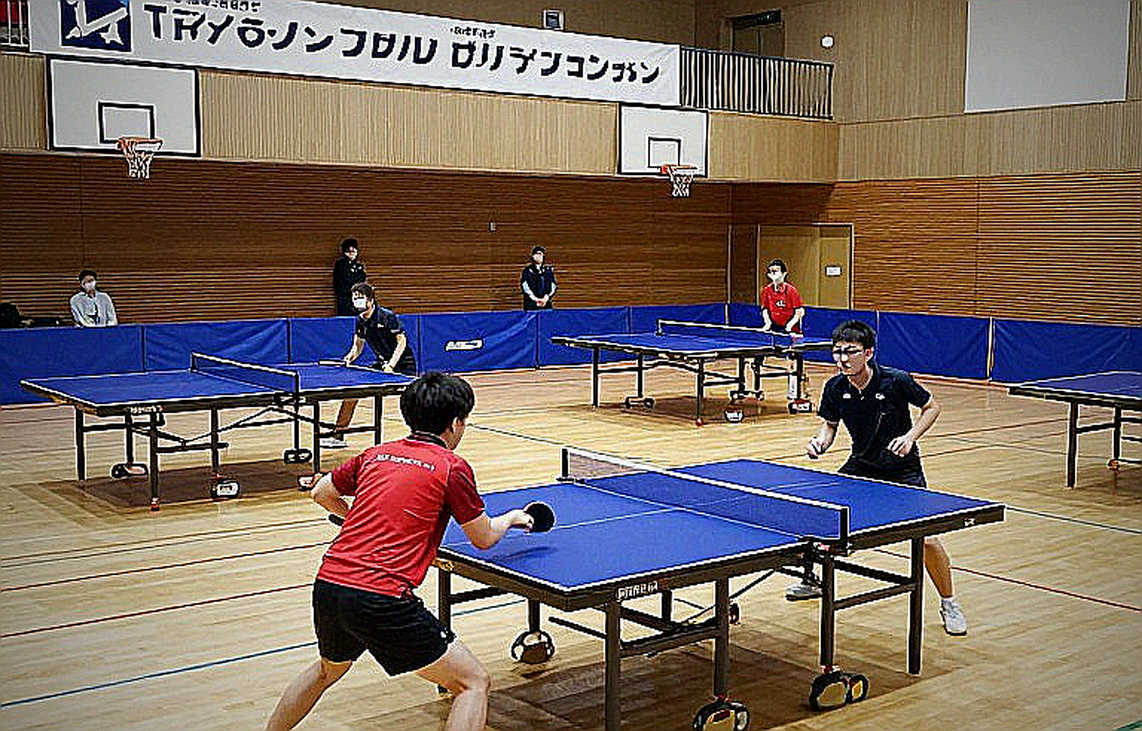
In the deciding fifth game of the opening round, the youngest squad ever to appear in Premier Division history beat Ormeau, the 2026/23 champions, 4-3. eBaTT's four players have a combined age of 71. Max Radiven took the decider 12-10 against Kingham, his England youth team-mate, and recorded the first Premier Division win of his career. On the same day, Nahom Asgedom swept Edouard Valanet 3-0, just as Valanet had been described as a "new international star" after two flawless wins on his English debut.
Those are the first three data lines of the Weekend 1 bulletin of the SBCL Premier Division, published by Table Tennis England. Every sediment layer hides a generation of talent; you only have to be willing to dig.
The SBCL — Senior British Clubs League — is England's national club competition, run in weekend blocks. Each club plays several rounds across two days, with Round 1 and Round 2, and two fixtures per day. This is the semi-professional tier, sitting outside the WTT and ITTF systems. There are no world ranking points, no published prize money, no Olympic qualification places. The only currency is match points, and when two clubs are level, the organisers separate them on "sets for" — total games won. BATTS lead Ormesby precisely because of that criterion.
A bulletin like this is worth analysing for the structure it exposes, not for the stars it names. This opening weekend exposed three things: a labour market for imported players, a youth development system that is delivering real results, and a commercial footprint left by Chinese equipment manufacturing.
The densest data in the source is the scoreboard. Many fifth games closed at 12-10, 13-11 and 15-13. For a scout, this is a cheap but reliable signal about the competitive band: a league whose deciders keep landing inside a two-point margin is a compressed league, where the gap between the leading clubs and the rest is far narrower than the 7-0 whitewashes suggest. A strong side can blank an entire tie, yet at game level the pairings still run to the wire.
Three individual names rise out of that data layer. Guillaume Alcayde (France) was the most stable player across the two days: he preserved a 100% record and was repeatedly deployed as the anchor of DHS Hurricane Kingsway. For a newly promoted club, a player who delivers in both singles and doubles without losing a match is a tactical asset that goes beyond individual statistics. Kingsway finished the weekend third, and that position carries Alcayde's fingerprints.
Edouard Valanet traced a different curve. He won his first two matches on English soil, then lost 0-3 to a youth player from eBaTT. This is the normal adaptation band for someone who has just changed market. An imported player has to adjust to the ball, the tables, the lighting, the warm-up rhythm and even the way referees run a game. I have watched too many similar cases to believe a "star" label after one weekend. Talent never arrives intact; it is a broken bone waiting to be set with patience.
Ben Piggott is a portrait of high variance. He won a decider 12-10 against Sawyer, came back from 0-2 down, and claimed two fifth games over the weekend. He also lost 3-1 to Johnson and went down 12-10 in the fifth to Shilton. A player like Piggott is hard to price on raw scorelines: heavy minutes, heavy decider volume, heavy variance. To judge him properly you need point-by-point data, which a club bulletin does not provide.
The men's doubles is a deliberately weighted scoring unit. Mendes and McBeath played together "as usual"; Shilton and Johnson are another fixed pair. Clubs locking pairings rather than rotating them shows doubles is coached as a tactical link, not as an afterthought to the tie. The bulletin says nothing about left-hand/right-hand composition or spin complementarity, so any deeper inference would be exaggeration.
The equipment factor appears in exactly one place: the club name DHS Hurricane Kingsway. DHS stands for Double Happiness, the Chinese table tennis equipment manufacturer, and Hurricane is its flagship inverted rubber line. This is a sponsorship and naming-rights signal, not a report of any player changing equipment. The transfer market is topsoil; I care about the structure of the deeper layers.
In those deeper layers there are two things worth tracking. The first is dependence on imported players: Alcayde carries Kingsway, Valanet is expected to carry BATTS, Oriol Monzo (Spain) plays a leading role at Ormeau. In a league where key roles are filled by overseas players, when that supply shifts, the standings shift with it. The second is the youth stream. eBaTT fielded an entirely 18-year-old squad, put them against seasoned opponents, and came away with a win over a former champion. Radiven took a game 12-10 against an England youth team-mate. Abraham Sellado pushed Johnson to a fifth game. These are real results, not participation exercises.
One staffing detail is rare at this level. Fusion fielded Larry and Lorestas Trumpauskas, a father-and-son pair. Larry opened the scoring, Lorestas levelled, and both lost 0-3 to Sawyer. Club table tennis allows mixed-generation rosters like this, and it says more about English league culture than any points column.
On the commercial infrastructure, the source notes the first live-streamed fixture of the season. At club tier, investment in broadcast is a small but real indicator: the league is testing whether its content can become a media product rather than a results digest. Alongside it sits a dense two-day weekend schedule, where a single player may work through several rounds back to back. Load management and rotation therefore become genuine coaching variables, even though the bulletin does not discuss them.
From my desk in Shanghai, I still keep the habit of coding every youth match into my own data table. Based on my experience tracking matches at youth level, a win over a champion side only deserves credit when it repeats in the next round. That is why I read eBaTT's 4-3 as a measuring mark, not as a verdict handed down to Ormeau.
On the regulatory side, the source contains nothing about rule reform, selection disputes or discipline. Table Tennis England appears here as the reporting body, not as a rule-maker at the centre of a controversy. The only regulation-adjacent detail is the "sets for" tiebreak, a competition rule rather than a policy dispute.
There is a strong temptation when reading this bulletin: to turn one youth win into evidence of a generational handover, and one two-win player into the league's new star. I reject both. One weekend, in a block-format league, with a sample of a few dozen games, is not enough to conclude anything about a system. A youth side can beat a former champion this round and be whitewashed the next. That does not diminish them, but it forces us to wait two or three more weekends before drawing a trend line.
The 7-0 scoreline also needs reading correctly. A club winning all seven singles and doubles matches is a signal of separation at team level. But the 12-10, 13-11 and 15-13 games say that separation narrows at point level. The leading clubs are stronger because they win the tight games, not necessarily because they are technically superior. That kind of difference never shows on a standings table, and it is exactly the kind a scout has to hunt for on video.
Finally, the source ends mid-sentence, in a passage referring to something connected to the Philippines. That truncated section may hold an international thread this analysis has not touched. A decent reporter notes it and goes to retrieve the full text, rather than assuming the missing part does not matter.
Over the next two to three weekends, I will mark three checkpoints. Can eBaTT hold their results after the shock against Ormeau, or do they return to the heavy defeats that are the price of an 18-year-old roster? Can Alcayde maintain a perfect record as the schedule thickens and opponents start studying him? And can Kingsway, a club carrying a Chinese equipment brand's name, turn third place into a genuine challenge to BATTS and Ormesby?
People see the record; I see the process buried before that record existed. In the English club league, that process began with four teenagers whose ages add up to 71, walking into a weekend few expected them to win anything from.

Cầu thủ liên quan
Bài đề xuất
British Clubs League 2026/27 Opens: When a Chinese Equipment Brand Names a Newly Promoted Club2026-09-25
43 of 56: How the United States Swept the Americas Youth Table Tennis Medal Table at U132026-09-19
When the data sheet is blank: Vietnamese table tennis and its data problem2026-09-09
Sussex Senior 4*: The Defending Champion Is Seed No. 5, and Every Entry Is Sold Out2026-09-10
England's U11 Champions: Two Tickets, One Quiet Before the Five-Continent Stage2026-09-21
Great Britain Para Table Tennis Squad Departs for France: Final Training Ground Before World Championships2026-09-13
Worthing TTC and the Junior Team 1 Star: When a Hole at the Bottom of England's Table Tennis Pyramid Reveals Itself2026-09-18
Nine Dimensions of Table Tennis Data: The Empty Result, Alarm Thresholds and a Lesson From an Analysis Pipeline2026-09-19
Bài đề xuất
The Empty Cell on the Statsheet: When Missing Data Is More Dishonest Than Wrong Data2026-09-15
A Blank Page from the Analysis Pipeline: Data Integrity Lessons in the WTT Era2026-09-17
Former England International Nick Jarvis Takes the Helm at Archway Peterborough Academy2026-09-08
The Blind Spot of Table Tennis Statistics: When Empty Cells Tell the Truth2026-09-12
Braintree Table Tennis League: 92% in Division Three and the Limits of a Win Percentage2026-09-29
WTT's 52-Week Rolling Window: How World Table Tennis Rankings Are Rewritten by Expiring Points2026-09-22
Bài đề xuất
Nine Layers of Table Tennis Analysis: Reading a Match Like a Map2026-09-14
England Hopes Challenge: Mapping England's U11 Talent Through One Weekend at Draycott2026-09-15
Nine Layers of Table Tennis Decoding: A Match-Reading Map from Rubber to Cash Flow2026-09-20
Alarming form of Indian paddlers ahead of the 2026 Asian Games2026-09-10
England Hopes Challenge 2026: The Underground Battle of U11 Talents and Lessons on Youth Table Tennis Data2026-09-14
Contracts, Player Options and the Unpublished Data of the NBA Offseason2026-09-28
The Crack Behind the Gold Medal: How Chinese Table Tennis Is Shifting2026-09-11
WTT Champions Macao 2026: The 136-Place Jump and Anna Hursey's Real Test2026-09-28